
Usenet: a distributed discussion network and its cultural legacy
Usenet is a decentralized system for exchanging text messages and files across newsgroups. Originating in 1980, it shaped early Internet culture and introduced concepts like FAQs, flame wars, and spam.
Usenet is a distributed discussion system in which users read and post messages, called articles or posts, to named categories known as newsgroups. Unlike many centralized online services, Usenet operates on a store-and-forward model: independent servers exchange messages and each user accesses a local server. The result is a federated, largely peer-to-peer network of discussion boards that predated the modern web and many Internet forums. For a basic overview, see Usenet.
Image gallery
4 Images

Structure and terminology
Newsgroups are the primary organizational units. Each group focuses on a particular subject and contains a sequence of posts that are usually threaded by reply relationships but are stored in chronological order. Common terms include article (a message), thread (a sequence of related articles), newsgroup (a topic category), crosspost (the same article posted to multiple groups), and moderator (a person who reviews or filters submissions in moderated groups). Retention (how long servers keep posts) and propagation (how servers share posts between one another) vary by server, producing a heterogeneous ecosystem.
How it works
Originally built on simple dial-up links and file transfer arrangements, Usenet relies on networked news servers that forward messages to their peers. A message posted to a local server propagates outward through the network until it reaches many other servers that subscribe to the same newsgroups. This decentralized design means there is no single global administrator; individual sites decide which newsgroups to carry and how long to keep content. The early implementation used the Unix-to-Unix Copy (UUCP) mechanism for transporting articles over dial-up connections; see UUCP. Later, a TCP-based protocol called NNTP made it easier to read and post news over the growing Internet.
History and development
The idea for Usenet emerged in the late 1970s and the first systems were in operation around 1980. It was created by students and engineers who wanted a way to share messages across campus and research computers. In the 1980s and early 1990s Usenet expanded across academic, commercial and hobbyist systems. Gateways to other networks and dial-up bulletin systems broadened access; for example, dial-up BBS networks and early store-and-forward networks like FidoNet helped distribute Usenet-style discussions to people without a permanent Internet connection or central server, relying on local telephone service and periodic links—see dial-up networks.
Uses, culture and influence
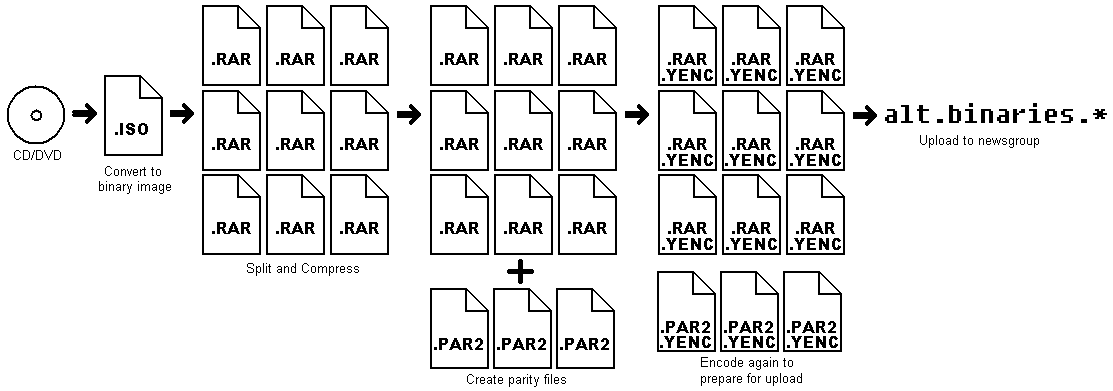
Usenet played an outsized role in forming early online culture. It was the birthplace or amplifier of many concepts and terms now common on the Internet, including the FAQ (frequently asked questions) documents that summarized group norms and answers—see FAQ—and cultural phenomena such as flame wars, trolling and spam. Usenet also hosted technical discussions, hobbyist communities, and binary newsgroups that were used to share files. Its public, archived conversations provided a researchable record of early Internet communities and debates.
Distinctions and notable aspects
- Decentralization: There is no single operator; servers are independently run and interlinked. See discussion of administration differences at no central admin.
- Moderation: Some groups are moderated (submissions reviewed), others are free-for-all.
- Persistence and propagation vary by server policy, creating uneven archives.
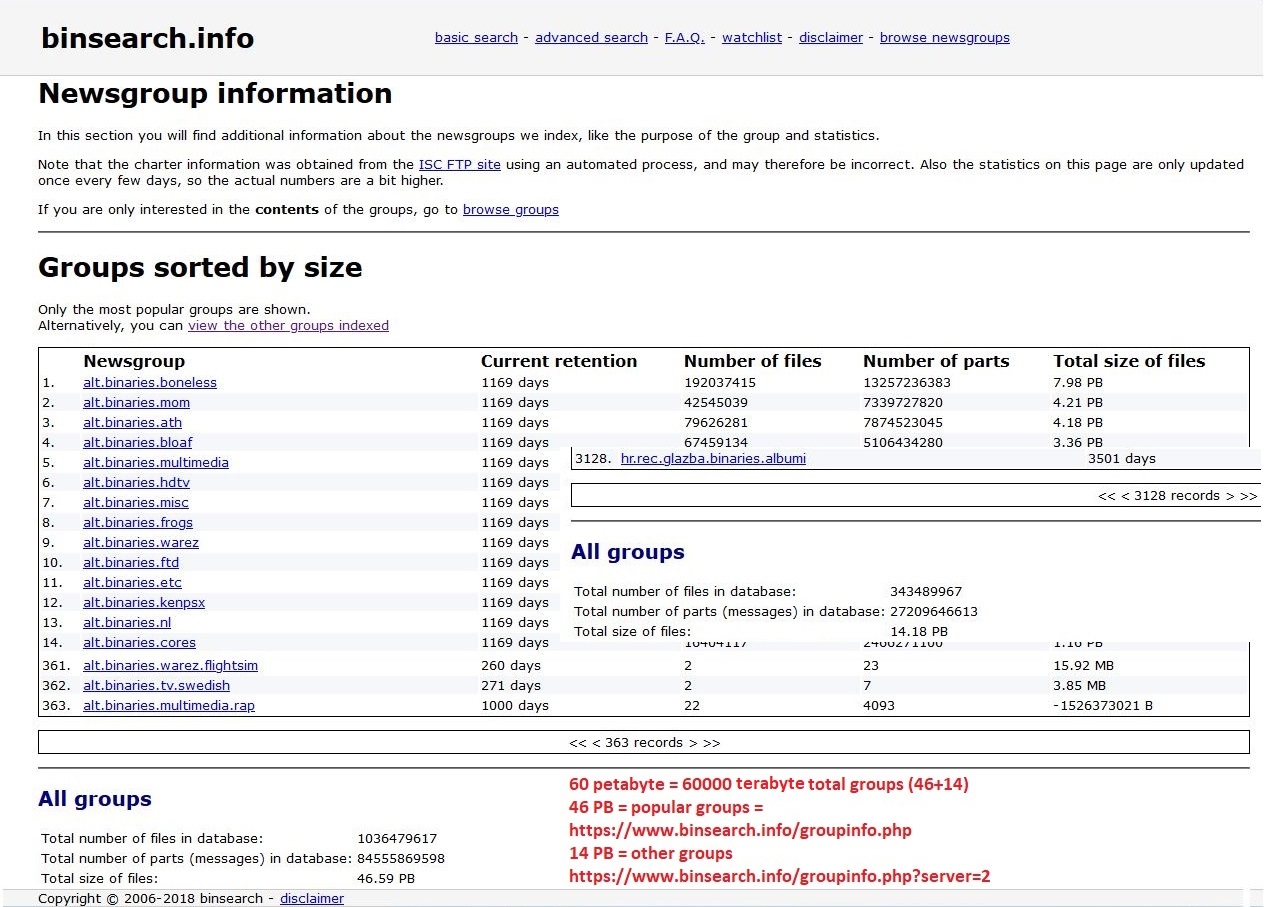
- Binary groups and high-volume traffic led to unique technical and social challenges.
Though overshadowed by web forums, social media and modern messaging systems, Usenet still exists and is maintained by hobbyists, commercial providers and archives. It remains a useful example of early distributed system design, an influential incubator for Internet norms, and a historical record of how online communities formed and governed themselves. For comparisons with later Internet forums and modern discussion platforms, see Internet forums and further reading at Usenet resources.
Questions and answers
Q: What is Usenet?
A: Usenet is a type of discussion system on computers that was created from the Unix-to-Unix Copy (UUCP) dial-up network architecture in 1980.
Q: How does Usenet compare to a bulletin board system (BBS)?
A: Usenet and BBS are similar in many ways, but there are some key differences. For example, usenet has no administrator and the network used to share messages is not constant. Additionally, posts on usenet are stored in order of when they were posted rather than threaded like on BBSs.
Q: Who created the idea for Usenet?
A: Tom Truscott and Jim Ellis began the idea for Usenet in 1979.
Q: How does Usenet work?
A: Messages or articles are posted to one or more categories called newsgroups. The messages are then spread over a large group of news servers which store and forward them to one another. Each user reads messages from and posts messages to a local server which can be operated by anyone.
Q: What made it easier for people to discuss things worldwide in the early 1990s?
A: In the early 1990s, connections via Fidonet's dial-up BBS networks made it easier for people to discuss things worldwide because they did not need their own server - just local telephone service was necessary.
Q: What important ideas or terms were either created on usenet or made popular there?
A: Important ideas or terms such as "FAQ", "flame", sockpuppet, and "spam" were either created on usenet or made popular there.
Related articles
Author
AlegsaOnline.com Usenet: a distributed discussion network and its cultural legacy Leandro Alegsa
URL: https://en.alegsaonline.com/art/103665