
Uruk: cradle of Mesopotamian urban civilization
Uruk was a major ancient city in southern Mesopotamia that pioneered urban life, state administration and early writing during the 4th–3rd millennia BC; its ruins lie in present-day Iraq.
Overview
Uruk was one of the earliest and most influential cities of ancient southern Mesopotamia. Located east of the present bed of the Euphrates in what is now Iraq, it emerged during the late Chalcolithic and early Bronze Age and gave its name to the Uruk period. Over several centuries the settlement grew from large villages into a true city-state that played a central role in the cultural and political development of Mesopotamia.
Image gallery
10 Images


City and social organization
At its peak, Uruk was a densely built, walled city with distinct civic and religious quarters. Archaeological remains show extensive mudbrick architecture, broad streets and monumental precincts devoted to major deities. One of the best-known temple complexes in the city, the Eanna precinct, is associated with the goddess Inanna. Defensive walls and large public constructions indicate organized labor, centralized planning and an elite capable of mobilizing resources and personnel.
Innovations of the Uruk period
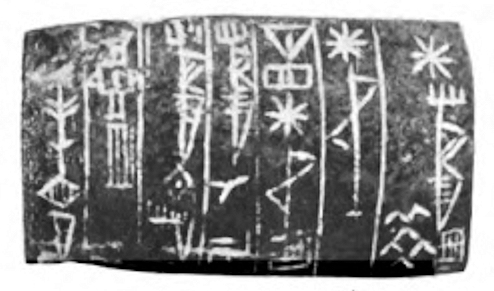
The Uruk era (roughly 4000–3100 BC) is credited with several transformative developments. Administrative technologies—such as sealed tokens, early cylinder seals and standardized accounting systems—appear in abundance. Toward the end of the period, pictographic and proto-cuneiform signs on clay tablets mark one of the earliest stages in the history of writing. These innovations supported more complex economic management, long-distance trade and the emergence of institutional authority.
History and chronology
Uruk played a leading role in the urbanization of southern Mesopotamia in the mid-4th millennium BC, and by the late 4th/early 3rd millennium BC it was among the region’s largest settlements. At its height around 2900 BC the walled city may have sheltered an estimated 50,000–80,000 inhabitants within several square kilometers, making it one of the largest cities of its age. The city appears in later literary and king-list traditions: the semi-legendary figure Gilgamesh is described as a ruler of Uruk. Political importance waned after centuries of competition between southern Babylonia and neighboring polities such as Elam, and the city declined in prominence after about 2000 BC.
Later occupation and abandonment
Although Uruk lost its leading role, it remained inhabited through many later periods. There is evidence of occupation and reuse of parts of the site during eras commonly called Seleucid and Parthian in classical chronology. The settlement continued in reduced form until final abandonment in late antique times, with ruins eventually buried and left until modern rediscovery.
Archaeology and legacy
The ruins of Uruk were identified in the mid-19th century (first reported in 1849) and have been the object of sustained archaeological research since the 19th and 20th centuries. Excavations have produced clay tablets, administrative archives, seal impressions and architectural remains that illuminate early urban life and state formation. Uruk’s cultural imprint is long-lasting: the city’s name is associated with a major archaeological period, its legends contributed to Near Eastern literary traditions, and some scholars trace part of the modern toponym al-ʿIrāq to the ancient name.
Notable facts
- Uruk gives its name to a formative archaeological era and to the rise of complex urban institutions in southern Mesopotamia.
- Archaeological finds from the site include some of the earliest administrative records and proto-writing in the world.
- Large temple precincts and monumental architecture reflect the central role of religion and elite administration in city life.
- The city is remembered in later Mesopotamian literature, most famously through the tradition surrounding Gilgamesh.
For further reading on the city’s archaeological and cultural contexts see specialized works on Sumer, the history of Babylonia, and surveys of early urbanization in Mesopotamia. Archaeological reports and museum catalogues document many of the recovered objects and inscriptions that underpin our understanding of Uruk’s role in world history.
Questions and answers
Q: Where is Uruk located?
A: Uruk is located in what is now Iraq, east of the present bed of the Euphrates river, on the ancient dry former channel of the Euphrates River.
Q: What was the Uruk period?
A: The Uruk period was the early Chalcolithic to early Bronze Age period in Mesopotamia, about 4000 to 3100 BC.
Q: How did Uruk contribute to the early urbanization of Sumer?
A: Uruk played a leading role in the early urbanization of Sumer in the mid 4th millennium BC.
Q: How many residents did Uruk have at its height?
A: At its height c 2900 BC, Uruk probably had 50,000–80,000 residents living in 6 km2 of walled area.
Q: Who was the semi-mythical king that ruled Uruk according to the Sumerian king list?
A: According to the Sumerian king list, the semi-mythical king Gilgamesh ruled Uruk in the 27th century BC.
Q: When did Uruk lose its prime importance and why?
A: Uruk lost its prime importance around 2000 BC, after the struggle of Babylonia with Elam.
Q: When was the site of Uruk discovered?
A: The site of Uruk was discovered in 1849.
Related articles
Author
AlegsaOnline.com Uruk: cradle of Mesopotamian urban civilization Leandro Alegsa
URL: https://en.alegsaonline.com/art/103639