
Uranium mining: methods, uses, risks, and global production
Overview of uranium mining, major producers, extraction methods, processing into nuclear fuel, environmental and health impacts, market influences, and regulatory responses.
Uranium mining is the extraction of uranium-bearing ore from the earth for processing into materials used largely as nuclear fuel. The raw material is commonly called uranium ore; modern operations concentrate the uranium into a powder often referred to as "yellowcake" before it enters the industrial supply chain. Significant producers include Kazakhstan, Canada and Australia, which together have supplied a large share of global output — historically more than half and in some years about 64% of world production.
Image gallery
10 Images


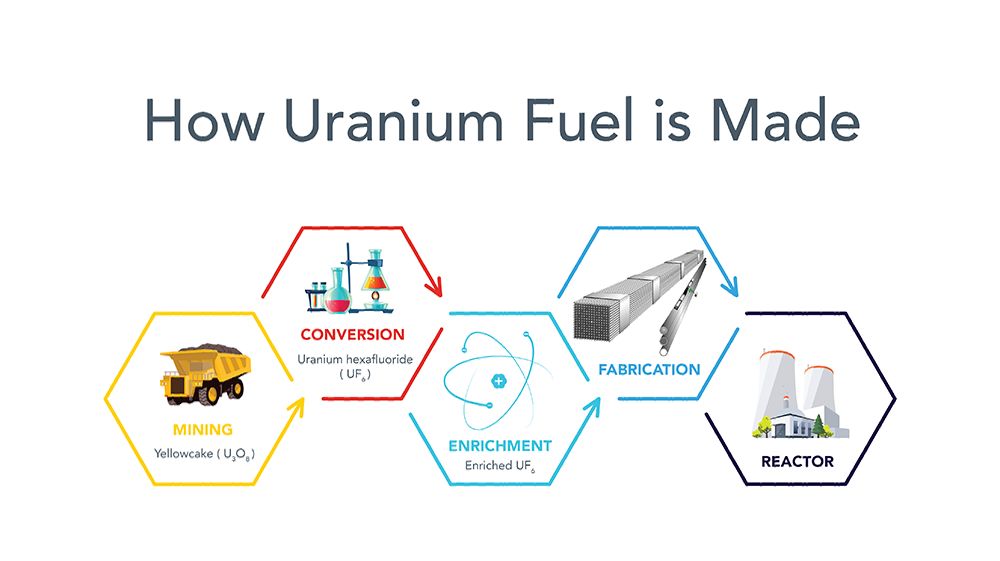
Extraction methods and processing
Uranium is recovered by several distinct mining techniques chosen according to geology, depth and local economics. Major methods are:
- Open-pit mining – surface removal of overburden to access near-surface ore deposits.
- Underground mining – tunnels and shafts target deeper veins, similar to other hard-rock mining.
- In-situ recovery (ISR) or in-situ leaching (ISL) – a fluid is injected to dissolve uranium in place and pumped back to the surface for treatment; this method avoids large waste rock piles.
After extraction the ore is milled to separate uranium, producing uranium concentrate. That concentrate is then converted and often enriched before fabrication into fuel assemblies for reactors.
Uses and economic context
The primary use of mined uranium is to fuel commercial nuclear power plants, which generate a substantial portion of low-carbon electricity in many countries. Uranium has other uses in science, research reactors and some industrial or medical isotope production. The uranium market is cyclical: prices and investment respond to expectations about reactor construction, reactor shutdowns and geopolitical events. The 2011 Fukushima nuclear disaster reduced demand in some markets and contributed to a multi-year price decline that led to postponed or cancelled mining projects.
Health, environmental impacts and regulation
Uranium mining can pose radiological and chemical hazards. Workers and nearby communities may be exposed to radon gas, radioactive dust, and heavy metals carried in mine tailings or wastewater. Epidemiological studies have linked mining work with elevated risks for lung cancer and other illnesses, primarily through prolonged radon exposure and inhaled particulates. Recognizing such harms, some governments have enacted compensation and assistance programs; for example, legislation passed in 1990 addressed compensation for affected miners and communities in certain jurisdictions (1990 legislation).
- Environmental concerns include tailings storage, groundwater contamination, and the long-term stewardship of mine sites.
- Modern regulation emphasizes worker protection, monitoring of radiation and effluents, and progressive reclamation during and after mining.
Social issues and remediation
Mining often occurs near Indigenous and rural communities, raising questions about land rights, consultation, and benefit-sharing. Remediation and mine closure practices aim to stabilize tailings, restore landscapes and reduce long-term risks, but these activities can be costly and technically demanding. Internationally, governments and industry bodies publish guidelines and best practices; community engagement and transparent environmental monitoring are central to building and maintaining social license for projects.
Because uranium is a strategic resource linked to energy, security and environmental policies, decisions about exploration, production and regulation balance economic opportunity against public health and ecosystem protection. For up-to-date technical standards and national frameworks consult relevant regulatory agencies and industry guidance (uranium ore information, Australian mining context, Canadian operations, Kazakh production, nuclear fuel use, policy responses, post-Fukushima developments).
Questions and answers
Q: What is uranium mining?
A: Uranium mining is the process of extracting uranium ore from the ground for processing.
Q: Which are the top three producers of uranium in the world?
A: Kazakhstan, Canada, and Australia are the top three producers of uranium, and they together account for 64% of world uranium production.
Q: How is uranium from mining mainly used?
A: Uranium from mining is mostly used as fuel for nuclear power plants.
Q: What is the risk uranium miners may face according to studies?
A: Health and environmental studies have shown that radiation exposure poses a risk for uranium miners.
Q: Has the government done anything to help those affected by uranium mining?
A: In 1990, Congress passed legislation to help those affected by mining.
Q: Why has the price of uranium concentrate decreased significantly in the last few years?
A: The price of uranium concentrate has fallen more than 50% from the peak price in January 2011 reflecting loss of demand following the 2011 Fukushima nuclear disaster.
Q: What has been the impact of the Fukushima nuclear disaster on plans for new mines and mine expansion?
A: Some plans for new mines and mine expansion have been deferred due to the loss of demand following the Fukushima nuclear disaster.
Related articles
Author
AlegsaOnline.com Uranium mining: methods, uses, risks, and global production Leandro Alegsa
URL: https://en.alegsaonline.com/art/103536
Sources
- world-nuclear.org : "World Uranium Mining Production"
- atomictraveler.com : Decommissioning of U.S. Uranium Production Facilities
- cameco.com : Uranium 5-year spot price history
- reuters.com : "Uranium producer Cameco scraps production target"
- mining.com : "Paladin Energy suspends production at Malawi uranium mine"