
Upton Sinclair: Novelist, Reformer, and Political Activist
Profile of Upton Sinclair (1878–1968), American novelist and social critic best known for The Jungle, his political campaigns, reform influence, major works, and lasting impact.
Overview
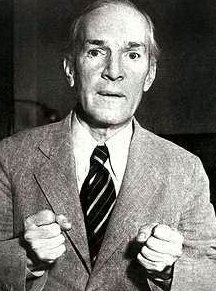
Upton Beall Sinclair (September 20, 1878 – November 25, 1968) was an American writer and social critic whose work combined journalism, fiction and political advocacy. He rose to national prominence with The Jungle (1906), a novel that exposed harsh conditions in the meatpacking industry and helped spur food-safety reforms. Sinclair's career spanned many genres: novels, investigative reportage, plays and essays. His writing often aimed to reveal social injustice and to promote economic and political change.
Image gallery
10 Images


Life and literary approach
Sinclair began publishing in the early 20th century and wrote prolifically over many decades. He blended documentary reporting with dramatic storytelling to create narratives that reached wide audiences and influenced public debate. Politically, Sinclair embraced socialist ideas for much of his life and used fiction as a vehicle for social critique. He was also interested in other subjects, including experiments in parapsychology documented in Mental Radio, and he explored industrial and technological change in novels such as The Flivver King.
Major works and themes
Among Sinclair's best-known books is The Jungle (1906), which portrayed immigrant laborers' exploitation and unsanitary practices in Chicago's meatpacking plants. Public reaction to the novel contributed to the passage of federal food-safety laws and inspection standards. Sinclair wrote the multi-volume Lanny Budd series, a sequence of novels that trace global events and politics in the first half of the 20th century; the series earned critical recognition and included works honored by major literary prizes. Other notable titles examine industrial life and labor struggles, often focusing on the human cost of economic systems.
Political activity and campaigns
Sinclair moved between literary and political arenas. He was an active voice for social reform, and in 1934 he ran for governor of California as the Democratic nominee on an End Poverty in California (EPIC) platform that proposed public works, state-run enterprises and relief for the unemployed during the Great Depression. His campaign generated intense public interest and controversy but ultimately failed to win office. Over time Sinclair continued to write and to advocate for progressive causes while participating in public debates about labor, regulation and democracy.
Legacy and significance
Sinclair is remembered as a central figure of American muckraking and progressive-era literature. His work demonstrated the power of narrative to shape policy and public opinion, and several of his books remain studied for their historical and literary value. In addition to social critique, his output includes genre fiction, historical novels and speculative experiments; his breadth and productivity made him a prominent literary figure of his era. Later years saw him retire away from active politics, but his influence on regulation, labor awareness and political discourse endured.
Selected bibliography and further reading
- Author overview and biography
- Context: United States history and Progressive Era
- The Jungle — publication details
- Historical response to The Jungle
- Meatpacking industry in the early 20th century
- Sinclair's socialist views and political philosophy
- The Flivver King and industrial America
- Labor organizing at Ford and factory conditions
- The Lanny Budd series and historical fiction
- 1934 California gubernatorial campaign
- California political history
- State-run enterprises and EPIC proposals
- Unemployment and social policy during the Great Depression
- Sinclair's later life and retirement
For readers seeking primary texts and contemporary accounts, many of Sinclair's novels and essays remain in print and are available through major libraries and archival collections. He spent his final years living away from the political spotlight and died in 1968, leaving a large body of work that continues to be discussed for its social impact and literary ambition.
Questions and answers
Q: Who was Upton Beall Sinclair?
A: Upton Beall Sinclair was a writer from the United States. He is most famous for his book The Jungle, which dealt with social injustice in the American meat-packing industry.
Q: What did he write about in The Flivver King?
A: The Flivver King was a book written by Upton Beall Sinclair about the Ford Motor Company at a time when workers were trying to start a labor union.
Q: How many books did he write in the Lanny Budd series?
A: Upton Beall Sinclair wrote eleven (11) books in the Lanny Budd series. These books were about current events happening around the world at that time.
Q: What political party did he join and why?
A: Upton Beall Sinclair joined the Democratic Party and ran for governor of California in 1934 because he wanted to help people who had been affected by unemployment due to the Great Depression by starting new businesses run by state government.
Q: Where did he retire?
A: Upton Beall Sinclair retired in Buckeye, Arizona.
Q: Did he win his election for governor of California?
A: No, Upton Beall Sinclair lost his election for governor of California in 1934.
Related articles
Author
AlegsaOnline.com Upton Sinclair: Novelist, Reformer, and Political Activist Leandro Alegsa
URL: https://en.alegsaonline.com/art/103523