
University of London
A large, historic federal university in central London that federates autonomous colleges and research institutes, awards degrees, and runs international programmes and examinations.
Overview
The University of London is a federal university that brings together multiple independent colleges and specialist research institutes under a single degree-awarding and examining body. Its administrative centre is Senate House on Malet Street in the Bloomsbury area of Camden, close to major cultural and academic neighbours such as University College London and the British Museum. The federation model means the member institutions retain substantial autonomy for teaching, research and student life while the University of London provides university-wide standards, examinations and certification.
Image gallery
10 Images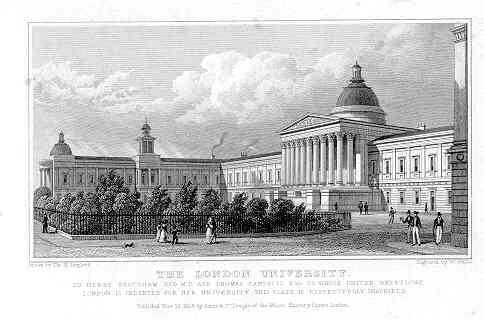



Structure and components
The university is often described as a federal university made up of a mixture of full colleges and specialised institutes. In total it comprises several dozen affiliated bodies, including nineteen separate university institutions alongside a number of research institutes. Membership spans smaller specialist schools and large, comprehensive colleges that operate much like independent universities in academic and administrative matters.
- Birkbeck
- Goldsmiths
- King's College London
- London Business School
- Queen Mary
- Royal Holloway
- SOAS (School of Oriental and African Studies)
- LSE (London School of Economics)
- UCL
History and development
The University of London was established by Royal Charter in 1836 as a response to the need for degree-awarding arrangements in a rapidly expanding metropolis. The original federation linked earlier foundations—then London University (which evolved into University College London) and King's College London—into a single corporate university. Over the following decades the federation expanded by admitting new colleges and creating specialist institutes, adapting its governance and role as higher education in Britain evolved.
Role, programmes and numbers
As an administrative and examining university, the University of London sets certain academic standards and conducts degree examinations, while the constituent colleges are chiefly responsible for delivering teaching and supervising research. The university also operates extensive external and international programmes; historically it has offered distance and international degrees that allow students worldwide to study for University of London qualifications. It is one of the largest higher education bodies in the United Kingdom—sources report sizable student populations, including on-campus and international programme enrolments.
Distinctive features and recognition
Graduates of the University of London have traditionally been entitled to include the post-nominal abbreviation Lond. (from the Latin Londiniensis) after their degree letters. The federal arrangement remains a distinguishing characteristic: member colleges enjoy a high degree of independence and often maintain their own identities, traditions and admissions processes while benefiting from shared degree status and a collective reputation. This hybrid model allows for institutional diversity within a single, long-established degree-awarding framework.
Importance and examples
Because of its size, central location and the prominence of many constituent colleges, the University of London plays a major role in the academic, cultural and professional life of the city. Its colleges and institutes are active in a wide range of disciplines—from the humanities and social sciences to business, law, science and medicine—and collaborate on research, postgraduate training and public engagement. Prospective students typically choose an individual college for study while receiving a University of London degree, illustrating how the federation combines local academic environments with a unifying credential.
For further institutional information and official resources, consult the collegiate pages and central offices maintained by the university and its member colleges.
Questions and answers
Q: What is the University of London?
A: The University of London is a federal university made up of 31 affiliates, including 19 separate university institutions and 12 research institutes.
Q: Where is the headquarters of the University of London located?
A: The headquarters, Senate House, is in Malet Street in the Bloomsbury area of Camden, near University College London and the British Museum.
Q: How many students are enrolled at the University of London?
A: There are 135,090 campus-based students and over 45,000 students enrolled in the University of London International Programmes.
Q: Who is responsible for teaching, research or individual student and staff matters at constituent colleges?
A: The constituent colleges are responsible for teaching, research or individual student and staff matters; not the university itself.
Q: When was the university first established?
A: The university was first established by a Royal Charter in 1836.
Q: What post-nominal letters may graduates from this university use after their degree abbreviations?
A: Graduates may use 'Lond.' or 'Londin.' (both from Londiniensis) after their degree abbreviations.
Q: What are some of its biggest colleges?
A: Some of its biggest colleges include Birkbeck, Goldsmiths, King's College London, the London Business School, Queen Mary, Royal Holloway , SOAS , LSE and UCL .
Related articles
Author
AlegsaOnline.com University of London Leandro Alegsa
URL: https://en.alegsaonline.com/art/103270
Sources
- hesa.ac.uk : "Table 0a - All students by institution, mode of study, level of study, gender and domicile 2005/06"
- londonexternal.ac.uk : "About us"
- london.ac.uk : "University of London: Colleges/Institutes"
- london.ac.uk : "University of London: Brief history"