
Univers (typeface family)
Univers is a large sans‑serif typeface family designed by Adrian Frutiger in 1957, notable for its systematic range of weights and widths and its influence on modernist typography and corporate design.
Univers is a widely used sans‑serif typeface family created by Adrian Frutiger and first released in 1957. Frutiger developed Univers as a coherent suite of related designs intended to work together across different sizes, weights and widths. The family was a practical response to the needs of modern typography: a single, neutral face that could serve display, text and signage with consistent proportions and rhythm. Early publicity and specimen sheets presented Univers as a modular, systematic collection rather than a single font.
Image gallery
7 Images


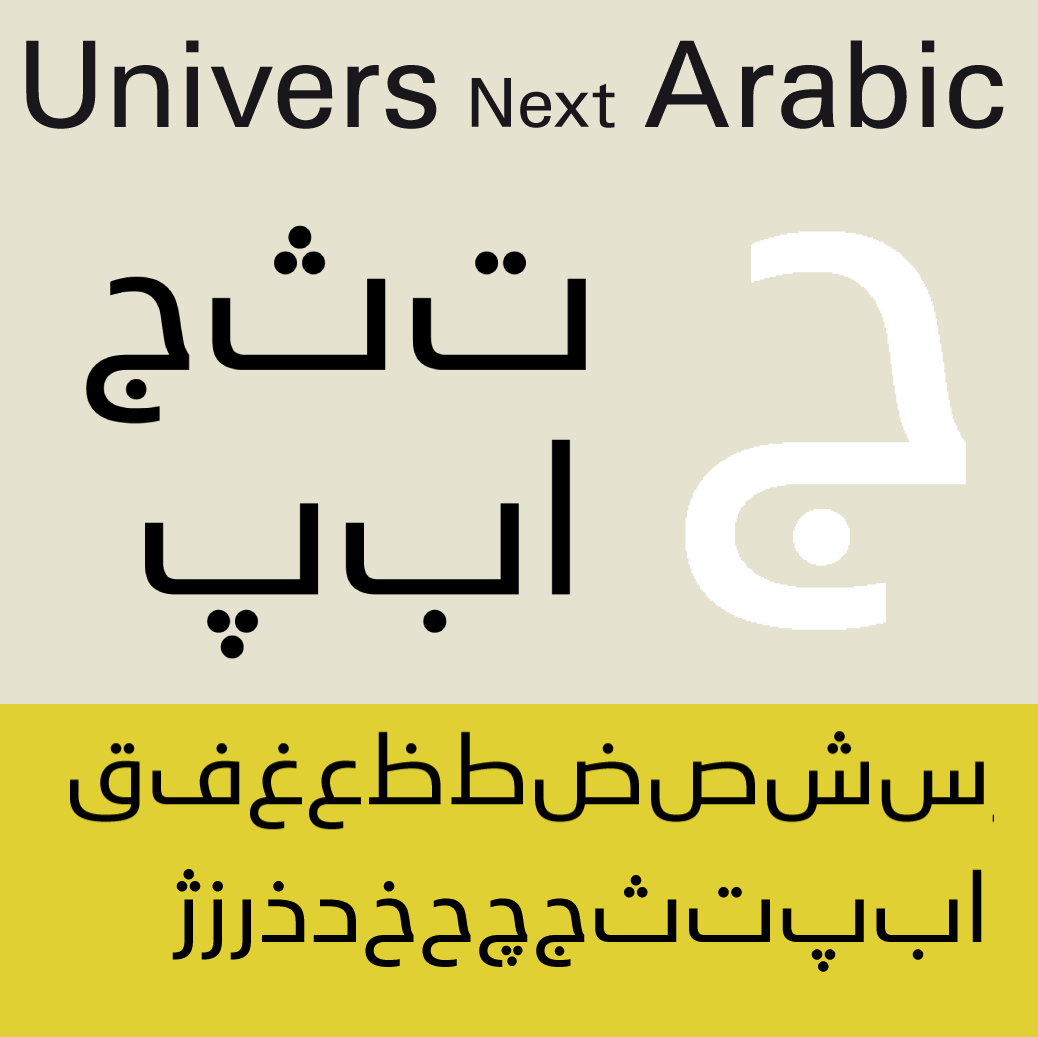


Design and characteristics
Univers belongs to the neo‑grotesque/industrial school of sans‑serif design; it draws on earlier nineteenth‑century grotesques such as Akzidenz-Grotesk while streamlining features for contemporary use. Its letterforms are restrained and functional: terminal strokes are cut straight rather than flaring into traditional serifs, and the overall shapes avoid strong calligraphic contrast. Frutiger offered Univers in an unusually wide array of weights and widths, which he numbered to indicate weight and posture — a system that made selecting complementary styles straightforward in complex layouts.
History and context
Univers emerged in a post‑war environment that favored clarity, objectivity and economy in visual language. It was embraced by proponents of modernism and the Swiss typographic movement, who preferred neutral sans‑serif letterforms over decorative or historic styles such as blackletter or ornate Roman lettering. Frutiger’s approach emphasized a family concept: instead of separate bold or condensed cuts designed independently, Univers provided coordinated variants intended to behave predictably together. The release happened near the end of the metal type era; historian James Mosley later described Univers as one of the last major families produced as metal type before the industry shifted to photo and electronic systems.
Uses and influence
Because of its range and neutrality, Univers has been used extensively in corporate identity, signage, editorial design and transportation graphics. Designers have chosen Univers when they want a consistent, unobtrusive voice across varied materials: maps, manuals, advertisements and wayfinding systems are typical examples. Its family approach influenced later type families and the way type was marketed — encouraging releases that include many coordinated weights and widths rather than individual, unrelated cuts.
- Neutral appearance suitable for body copy and display.
- Wide palette of weights and widths for typographic hierarchy.
- Systematic naming/numbering for ease of specification.
Reception and distinctions
Univers has been praised for its utility and criticized for perceived blandness; some observers find its restraint useful for clear communication, while others say it lacks distinctive character when overused. It sits alongside other influential sans‑serif families and is often contrasted with more humanist or geometric designs. Like many classic types, Univers migrated from metal to photo typesetting and then to digital formats; today it is offered under licence by multiple vendors and remains a standard choice in print and screen typography. Its relationship to national typographic traditions — for example, the earlier prevalence of blackletter in some German publications, or to classical Roman lettering — helps explain both its adoption and its controversies.
For those comparing families, Univers is often mentioned with other twentieth‑century grotesques and neo‑grotesques; discussions typically reference how a neutral design like Univers differs from more characterful or humanist faces (related sans faces) and how its systematic family model anticipated later type releases. The result is a typeface that is at once historically significant and practically oriented toward clear, consistent visual communication.
Questions and answers
Q: What is the name of the typeface family designed by Adrian Frutiger?
A: The typeface family designed by Adrian Frutiger is called Univers.
Q: When was Univers released?
A: Univers was released in 1957.
Q: What style is Univers in?
A: Univers is a sans-serif typeface in a geometrical style.
Q: What range of weights and widths does it come in?
A: Univers comes in a huge range of weights and widths.
Q: How did it influence modernism?
A: It influenced modernism by rejecting tradition in favour of plain function, which most people who promoted Univers and other sans serif fonts mentioned.
Q: What are some criticisms of the font?
A: Some criticisms of the font include its lack of character and monotony when used on a variety of printed forms.
Q: How can one access this font today?
A: This font can be accessed through phototypesetting or computer typesetting, and it is marketed under licence by almost all outlets serving the print industry.
Related articles
Author
AlegsaOnline.com Univers (typeface family) Leandro Alegsa
URL: https://en.alegsaonline.com/art/103155
Sources
- archive.org : Univers specimen book