
United States v. Wong Kim Ark (1898): Birthright Citizenship and the Fourteenth Amendment
Landmark Supreme Court decision holding that almost all children born in the United States acquire citizenship at birth under the Fourteenth Amendment, and its legal and historical implications.
Overview
United States v. Wong Kim Ark is a landmark decision of the U.S. Supreme Court from 1898 that interpreted the Citizenship Clause of the Fourteenth Amendment. The Court held that a person born in the United States to parents of foreign descent generally acquires American citizenship at birth (birthright citizenship), with narrow exceptions established by law. The case is frequently cited in discussions of constitutional citizenship and immigration policy.
Image gallery
6 Images


Background and facts
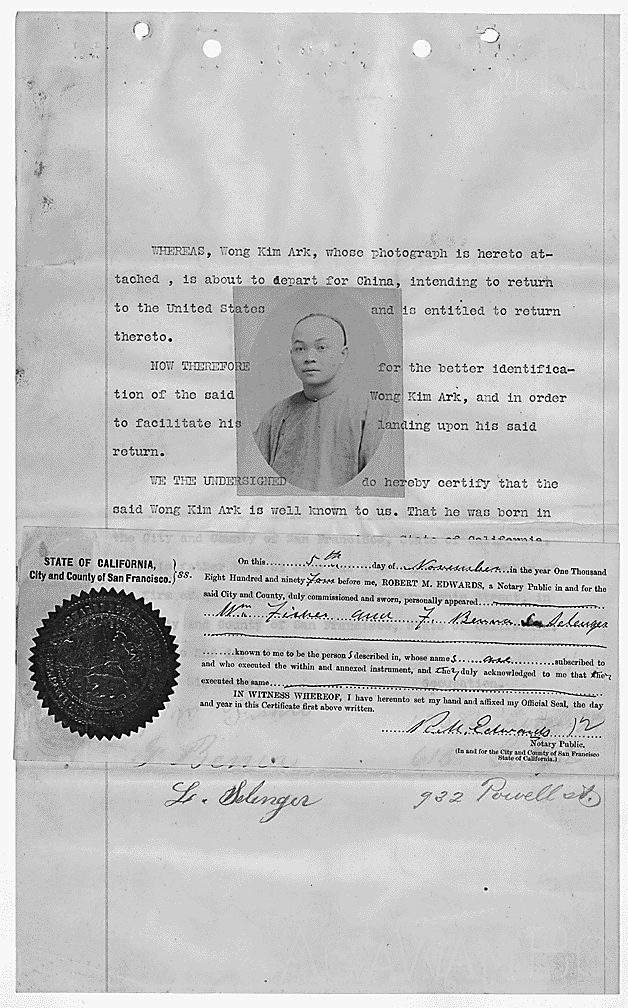
The dispute began when an individual of Chinese parentage, born in the United States, was denied recognition as a citizen on returning from a trip abroad and was prevented from reentering the country. Authorities relied on immigration statutes and the prevailing restrictions on Chinese immigration at the time. The matter eventually reached the Supreme Court, which reviewed whether the Fourteenth Amendment's provision that "all persons born or naturalized in the United States, and subject to the jurisdiction thereof, are citizens" granted automatic citizenship in this situation. Contemporary materials about the case can be found in legal reports and historical summaries such as the official case citation and Court records available through various repositories.
Decision and legal reasoning
The Court, in a majority opinion, concluded that the Citizenship Clause conferred birthright citizenship to nearly all persons born on U.S. soil regardless of parental nationality, except for children of foreign diplomats and enemy occupiers who were not subject to U.S. jurisdiction. The opinion examined English common law principles and the intent and text of the Fourteenth Amendment, finding that the amendment codified a broad rule of territorial birthright (jus soli) rather than a rule limited to the children of citizens. The opinion addressed statutory schemes that restricted immigration but held that those statutes did not negate constitutional birthright status.
Impact and significance
This ruling has had lasting influence on American law and public policy. It affirmed a broad understanding of birthright citizenship that has been relied upon in subsequent court decisions, immigration adjudications, and political debates. The case is often cited when questions arise about the meaning of the Fourteenth Amendment's Citizenship Clause, and it remains a central precedent in discussions about the rights of persons born in the United States to noncitizen parents.
Limitations, distinctions, and later context
The Court's holding is not absolute; recognized exceptions include children of foreign diplomats and certain narrow circumstances tied to occupation by foreign powers. The decision did not nullify immigration laws restricting entry or naturalization of noncitizens, but it prevented those laws from denying citizenship to qualifying U.S.-born persons. Scholars and courts continue to discuss its scope, especially as it relates to modern immigration patterns and statutory definitions of jurisdiction.
Further reading and resources
- Primary opinion and summaries: see the official Supreme Court reports and annotated casebooks.
- Constitutional text and commentary: the Fourteenth Amendment is discussed in many legal references; a general introduction can be found at constitutional overviews.
- Historical context on Chinese exclusion and immigration policy: background material is available in legal histories and archives, for example at historical resources.
- Contemporary analyses and law review articles: see scholarly commentary accessible through academic databases and legal libraries (scholarly articles).
- Practical guides and FAQs on birthright citizenship and immigration law: consult government and legal aid materials (practical resources).
Readers seeking more detail on the case's facts, the Court's full opinion, and subsequent citations should consult primary sources and reputable legal commentaries. The decision remains a touchstone in American constitutional law for how birth, jurisdiction, and citizenship interact.
Questions and answers
Q: What is United States v. Wong Kim Ark?
A: United States v. Wong Kim Ark is a United States Supreme Court case that dealt with citizenship rights of children born to parents of Chinese descent in the United States.
Q: What was the decision made by the Supreme Court in United States v. Wong Kim Ark case?
A: The Supreme Court ruled that a child born in the United States to parents of Chinese descent automatically becomes a U.S. citizen by birth, based on the Citizenship Clause in the Fourteenth Amendment to the United States Constitution.
Q: What is the Citizenship Clause in the Fourteenth Amendment to the United States Constitution?
A: The Citizenship Clause is a part of the Fourteenth Amendment to the United States Constitution that grants citizenship to all persons born or naturalized in the United States, including those born to non-citizen parents.
Q: Did the decision in United States v. Wong Kim Ark case apply only to children of Chinese descent?
A: No, the decision in United States v. Wong Kim Ark case applied to all children born in the United States to non-citizen parents, regardless of their race or ethnicity.
Q: What was the impact of the United States v. Wong Kim Ark case?
A: The United States v. Wong Kim Ark case helped to establish the principle of birthright citizenship and set an important precedent for future cases related to citizenship rights of children born to non-citizen parents in the United States.
Q: Was there any controversy around the decision in United States v. Wong Kim Ark case?
A: Yes, there was some controversy around the decision in United States v. Wong Kim Ark case, with some arguing that it went against the original intent of the Fourteenth Amendment and that birthright citizenship should not apply to children of non-citizen parents.
Q: What were the possible implications of the United States v. Wong Kim Ark case for immigration policies?
A: The United States v. Wong Kim Ark case helped to solidify birthright citizenship as a fundamental aspect of American nationality law and limited the ability of the government to restrict citizenship rights based on a person's ancestry or ethnicity.
Related articles
Author
AlegsaOnline.com United States v. Wong Kim Ark (1898): Birthright Citizenship and the Fourteenth Amendment Leandro Alegsa
URL: https://en.alegsaonline.com/art/103144
Sources
- crfimmigrationed.org : "United States v. Wong Kim Ark (1898)"
- washingtonpost.com : "Donald Trump meet Wong Kim Ark, the Chinese American cook who is the father of 'birthright citizenship'"
- encyclopedia.densho.org : "United States v. Wong Kim Ark"
- lawschoolcasebriefs.net : "United States v. Wong Kim Ark case brief"
- law.cornell.edu : "United States v. Wong Kim Ark"
- oyez.org : "United States v. Wong Kim Ark"
- briefcat.com : "U.S. v. Wong Kim Ark, 169 U.S. 649 (1898)"
- scpr.org : "Who was Wong Kim Ark? How a son of immigrants helped define who is a U.S. citizen"
- theatlantic.com : "The Problem with Challenging Birthright Citizenship"
- politifact.com : "Trump: 'Many' scholars say 'anchor babies' aren't covered by Constitution"