
United Nations Partition Plan for Palestine (1947)
UN proposal of 29 November 1947 to divide the British Mandate of Palestine into separate Jewish and Arab states with an international regime for Jerusalem; accepted by Jewish leaders and rejected by Arab leaders.
Overview
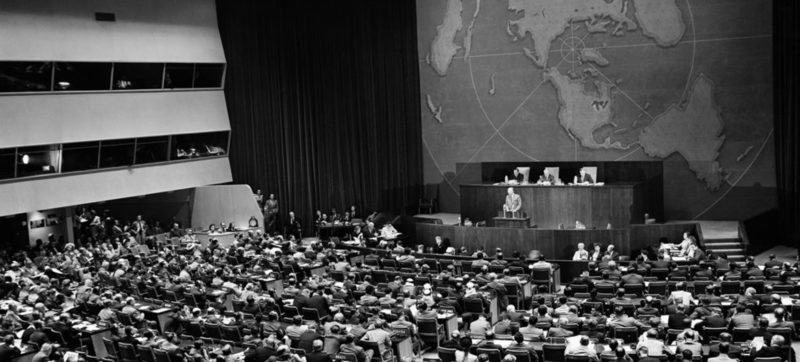
The United Nations Partition Plan for Palestine was a 1947 recommendation to divide the former British Mandate into separate Jewish and Arab states with a special international status for Jerusalem. Adopted by the UN General Assembly on 29 November 1947 as a non‑binding resolution, the plan sought to resolve competing national claims emerging after the end of British rule in Mandatory Palestine. It proposed the creation of two sovereign entities and an internationally administered city to preserve access to holy places.
Image gallery
10 Images




Plan structure and main provisions
The map drawn in the proposal allotted territory in several non‑contiguous sections to each proposed state: three areas were to form the Jewish state and three areas the Arab state, with Jerusalem and its environs designated as a corpus separatum under UN administration. The plan included provisions for population protections, minority rights and an economic union between the two states to manage customs, currency and movement of goods and people. Proponents argued this would provide a practical transition from the mandate to independent governance in both communities.
Political response and immediate aftermath
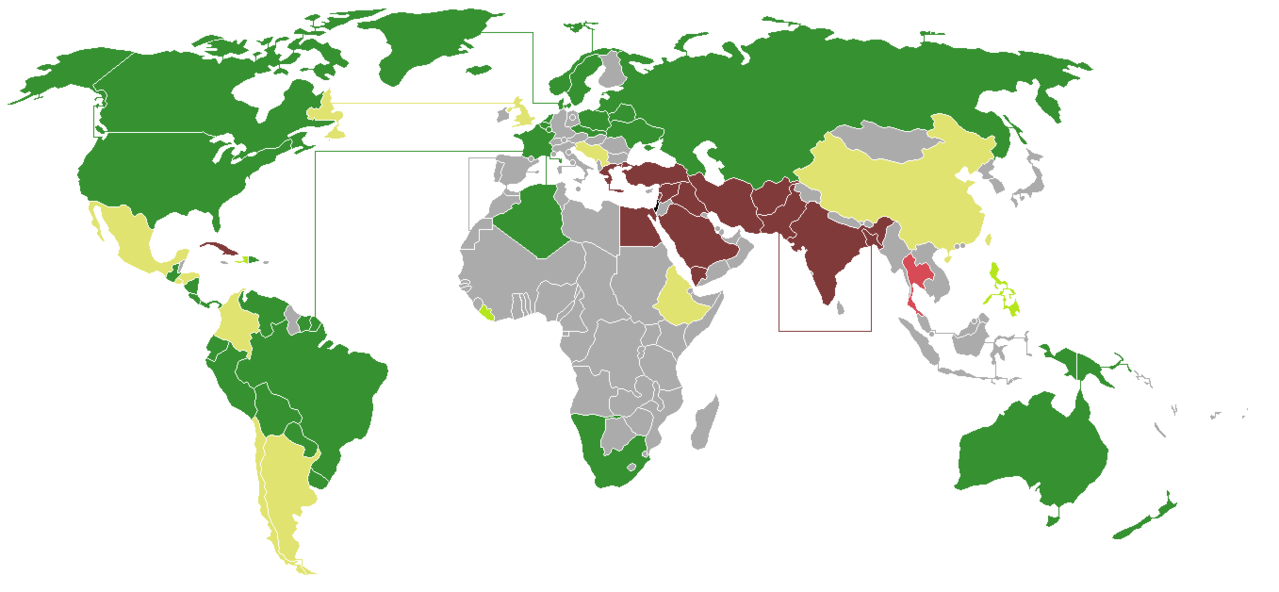
The Jewish Agency accepted the plan as the basis for creating a Jewish state, while Palestinian Arab leaders and surrounding Arab governments rejected it, arguing it infringed on the rights of the Arab majority and partitioned the land unfairly. The UN document is often cited as a turning point: its adoption was followed almost immediately by communal violence, a civil war in late 1947 and early 1948, and then the wider 1948 Arab–Israeli War after the declaration of the State of Israel. The plan itself was never fully implemented on the ground.
Legal status and historical significance
As a UN General Assembly resolution, the partition plan was a recommendation rather than a binding treaty; its legal force was limited and contingent on acceptance by the parties involved. Nevertheless, it has enduring historical importance: it represents the first major international attempt to apply partition as a solution to nationalist conflict, and its boundaries and concepts continue to influence diplomatic discussions, narratives and claims related to the conflict.
Key controversies and distinctions
- The disparity between population distribution and allocated territory was a central grievance among Arab opponents.
- Jerusalem's proposed international status reflected concern over religious access, but it never came into effect as planned.
- Acceptance by one party and rejection by the other transformed a diplomatic proposal into the opening chapter of a prolonged conflict.
Legacy and contemporary relevance
The 1947 partition proposal remains a reference point in discussions about statehood, borders and refugee issues. It is studied as an example of mid‑20th century international peacemaking, and as a catalyst for the region's subsequent history. For background material and primary documents, consult archival collections and historical overviews such as those held in UN records and specialized studies on the end of the British mandate and the emergence of Israel and Palestinian national movements: archives, primary documents, UN resolutions, and scholarly summaries at research libraries or educational portals (academic overview, legal analysis, historical timeline).
Questions and answers
Q: What is the United Nations Partition Plan for Palestine?
A: The United Nations Partition Plan for Palestine is a plan adopted by the United Nations in 1947 to split the former British colony of Mandatory Palestine into two different countries.
Q: How many regions would Mandatory Palestine have been split into under the United Nations Partition Plan for Palestine?
A: Mandatory Palestine would have been split into six different regions under the United Nations Partition Plan for Palestine, with three belonging to the Palestinians and three to the Israelis.
Q: What was the status of Jerusalem under the United Nations Partition Plan for Palestine?
A: Jerusalem would have been an international city shared by both countries under the United Nations Partition Plan for Palestine.
Q: Did the Israelis accept the United Nations Partition Plan for Palestine?
A: Yes, the Israelis accepted the United Nations Partition Plan for Palestine.
Q: Did the Palestinians accept the United Nations Partition Plan for Palestine?
A: No, the Palestinians rejected the United Nations Partition Plan for Palestine.
Q: Was the United Nations Partition Plan for Palestine ever put into place?
A: No, the United Nations Partition Plan for Palestine was never put into place.
Q: What was the consequence of the United Nations Partition Plan for Palestine not being put into place?
A: The consequence of the United Nations Partition Plan for Palestine not being put into place was the 1947-1949 Palestine War.
Related articles
Author
AlegsaOnline.com United Nations Partition Plan for Palestine (1947) Leandro Alegsa
URL: https://en.alegsaonline.com/art/102981