
United Nations Assistance Mission for Rwanda (UNAMIR)
UNAMIR was a UN peacekeeping operation deployed in 1993–1996 to support a peace agreement in Rwanda; it became widely known for its limited ability to prevent the 1994 genocide and for subsequent institutional lessons.
The United Nations Assistance Mission for Rwanda (UNAMIR) was established by the United Nations Security Council in October 1993 in the wake of the Rwandan Civil War. It arrived amid fragile politics and an uneasy ceasefire. Its deployment reflected the UN's attempt to support a fragile transition from conflict toward a negotiated settlement and to create conditions for a political solution.
Image gallery
6 Images


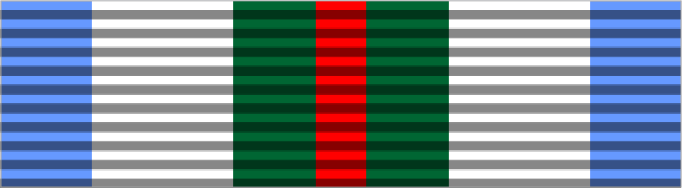

Mandate and composition
UNAMIR's official mandate and goals focused on facilitating the implementation of a negotiated peace, monitoring compliance with the agreement, assisting with the return of displaced people and the security of political actors, and supporting safe conditions for humanitarian assistance. The mission included military observers, a limited contingent of peacekeepers and police advisers drawn from several member states. Its rules of engagement and authorized strength were relatively constrained compared with later "robust" peacekeeping missions.
- Monitor ceasefire and report violations.
- Assist with demobilization and confidence-building measures.
- Protect certain vulnerable sites and help deliver humanitarian aid.
These tasks were intended to underpin a broader political process, including implementation of a peace agreement between the parties, and to provide a neutral presence that could reduce the risk of renewed large-scale violence.
Events during 1994 and operational limits
While the mission was operating in Rwanda, the country descended into mass killings in April 1994 in what became known as the Rwandan genocide. Over roughly one hundred days the violence claimed an immense number of lives and created large refugee movements. UNAMIR's limited mandate, scarcity of resources, and restrictive rules of engagement meant it could not stop the killing, despite warnings from mission leadership and calls for reinforcements.
The mission also faced acute personnel and political constraints: contributing countries reduced or withdrew troops after peacekeepers were attacked; requests to expand the force were delayed or denied at the UN headquarters; and the international community's response was widely judged inadequate. The human consequences included mass displacement and widespread abuses, including targeted and gender-based violence: many became refugees or internally displaced, and tens of thousands suffered sexual violence during the period.
Aftermath, accountability and legacy
UNAMIR formally concluded in 1996, but the mission's experience had a lasting impact on UN peace operations and international policy. In the aftermath, international courts and national tribunals prosecuted many leaders responsible for the atrocities. The United Nations and member states acknowledged failures in early warning, mandate clarity and rapid political decision-making. These lessons contributed to changes in doctrine, clearer rules for civilian protection, and debates about when peacekeepers should be authorized to use force to protect civilians.
UNAMIR remains a frequently cited case in discussions of peacekeeping limitations, the responsibility to protect, and how the international community evaluates and reforms its responses to mass atrocities. Scholarly assessments, survivor accounts and official reviews continue to analyze the mission's decisions, constraints and the broader political context that shaped what UNAMIR could and could not accomplish.
Notable facts: the mission was created in October 1993 and ended in March 1996; its experience highlighted the consequences of limited mandates and slow political reaction, and it helped spur later reforms in UN peace operations and international criminal accountability mechanisms.
For further institutional context and primary documents, see materials from the United Nations Security Council and historical overviews of the Rwandan Civil War and the Rwandan genocide.
Questions and answers
Q: What was the purpose of UNAMIR?
A: The purpose of UNAMIR was to help put a peace agreement into place, monitor how well it was going, and support the new government.
Q: When did UNAMIR start?
A: UNAMIR started in October 1993.
Q: When did the Rwandan genocide start?
A: The Rwandan genocide started on April 7, 1994.
Q: How long did the Rwandan genocide last?
A: The Rwandan genocide lasted 100 days.
Q: How many people were killed during the Rwandan genocide?
A: 800,000 people were killed during the Rwandan genocide.
Q: How many refugees were created as a result of the Rwandan Genocide?
A: As a result of the Rwandan Genocide, 2 million people became refugees in other countries and another two million had to run away to different parts of Rwanda.
Q: How many women were raped during this time period?
A: Up to 250,000 women were raped during this time period.
Related articles
Author
AlegsaOnline.com United Nations Assistance Mission for Rwanda (UNAMIR) Leandro Alegsa
URL: https://en.alegsaonline.com/art/102970
Sources
- un.org : "Rwanda: A Brief History of the Country"
- wcl.american.edu : History of the Tutsis and the Hutus
- uscis.gov : "RIC Query – Rwanda: The Role of the Interahamwe Militia During the 1994 Rwandan Genocide"
- e-ir.info : "Rwandan Genocide: Failure of the International Community?"
- bbc.com : "Rwanda genocide: 100 days of slaughter"
- un.org : "Rwanda – UNAMIR: Mandate"
- un.org : "Protecting civilians from genocide"
- wpunj.edu : "The Rwanda Genocide: The Nightmare that Happened"
- emsisd.com : Other Genocides in the 20th (and 21st) Century.
- webcache.googleusercontent.com : HTML version available here.
- newyorker.com : "After the Genocide"
- theguardian.com : "US Chose to Ignore Rwandan Genocide: Classified papers show Clinton was aware of 'final solution' to eliminate Tutsis"
- un.org : "Rwanda – UNAMIR Background"
- telegraph.co.uk : "France declassifies Rwanda genocide documents"
- romeodallaire.com : "Rwandan Genocide"