
Unicycle: single-wheel cycle — design, history, and uses
A unicycle is a single-wheel pedal vehicle used for performance, sport and transport. This article explains its design, common types, riding techniques, historical origins and practical applications.
Overview
A unicycle is a human-powered vehicle that has exactly one wheel, a frame, a saddle and pedals. Unlike a bicycle, it generally lacks handlebars and a multi-speed transmission; steering and balance are accomplished through rider posture, leg pressure and continuous small adjustments. Because of its singular wheel, mastering a unicycle calls for a different set of balance and coordination skills than other wheeled vehicles.
Image gallery
10 Images




Design and main components
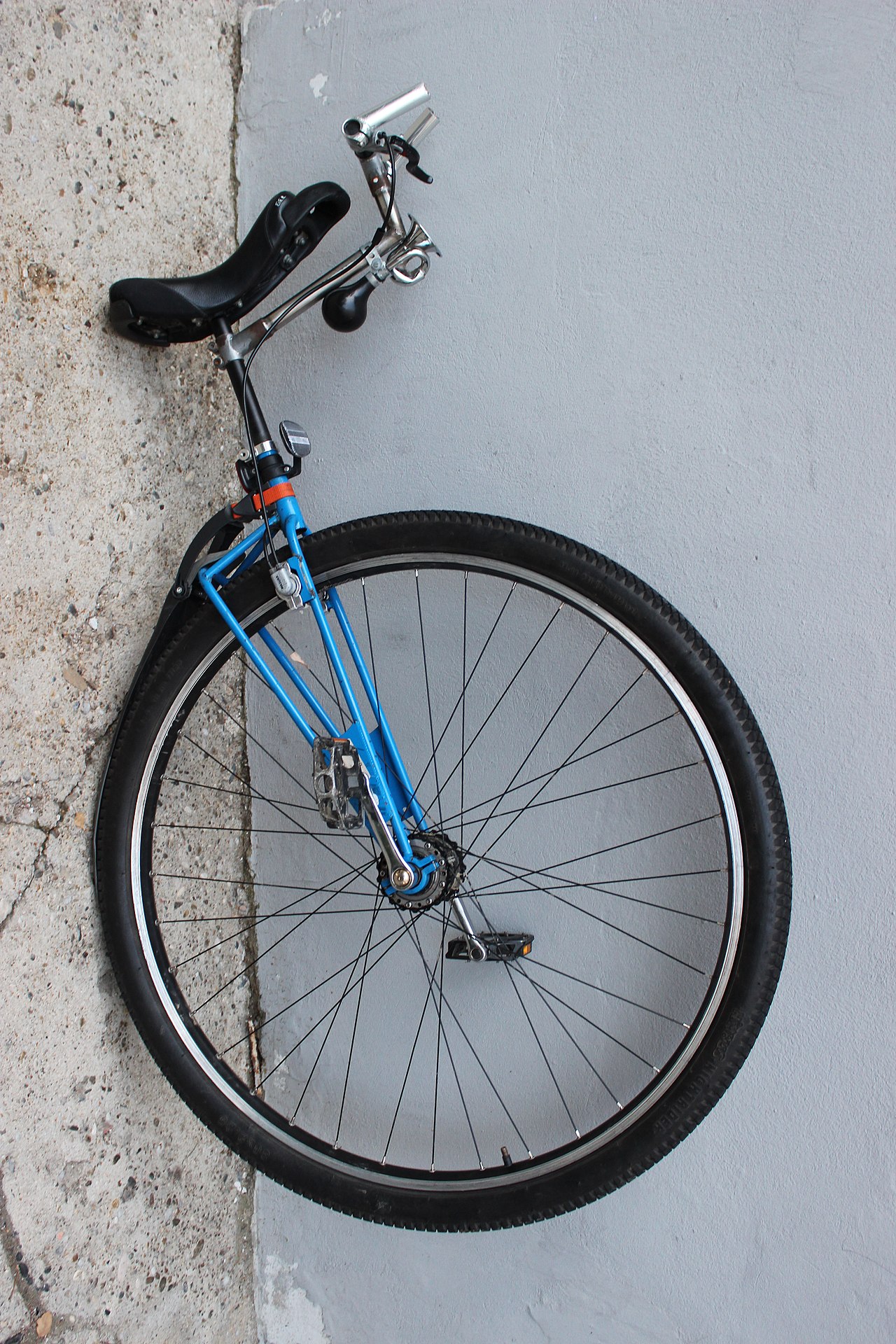
Typical parts of a unicycle include a rim and tyre, hub, cranks and pedals, a fork or frame that holds the axle, a seatpost and a saddle. Many unicycles are direct-drive: the cranks attach directly to the wheel hub so one pedal revolution equals one wheel revolution. Some specialty models use chains or internal gearing to allow taller frame designs or higher speeds, but the simplest machines remain single-speed and mechanically straightforward.
Common types and variations
- Standard (or traditional): a single-wheel, moderate wheel size used for learning and general riding.
- Giraffe: a taller-frame unicycle that drives the wheel with a chain so the saddle sits well above the wheel.
- Mountain unicycle (MUni): built with wider tyres, stronger hubs and sturdier frames for off-road use.
- Trials and street: reinforced to take jumps, drops and urban obstacles.
- Freestyle and long-distance: tuned for tricks, smooth pedaling, or extended travel.
Riding techniques and common tricks
Riders control direction and balance by shifting weight, turning the hips and using the legs against the saddle. Beginners learn forward riding, mounting and dismounting; more advanced skills include idling (rocking the wheel under the rider to hold position), wheel-walking (moving the feet on the tyre instead of pedals), hopping, riding backwards and various jumping or spinning tricks. Performers frequently combine unicycling with juggling, plate spinning or acrobatics, using idling to remain in place while attending to other tasks.
History and cultural role
The unicycle emerged from experiments with high-wheeled bicycles in the late 19th century and became popular as a circus and novelty item early on. Over time it developed into both a performance art tool and a sporting discipline. Today there is an active global community with clubs, competitions and specialized events that celebrate unicycle sport, mountain unicycling and creative street riding.
Uses, importance and notable facts
Beyond performance, unicycles are used for fitness, balance training, recreation and niche commuting. The simplicity of many unicycles—few moving parts and a compact form—makes them mechanically simple but technically demanding to ride. Learning typically requires minutes to days for basic riding and many months for advanced tricks. Specialized competitions and clubs exist, and innovations continue in frame strength, tyre design and gearing options.
Further information
For introductory guidance, technique tutorials or community links see beginner resources. For technical specifications, comparison of models and event calendars, consult specialized listings.
Questions and answers
Q: What is a unicycle?
A: A unicycle is a pedal vehicle with only one wheel, a seat, and pedals, but no chain or gears.
Q: How is a unicycle steered?
A: A unicycle is steered by gripping the seat with the legs and twisting the body.
Q: How does a rider keep their balance on a unicycle?
A: A rider keeps their balance by moving their arms and controlling their speed.
Q: What is the use of a unicycle?
A: A unicycle is usually used for acting and performing.
Q: What are the two kinds of unicycles?
A: The two kinds of unicycles are giraffe unicycles and traditional unicycles.
Q: What is idling in unicycling?
A: Idling in unicycling refers to the performer rocking back and forth on the unicycle to pay attention to what they are doing in their hands, instead of to the ground in front of them.
Q: What are some tricks that can be done on a unicycle?
A: Tricks that can be done on a unicycle include going backwards, riding up and down steps, pedaling with only one foot, hopping in place, wheel-walking, and riding over obstacles.
Related articles
Author
AlegsaOnline.com Unicycle: single-wheel cycle — design, history, and uses Leandro Alegsa
URL: https://en.alegsaonline.com/art/102856
Sources
- juggling.org : "Learning to ride"
- unicycling.org : "Disciplines (styles)"