
Ungdomshuset (Jagtvej 69): history, conflict and cultural legacy
Ungdomshuset (Jagtvej 69) was a self-managed youth house in Copenhagen (1982–2007). This article summarizes its activities, the ownership and legal disputes, the 2007 eviction and demolition, and its ongoing legacy.
Overview
Ungdomshuset — literally "the Youth House" — was the popular name given to the building at Jagtvej 69 in the Nørrebro district of Copenhagen. Officially known as Folkets Hus ("House of the People"), it served from the early 1980s as an autonomous cultural and political center for punk, underground music, autonomous politics and other youth movements. The site became a focal point for local and international squat and countercultural networks and a symbol of broader disputes about urban space, property rights and youth autonomy. For basic location and background, see Jagtvej 69.
Image gallery
10 Images




Function and character
Ungdomshuset hosted concerts, meetings, workshops, social gatherings and political organising. It operated largely outside formal commercial and municipal frameworks, relying on volunteer labour and informal networks. The house was known for DIY punk shows, leftist political assemblies, art and zine production, and as a social meeting point for anarchists and other left-leaning groups. Its informal governance and countercultural identity made it an important node in Copenhagen's underground scene.
Ownership, dispute and legal background
During the late 1990s and 2000s the building's legal status became contentious. After a purchase of the property by an external owner, local authorities and the occupants clashed over control and use of the site. A long-running legal and political conflict between the municipal government, the property's owners and the house's users culminated in court decisions and enforcement actions. The dispute drew national attention and intense local debate about eviction, public space and the rights of autonomous communities; relevant details are discussed in coverage linked at related resources.
Eviction and demolition, March 2007
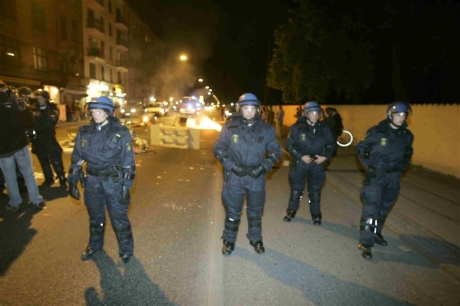
In early 2007 the conflict reached its peak. Authorities began a police operation to clear the building on 1 March 2007. After the eviction, demolition of the structure started on 5 March and was completed within days. The operation involved large numbers of police officers and led to confrontations between law enforcement and supporters and occupants of the house. Contemporary reports and timelines of these events can be found at news and reports.
Aftermath and protests
The demolition did not end activism connected to Ungdomshuset. Former users and supporters organised weekly demonstrations calling for a new autonomous youth house. These protests typically gathered on local public squares and travelled through Copenhagen streets to maintain public pressure for a solution. Organisers shifted starting points occasionally—among them Blågårds Plads and Gammel Torv—as tactics and negotiations evolved.
Related direct actions: the G13 initiative
Following the demolition, initiatives to reclaim alternative spaces continued. One notable event known as G13 involved an attempt to occupy an unused public waterworks building as a replacement venue. The non-violent squat was met by a strong police response that included mass arrests and the use of riot control measures; hundreds of participants were detained in that operation. For accounts of G13 and the police reaction see coverage of G13.
Legacy and significance
Ungdomshuset remains a prominent case study in debates about urban commons, youth culture, and state responses to squatting and autonomous social centres. It influenced policy discussions on policing and housing as well as cultural memory in Copenhagen and beyond. The site and its story continue to be invoked by activists, musicians and scholars interested in how cities negotiate contested cultural spaces and how grassroots communities persist after physical displacement.
- Key themes: self-organisation, counterculture, eviction law and public protest.
- Notable dates: active as a youth house from 1982 until eviction in March 2007; demolition began 5 March 2007.
- After-effects: weekly demonstrations, attempts to establish alternative venues, and sustained public debate about the rights of autonomous spaces.
The Ungdomshuset episode is often cited in wider European discussions about squats and autonomous social centres; it illustrates enduring tensions between municipal governance, private property and collective cultural practices.
Questions and answers
Q: What was Ungdomshuset?
A: Ungdomshuset was the popular name of a building called Folkets Hus, located on Jagtvej 69 in Nørrebro, Copenhagen.
Q: What kind of people frequented Ungdomshuset?
A: Many anarchists, music enthusiasts in the underground scene, and leftist groups used Ungdomshuset as a meeting point.
Q: When was Ungdomshuset demolished, and why?
A: The police started clearing the building on Thursday, March 1, 2007, and demolition began on March 5, 2007. This was the result of a long conflict between the municipal government of Copenhagen and the people living in the Ungdomshuset.
Q: What has happened since the eviction of Ungdomshuset in 2007?
A: Former users and supporters of Ungdomshuset have been holding weekly demonstrations for a new Ungdomshuset since the eviction in March 2007.
Q: Where do the demonstrators for a new Ungdomshuset start their weekly demonstrations?
A: The demonstrators start from nearby square 'Blågårds Plads' every Thursday at 5 p.m. and go to various places in Copenhagen.
Q: What was the G13 initiative, and why did it meet opposition from the police?
A: The G13 initiative wanted to squat an old public waterwork on Grøndalsvænge Allé 13 in northwestern Copenhagen to be used as a new Ungdomshuset. The police arrested 436 people and threw large amounts of tear gas in response, despite the squat being non-violent.
Q: What was the recent change in the starting point of the demonstrations for a new Ungdomshuset?
A: The starting point of the demonstrations for a new Ungdomshuset has recently been changed to Gammel Torv in response to the demonstrators saying they are getting closer to the politicians concerning a solution for a new Ungdomshus at an old school.
Related articles
Author
AlegsaOnline.com Ungdomshuset (Jagtvej 69): history, conflict and cultural legacy Leandro Alegsa
URL: https://en.alegsaonline.com/art/102847
Sources
- dr.dk : Politiet brugte livsfarlig tåregas