
Umayyad Mosque (Grand Mosque of Damascus)
Early 8th‑century congregational mosque in Damascus noted for its monumental mosaics, historic shrine of John the Baptist, influential Umayyad architecture and long continuity of sacred use.
Overview
The Umayyad Mosque, commonly called the Grand Mosque of Damascus, is an early and influential congregational mosque located in the Old City of Damascus. Its Arabic name is جامع بني أمية الكبير. Historically one of the largest and most important Muslim houses of worship, it occupies a central place in the urban and religious life of Damascus and forms a key element of the city's UNESCO‑listed heritage (one of the oldest and largest mosques) and (the old city of Damascus).
Image gallery
10 Images




Architecture and principal elements
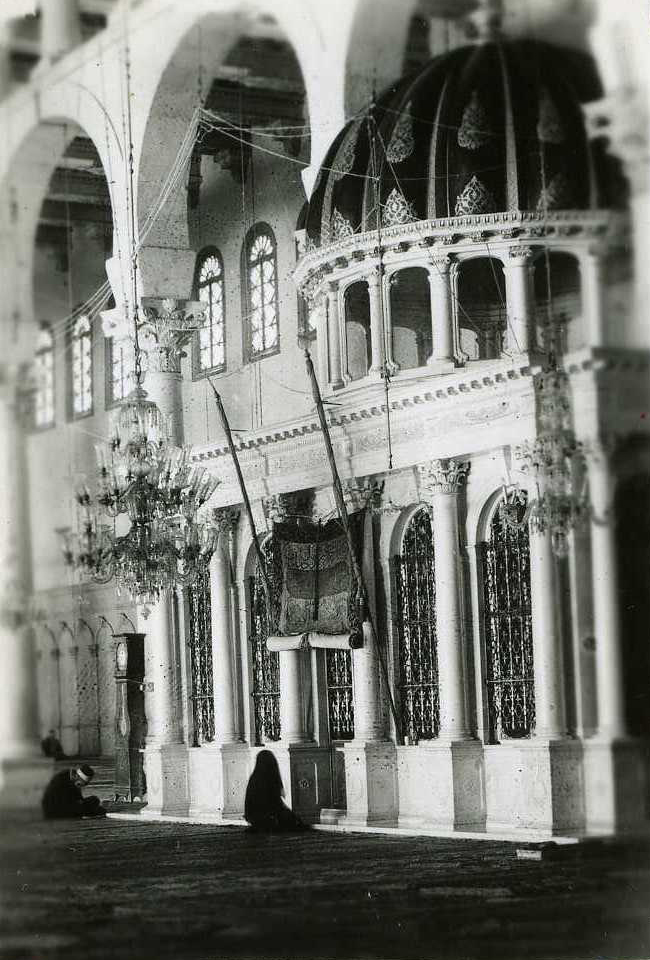
The complex combines an expansive courtyard (sahn) and a covered prayer hall arranged with aisles and arcades. Its plan and ornamental program reflect early Umayyad ambitions to create a monumental, public Islamic architecture (architecture). Notable components include:
- Mosaics: extensive stone and glass mosaics decorating the qibla façade and porticoes with stylized landscapes and urban vistas rather than figural imagery.
- Mihrab and minbar: the niche indicating prayer direction and the pulpit used for Friday sermons.
- Minarets: three principal towers that mark the mosque on the city skyline and were rebuilt or restored in different periods.
- Shrine and tombs: a chapel that preserves a relic associated with John the Baptist and an adjacent garden area that contains the tomb of Saladin.
History and development
The present mosque was commissioned by the Umayyad caliph al‑Walid ibn Abd al‑Malik and largely completed in the early 8th century. It was constructed on a site long used for sacred buildings: earlier Roman and Byzantine structures, including a Christian basilica dedicated to St. John the Baptist, occupied the parcel before the mosque. Over the centuries the complex suffered damage from earthquakes, fires and periodic repairs; successive dynasties — Abbasid, Ayyubid, Mamluk and Ottoman authorities — carried out restoration and alteration work that shaped the mosque seen today.
Religious and cultural significance
Within the mosque is a small, venerated shrine said to contain the head of John the Baptist (Yahya), a figure respected in both Islam and Christianity (shrine). John the Baptist is recognized as a prophet in Islamic tradition (Yahya) and (prophet) traditions, and the relic has long attracted pilgrims and visitors of different faiths. The mosque has also played a civic role as the venue for major congregational prayers and community events through much of Damascus’s history.
Notable facts and modern visitors
The mausoleum of the medieval leader Saladin stands in a small garden adjacent to the mosque complex (tomb of Saladin). In modern times the mosque drew international attention when Pope John Paul II visited in 2001, marking a historic encounter between a pope and a major mosque (Pope John Paul II visit). The site continues to be studied for its early Islamic mosaics and its role as a model for later mosque architecture.
Conservation and public access
Because the Umayyad Mosque is both an active place of worship and a cultural monument, conservation efforts balance religious use with preservation of decoration and structure. Visitors are encouraged to respect prayer times and local customs; guided study and scholarly work continue to clarify the building's phases and artistic program. The mosque remains a central landmark for understanding the early Umayyad period and the layered religious history of Damascus.
Questions and answers
Q: What is the Grand Mosque of Damascus?
A: The Grand Mosque of Damascus, also known as the Umayyad Mosque, is one of the largest and oldest mosques in the world. It is located in one of the holiest sites in the old city of Damascus.
Q: Why is the Grand Mosque of Damascus important?
A: The Grand Mosque of Damascus is important because of its architecture and historical significance.
Q: What does the mosque hold?
A: The mosque holds a shrine which is said to contain the head of John the Baptist (Yahya), honored as a prophet by Muslims and Christians alike.
Q: How was the head of John the Baptist found?
A: The head of John the Baptist was supposedly found during the excavations for the building of the mosque.
Q: Whose tomb stands near the mosque?
A: The tomb of Saladin stands in a small garden adjoining the north wall of the mosque.
Q: Who visited the mosque in 2001?
A: Pope John Paul II visited the mosque in 2001, primarily to visit the relics of John the Baptist.
Q: What was significant about Pope John Paul II's visit to the mosque?
A: It was the first time a pope paid a visit to a mosque.
Related articles
Author
AlegsaOnline.com Umayyad Mosque (Grand Mosque of Damascus) Leandro Alegsa
URL: https://en.alegsaonline.com/art/102729