
Ultra High Frequency (UHF): properties, history, and common uses
Ultra High Frequency (UHF) is the 300 MHz–3 GHz portion of the radio spectrum used for TV, mobile, Wi‑Fi, RFID and more; it has characteristic propagation, antenna requirements, and regulatory bands.
Overview
Ultra High Frequency (UHF) refers to radio waves with frequencies from 300 megahertz (MHz) up to 3 gigahertz (GHz). That frequency range corresponds to wavelengths roughly between 1 metre and 10 centimetres. UHF is a sub‑band of the radio spectrum commonly used for terrestrial broadcasting, wireless networks and short‑range communications. Like other radio bands, UHF waves are a form of non‑ionizing electromagnetic radiation.
Image gallery
3 Images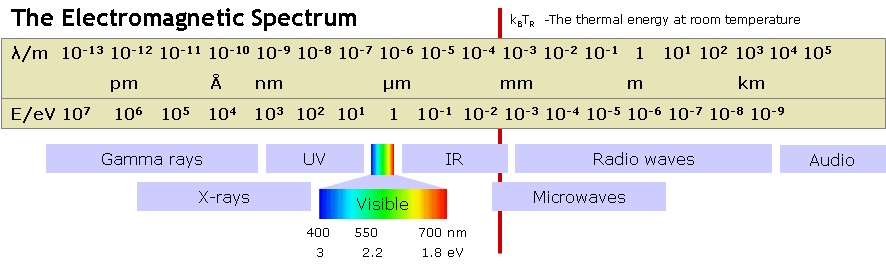

Propagation and characteristics
UHF signals are largely line‑of‑sight: they travel in straight paths and do not diffract around obstacles as readily as lower frequencies. Their shorter wavelengths allow for smaller, more directional antennas and higher antenna gain for a given physical size. UHF tends to reflect and scatter from buildings and terrain, giving rise to multipath effects that influence reception; this is why antenna placement and receiver sensitivity are important for reliable links.
Common components and equipment
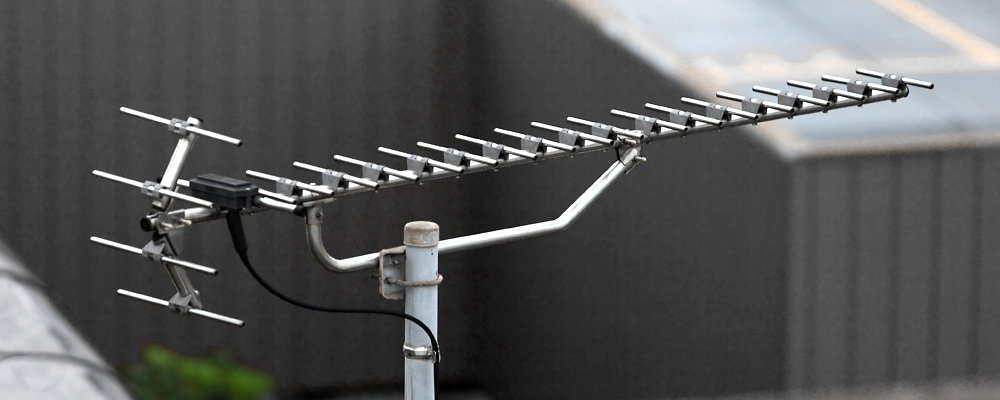
Equipment designed for UHF use takes advantage of the wavelength scale. Typical antenna types include small monopoles, Yagi arrays and patch antennas for fixed installations or handheld devices. Tuners, filters and low‑noise amplifiers are tailored to the UHF band to manage bandwidth, reject interference and improve sensitivity. For more technical references see spectrum overview and information on antenna design.
History and regulation
The allocation and deployment of UHF services expanded in the 20th century as television, mobile telephony and other services grew. National and international bodies such as the ITU coordinate frequency assignments and standards so different users do not interfere. In many countries portions of the UHF range have been reallocated over time—for example from analogue TV to mobile broadband and wireless data services.
Major uses and examples
- Television broadcasting: many digital terrestrial TV services operate in UHF bands.
- Mobile communications: several cellular technologies and Wi‑Fi at 2.4 GHz use UHF frequencies.
- Wireless peripherals and short‑range links: Bluetooth and other personal area networks.
- RFID and industrial systems: UHF RFID (around several hundred MHz) for tagging and inventory.
- Specialized services: public safety, some radar and satellite links also occupy UHF allocations.
Examples and regulatory details can be explored in resources on frequency bands and practical guides to television and broadcast standards.
Notable distinctions and safety
Compared with lower VHF bands, UHF requires more careful alignment and fewer natural propagation advantages, but it allows more compact equipment and higher data rates within its bandwidth. As non‑ionizing radiation, UHF does not carry enough photon energy to ionize atoms; exposure guidelines and limits are set by health authorities and standards organizations to manage thermal and other effects.
Questions and answers
Q: What is Ultra High Frequency (UHF)?
A: Ultra High Frequency (UHF) is a type of electromagnetic radiation with a frequency between 300 MHz and 3 GHz.
Q: What are the characteristics of UHF?
A: UHF has strong directivity due to its short wavelength and has a small area.
Q: What is UHF commonly used for?
A: UHF is commonly used for television signals.
Q: Why is UHF strong enough to be protected from other signals?
A: UHF is strong enough to be protected from other signals because of its frequency.
Q: What can cause receiving error when using UHF?
A: Receiving error can occur when using UHF when an obstacle is blocking the signal due to its strong directivity.
Q: What does UHF require to minimize receiving error?
A: UHF requires sensitive sensors to minimize receiving error caused by obstacles.
Q: What is the frequency range of UHF?
A: The frequency range of UHF is between 300 MHz and 3 GHz (3,000 MHz).
Related articles
Author
AlegsaOnline.com Ultra High Frequency (UHF): properties, history, and common uses Leandro Alegsa
URL: https://en.alegsaonline.com/art/102695