
Ultima Online: pioneering persistent MMORPG and its sandbox world
An overview of Ultima Online, the 1997 fantasy MMORPG that popularized persistent online worlds, player-driven economies, and shard servers; development, gameplay systems, and legacy.
Ultima Online is a landmark fantasy Massively Multiplayer Online Role-Playing Game (MMORPG) first released in 1997 by Origin Systems. It created one of the earliest large-scale persistent virtual worlds where thousands of players could live, fight, trade, and build simultaneously. The game introduced many conventions that later became common in the genre, from open economies to long-running server communities called "shards." For official information and historical context see official resources.
Image gallery
3 Images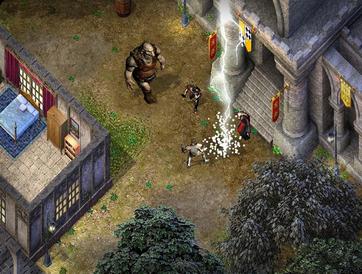
Core features and gameplay
The game emphasizes sandbox play rather than a strictly linear narrative. Players create characters and develop skills by performing in-world actions instead of following rigid class templates. Notable systems include:
- Skill-based progression: Abilities improve through use, allowing flexible character development.
- Player housing and crafting: Construction, blacksmithing, tailoring and other trades power a crafting-heavy economy.
- Open PvP and law systems: Many servers offer player-versus-player combat, with varying rules and moderation.
- Shard architecture: The world is hosted on multiple servers called shards, each maintaining its own community and rules.
History and development
Developed by Origin Systems, Ultima Online grew from the long-running Ultima role-playing series but focused on massively multiplayer interaction. Over time the game received numerous expansions that expanded geography, mechanics, and social systems. Ownership later passed to Electronic Arts, which has continued to operate and update the title while maintaining legacy servers and modernized shard options; further details can be found via publisher links like publisher pages.
Economy, community and influence
One of Ultima Online's defining features is its player-driven economy: goods are produced, bought, and sold between players, and wealth can be stored in houses or banks. Social structures—guilds, role-playing communities, and player-run events—became core to the experience. The game's experimental systems and emergent social problems (crime, griefing, governance) taught designers important lessons about moderation, virtual property, and balancing freedom versus safety.
Its influence persists: many design ideas originating or popularized in Ultima Online—persistent worlds, sandbox mechanics, and player economies—helped shape later MMORPGs. Today it survives as both a historical milestone and a living service that continues to attract niche communities interested in open-ended online play.
Questions and answers
Q: What is Ultima Online?
A: Ultima Online is a fantasy-themed MMORPG that is played all around the world.
Q: What are the servers called in Ultima Online?
A: The servers are called shards.
Q: When was Ultima Online launched?
A: Ultima Online was launched in 1997 by Origin Systems.
Q: Who owns Ultima Online now?
A: Ultima Online is now owned by Electronic Arts.
Q: What is the main goal of the game?
A: Like in other games, the main goal in Ultima Online is to create the best character possible.
Q: How is Ultima Online classified?
A: Ultima Online is classified as a MMORPG (Massively Multiplayer Online Role-Playing Game).
Q: What can players expect to encounter in Ultima Online?
A: Players can expect to encounter a fantasy-themed environment in Ultima Online, as well as other players from all around the world.
Related articles
Author
AlegsaOnline.com Ultima Online: pioneering persistent MMORPG and its sandbox world Leandro Alegsa
URL: https://en.alegsaonline.com/art/102688
Sources
- uo.com : uo.com/
- gamesites200.com : gamesites200.com/ultimaonline/
- runuo.com : runuo.com/
- uo2.stratics.com : uo2.stratics.com/