
Uyghur Arabic alphabet
The Uyghur Arabic alphabet is an adapted Perso‑Arabic script used to write the Uyghur language. It marks vowels with letters and includes additions to represent Turkic sounds not found in Arabic.
Overview
The Uyghur Arabic alphabet is a modified form of the Arabic script used to write the Uyghur language. It arose as a practical system to record Turkic phonology using a right‑to‑left cursive script derived from the Perso‑Arabic tradition. The script is closely associated with the Uyghur people and modern Uyghur literature, and it remains one of several orthographies used for the language alongside Latin and Cyrillic variants.
Image gallery
4 Images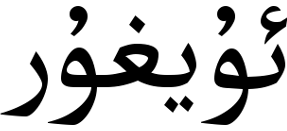


Key characteristics
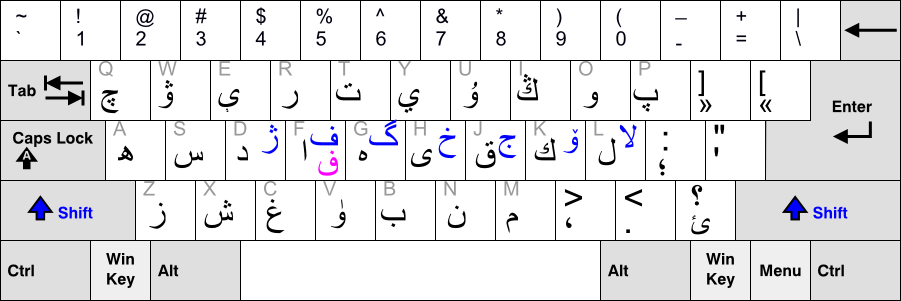
Unlike standard Arabic orthography, the Uyghur Arabic script represents vowel sounds with distinct letters rather than leaving short vowels mainly to diacritics. This feature makes vowel marking obligatory in most contexts, which reduces ambiguity when transcribing Turkic vowel harmony and syllable structure. The script is cursive: many letters change shape depending on their position within a word, and additional characters or modified forms are used to represent consonants and vowels not present in Arabic.
- Direction: written right to left.
- Vowel representation: explicit letters for vowels rather than optional diacritics; this supports clear pronunciation.
- Adaptations: extra letters, diacritic conventions and orthographic rules to render Turkic phonemes.
History and development
Uyghur has been written in a variety of scripts over many centuries, including Old Turkic runic forms and later alphabetic systems. Following the region's adoption of Islam and increased contact with Persian and Arabic culture, Arabic‑based writing systems became prominent. Over time, the Arabic script was adapted to fit Uyghur phonology. In the 20th century, various reforms and standardization efforts produced modern orthographic norms for education, publishing and administration. Alternative scripts — Latin and Cyrillic — have also been used in different periods and regions, so script practice varies by community and political context. For further context see Uyghur language and the Arabic alphabet.
Uses and examples
The Uyghur Arabic alphabet is widely used in books, newspapers, religious texts and everyday writing among Uyghur communities, especially in areas where it is the taught and official script. Its fully vowelled approach makes it suitable for orthographies that aim to represent spoken forms faithfully, including dictionaries and primers. When converting texts between scripts, transliteration must account for vowel letters and localized spelling rules.
Variants, standards and notable facts
Different publishing houses and regions may apply slightly different conventions for spelling and punctuation, but contemporary education systems have established standardized rules to promote literacy. Unicode includes the necessary characters and presentation forms so the script can be used in digital text. Linguistically notable is the contrast with Arabic: where Arabic writing often omits short vowels, Uyghur Arabic orthography requires explicit vowel notation, a design choice that reflects the language's phonological needs. For orthographic resources and encoding guidance see resources and technical notes at encoding guides.
Questions and answers
Q: What is the Uighur alphabet?
A: The Uighur alphabet is the writing system developed by the Uighurs to read and write their language.
Q: What is the basis of the Uighur alphabet?
A: The Uighur alphabet is based on the Arabic alphabet.
Q: What distinguishes the Uighur alphabet from the Arabic alphabet?
A: Unlike the Arabic alphabet, the Uighur alphabet has specific letters to represent vowel sounds instead of diacritic marks.
Q: Is writing vowels in Uighur optional?
A: No, writing vowels is required in Uighur.
Q: What is the reason for having specific letters for vowel sounds in the Uighur alphabet?
A: To make the representation of vowel sounds more clear and to prevent ambiguity.
Q: Did the Uighurs create the Uighur alphabet for their own language?
A: Yes, the Uighur alphabet was created by the Uighurs specifically for writing their language.
Q: Can the Uighur alphabet be used to write other languages?
A: The Uighur alphabet was designed for writing the Uighur language but may be adapted or modified for use in writing other languages.
Related articles
Author
AlegsaOnline.com Uyghur Arabic alphabet Leandro Alegsa
URL: https://en.alegsaonline.com/art/102607