
Twilight (novel series)
A young-adult vampire romance series by Stephenie Meyer that sparked wide popularity, major film adaptations, and debate over its themes and portrayal of relationships.
Overview
Twilight is a young-adult series by Stephenie Meyer that blends fantasy and romance. It follows Bella Swan, a teenage girl who moves to the small town of Forks and becomes involved with the enigmatic vampire Edward Cullen and, later, with Jacob Black, a friend who is part of a werewolf community. The story is told largely from Bella's first-person perspective and centers on themes of love, identity, danger and choice.
Image gallery
5 Images
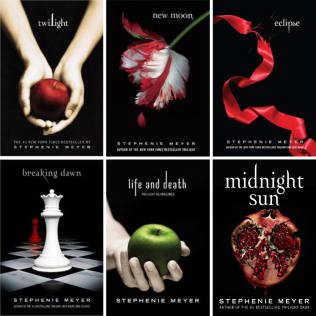


Books in the series
The principal novels form a four-book sequence that traces Bella's relationships and the consequences of a human-vampire bond. The core titles are:
- Twilight
- New Moon
- Eclipse
- Breaking Dawn
Themes and style
The series is notable for its contemporary take on vampire mythology, converting traditional supernatural elements into a modern, young-adult context. Meyer emphasizes emotional intensity and the experience of adolescence: longing, first love, and the tensions of entering adulthood. The prose is intimate and plot-driven, focused on relationships rather than extensive world-building.
Film adaptations
The novels were adapted into a commercially successful movie series; the first film adaptation, often credited with widening the franchise's audience, led to sequels that followed the chronology of the books. The final novel was adapted into two films to cover its extended narrative. The screen adaptations increased the series' visibility and brought the characters to a global audience.
Reception and legacy
Twilight achieved significant popular success, attracting a large, devoted fan base and influencing a wave of vampire-themed young-adult fiction and media. It also provoked critical discussion: supporters praise its emotional appeal and accessibility, while critics raise questions about characterization and the depiction of romantic relationships. The franchise expanded beyond the novels and films into merchandise, fan fiction communities and companion works authored later by Meyer.
Notable facts
- The franchise spans books, film adaptations and companion material that revisit characters or events from different viewpoints.
- The movies helped bring the books to a broader mainstream audience and remain a reference point in discussions of early-21st-century young-adult culture.
- For readers exploring the phenomenon, the novels are often cited as a defining example of romance-driven young-adult fantasy.
Further information about the author, individual volumes and the adaptations can be found through dedicated resources and fan sites; introductory overviews and critical essays provide context for its cultural impact. Learn more about the films.
Questions and answers
Q: What is Twilight?
A: Twilight is a series of fantasy/romance books written by Stephenie Meyer.
Q: When was the movie adaptation of Twilight released?
A: The movie adaptation of Twilight was released in 2008.
Q: What is the name of the second book in the Twilight series?
A: The name of the second book in the Twilight series is New Moon.
Q: When was the first part of Breaking Dawn released?
A: The first part of Breaking Dawn was released in 2011.
Q: Who wrote the Twilight series?
A: The Twilight series was written by Stephenie Meyer.
Q: When was the movie adaptation of Eclipse released?
A: The movie adaptation of Eclipse was released in 2010.
Q: Was Breaking Dawn adapted into two parts?
A: Yes, Breaking Dawn was adapted into two parts, with the first part being released in 2011 and the second part in 2012.
Related articles
Author
AlegsaOnline.com Twilight (novel series) Leandro Alegsa
URL: https://en.alegsaonline.com/art/102248