
Twelfth Amendment to the United States Constitution
Amendment that reformed the Electoral College in 1804 by requiring separate ballots for President and Vice President and specifying contingent election rules when no candidate wins a majority.
Overview
The Twelfth Amendment altered the mechanics by which the United States selects its executive leaders. Proposed after an electoral crisis at the end of the 18th century, the amendment requires members of the Electoral College to cast distinct votes for President and Vice President, and it establishes procedures for resolving contests when no candidate receives a majority of electoral votes. The measure was proposed in Congress on December 9, 1803 and later ratified by the states on June 15, 1804; several sources describe the ratification as the work of the state legislatures, see state legislatures for further context.
Image gallery
2 Images
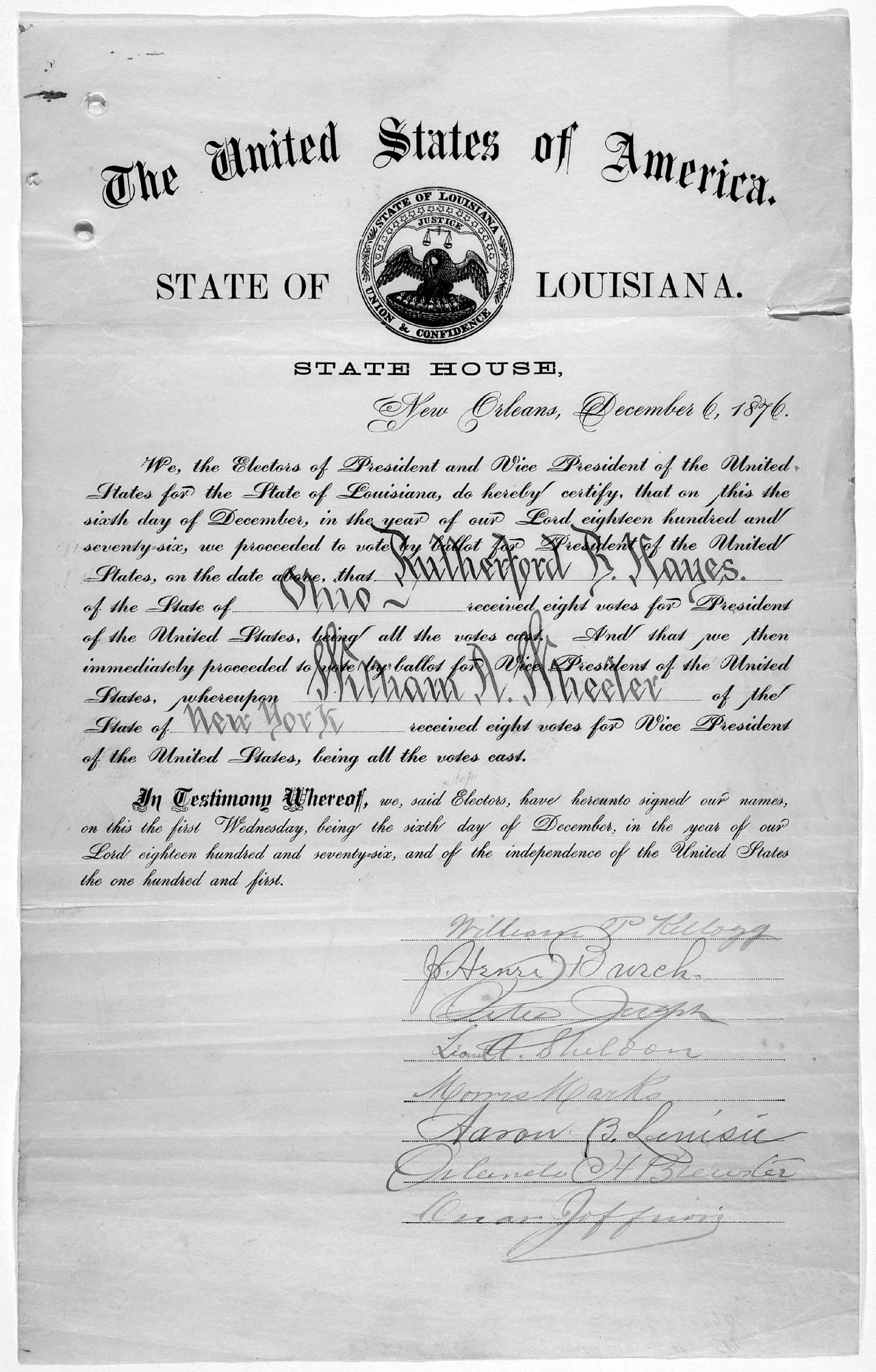
Key provisions
- Electors meet in their respective states and cast one distinct ballot for President and one distinct ballot for Vice President, rather than two undifferentiated votes.
- If no presidential candidate obtains a majority of electoral votes, the House of Representatives chooses the President from the top three electoral vote recipients, with each state delegation casting one vote.
- If no vice-presidential candidate obtains a majority, the Senate selects the Vice President from the top two candidates.
- The amendment preserves existing eligibility requirements and details transmission and counting procedures for electoral votes as part of the overall process of electing national officers.
Historical background
The Twelfth Amendment was driven by practical problems that emerged as political parties developed. Under the original constitutional scheme each elector cast two votes for President; the individual with the most votes (if a majority) became President, and the runner-up became Vice President. This arrangement broke down in the election of 1800, when competing factions produced a tie that threw the decision into the House of Representatives and exposed weaknesses in the earlier method. In response, lawmakers drafted the amendment to supply clearer rules for party-based contests and to reduce the likelihood of ties or cross-party executive pairings. The constitutional reform is often linked in sources to the broader history of early American politics and electoral practice; earlier materials discuss the method of electing executives under the original text and why change was sought.
Consequences and notable applications
By separating the ballots, the amendment facilitated the modern practice of presidential tickets: parties now nominate a joint pair of candidates for President and Vice President and urge electors to support both. The Twelfth Amendment did not eliminate all contestable aspects of the Electoral College—contingent elections still occur when no majority exists, and the role of state delegations in the House can produce outcomes different from the nationwide popular preference. The 1824 election is a frequently cited example of a contingent House decision under the revised rules. Later developments, including statutes that clarify how Congress counts electoral votes, interact with the amendment but do not replace its constitutional framework.
Distinctions and modern relevance
The amendment is distinct from subsequent modifications to presidential succession and timing found elsewhere in the Constitution. It specifically addresses balloting and contingent selection, and it remains the constitutional basis for separate electoral votes for President and Vice President. Contemporary discussions about faithless electors, the Electoral Count Act, and proposals for more substantial reforms often reference the Twelfth Amendment as the baseline rule set for presidential elections. For readers seeking additional primary text or commentary, consult resources that treat the amendment's text, legislative history, and judicial interpretation; many summaries and scholarly treatments point to the original proposal proposed in Congress and the later ratification record as starting points.
For related material and governmental records, see official collections and historical analyses; the amendment is a central milestone in the evolution of the American electoral system and its adaptation to the realities of political parties. Further reading can use institutional collections and legal commentaries identified through archived legislative documentation state legislatures and explanatory sites that discuss how the electorate casts separate votes when electing its chief executives. The technical mechanics of the joint session where electoral votes are opened and counted are also shaped by the Twelfth Amendment and subsequent statutes governing the national counting process, a topic of frequent reference in modern electoral law debates.
See also primary-source texts and annotated histories for the exact amendment language and contemporaneous debate; introductory resources typically link the amendment to the crisis of 1800 and to continuing conversations about the balance between federal procedures and state-run elections.
Questions and answers
Q: When was the Twelfth Amendment proposed in Congress?
A: The Twelfth Amendment was proposed in Congress on December 9, 1803.
Q: When was the Twelfth Amendment ratified by the state legislatures?
A: The Twelfth Amendment was ratified by the state legislatures on June 15, 1804.
Q: What did the Twelfth Amendment provide?
A: The Twelfth Amendment provided new procedures for electing the President and Vice President.
Q: What was the previous method of electing the President and Vice President?
A: Before the Twelfth Amendment, each member of the Electoral College cast a single vote. The candidate who received the largest number of votes became the President. The candidate receiving the next highest number of votes became the Vice President.
Q: What does the current system of electing the President and Vice President involve?
A: The current system of electing the President and Vice President involves one vote being cast for the President and one for the Vice President.
Q: What was the main change brought about by the Twelfth Amendment?
A: The main change brought about by the Twelfth Amendment was the procedure for electing the President and Vice President.
Q: Why was the Twelfth Amendment considered necessary?
A: The Twelfth Amendment was considered necessary to address issues with the previous method of electing the President and Vice President, which sometimes led to disagreements and conflicts.
Related articles
Author
AlegsaOnline.com Twelfth Amendment to the United States Constitution Leandro Alegsa
URL: https://en.alegsaonline.com/art/102218
Sources
- system.uslegal.com : "Amendment XII – Election of President and Vice-President (1804)"
- kids.laws.com : "12th Amendment"
- archives.gov : "Constitution of the United States: Amendments 11–27"
- history.com : "Electoral College"
- millercenter.org : "Thomas Jefferson: Campaigns and Elections"
- constitutioncenter.org : "The Twelfth Amendment"
- u-s-history.com : "Election of 1800"