
Turf Moor — Burnley FC's historic football ground
Turf Moor is the long-standing home stadium of Burnley Football Club in Burnley, Lancashire. In continuous use since 1883, it hosts league matches and serves as a focal point for the club and local community.
Overview
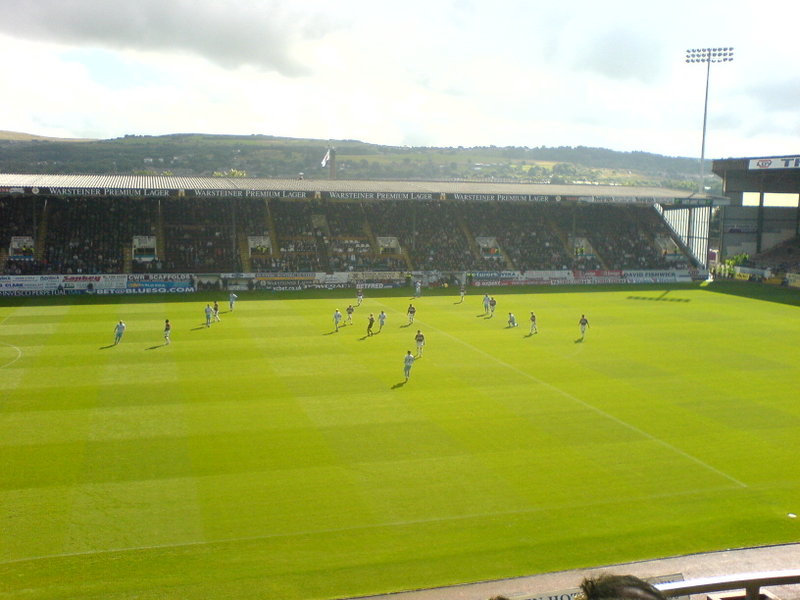
Turf Moor is the principal football ground for Burnley in the north-west of England. Situated close to the town centre of Burnley, in Lancashire, it has been the club’s home since 1883. The stadium’s official spectator capacity is approximately 21,944, and it is the venue for Burnley’s home fixtures in the Premier League and other competitions. The site combines matchday facilities with club offices and community uses.
Image gallery
8 Images


History and development
Burnley Football Club moved from its earlier Calder Vale location to Turf Moor in 1883. Since then the ground has evolved through incremental redevelopment to meet modern safety and comfort standards while retaining much of its traditional character. Major improvements in the late 20th and early 21st centuries modernised spectator seating, circulation and player facilities. The access road leading to the ground was named Harry Potts Way in honour of one of the club’s longest-serving managers.
Layout and characteristics
The stadium is arranged with stands on all sides of the pitch and a natural grass playing surface. Seating and sightlines were updated to create an all-seater environment and to comply with contemporary crowd-safety requirements. Stands and other parts of the complex have been named over time to recognise important players, officials and benefactors connected to Burnley Football Club. The compact footprint keeps spectators close to the action, which contributes to a traditional matchday atmosphere.
Uses and significance
Primarily used for first-team football matches, Turf Moor also hosts reserve and youth fixtures, club events and community programmes. As the longstanding home of Burnley FC, it plays a central role in local identity and sporting culture. The ground is also a frequent stop for visiting supporters and is well integrated with local transport links during matchdays.
Notable facts
- Home to Burnley FC since 1883, making it one of the oldest continuously used professional football grounds in England.
- Official capacity around 21,944 spectators.
- Located on Harry Potts Way, commemorating a prominent figure in the club’s history.
- Serves both competitive matches and community activities, reflecting the club’s regional role.
Turf Moor combines a long history with incremental modernisation. While it has been updated to meet contemporary requirements, it remains a vivid example of a traditional English football ground where the layout and proximity of fans to the pitch preserve a distinct matchday character.
Questions and answers
Q: Where is Turf Moor located?
A: Turf Moor is located in Burnley, Lancashire, England.
Q: Which football club plays at Turf Moor?
A: Burnley Football Club plays at Turf Moor.
Q: When did Burnley Football Club move to Turf Moor?
A: Burnley Football Club moved to Turf Moor in 1883.
Q: What was the name of Burnley Football Club's previous ground before Turf Moor?
A: Burnley Football Club's previous ground before Turf Moor was Calder Vale ground.
Q: Who is Harry Potts and why is a road named after him?
A: Harry Potts was Burnley Football Club's longest serving manager. A road near Turf Moor is named after him.
Q: What is the official capacity of Turf Moor?
A: The official capacity of Turf Moor is 21,944.
Q: Which league does Burnley Football Club play in currently?
A: Burnley Football Club currently plays in the Premier League.
Related articles
Author
AlegsaOnline.com Turf Moor — Burnley FC's historic football ground Leandro Alegsa
URL: https://en.alegsaonline.com/art/102070
Sources
- burnleyfootballclub.com : "Stadium Access Information"
- soccerbase.com : "Turf Moor"