
Tube feet (podia) — locomotion, feeding and respiration in echinoderms
Tube feet (podia) are small, tubular appendages of echinoderms used for locomotion, adhesion, feeding and gas exchange. They operate by a water vascular system and vary among sea stars, urchins and other echinoderms.
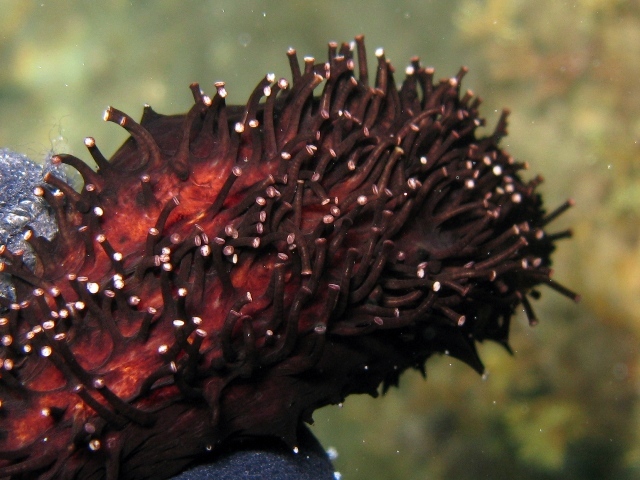
Tube feet, also called podia, are flexible, tubular projections on the underside of many echinoderms (starfish, sea urchins, sea cucumbers and related groups). They are visible as rows of tiny protuberances along ambulacral grooves in animals such as sea stars, and they play multiple roles: locomotion, attachment to surfaces, handling food and assisting in gas exchange. Much of their action depends on the specialised water vascular system that is unique to the phylum and gives podia their hydraulic function (hydraulic pressure).
Image gallery
10 Images


Structure and mechanics
Each tube foot is a soft, extensible organ composed of an external cylinder (the podium) and an internal ampulla. The ampulla is a bulb-like sac that sits inside the body and can contract to force fluid into the podium, extending it. At the tip some tube feet end in a small suction-like disc or adhesive pad and often secrete sticky chemicals to strengthen attachment. Tube feet are connected to radial canals of the water vascular system; coordinated contraction of ampullae and longitudinal muscles allows extension, adhesion and retraction.
Functions and typical behaviors
Podia serve several practical purposes. They allow slow, controlled movement and can hold an animal firmly to substrates, resisting waves and predators. Tube feet are also sensory: tips may detect chemicals, touch and light. Many echinoderms use podia in feeding—most famously, sea stars use their tube feet to grip and pull open the shells of bivalves. Once a small gap appears, the sea star can evert part of its stomach to digest prey externally. Tube feet also contribute to respiration and surface gas exchange by moving water over soft tissues and increasing the area available for diffusion (movement, feeding and gas exchange).
Variation across echinoderms
- Sea stars (Asteroidea): numerous tube feet with suction cups arranged in rows along arms; used for walking, prey capture and righting the body (starfish).
- Sea urchins (Echinoidea): podia protrude through pores in the test and aid in locomotion and sensing the environment.
- Brittle stars (Ophiuroidea): tube feet are present but often lack suckers and play a lesser role in locomotion, which is primarily arm-driven.
- Sea cucumbers (Holothuroidea): tube feet may be modified into tentacles around the mouth or remain as locomotory podia.
Feeding example: opening shells and external digestion
A practical example of tube feet in action is the predation of bivalves by some sea stars. The starfish uses many tube feet to clamp onto each valve and applies a steady, sustained pull that can overcome the tiring muscles of the bivalve. After the shell is eased open, the predator can protrude part of its stomach through the opening to digest the soft tissues in place. This external digestion allows the starfish to consume prey larger than its mouth would otherwise accommodate and to extract the animal's tissues as absorbed nutrients. The process involves physical force from the podia and the animal's muscular and digestive systems and is an efficient combination of mechanical and chemical feeding.
Origins, ecology and notable facts
The water vascular system and podia are ancient features of echinoderms, present in early members of the group, and have contributed to their ecological success in marine habitats worldwide. Tube feet enable secure attachment in turbulent environments and access to a range of food types, from detritus to live prey such as bivalve molluscs. Because the system depends on seawater pressure, changes in salinity or injury to the body can impair its function. Tube feet are also remarkable for their regenerative potential: lost podia can regrow alongside other regenerating body parts in many species. For more introductory and technical descriptions, see resources on echinoderm anatomy and feeding strategies (mollusc interactions) and comparative studies of locomotion in marine invertebrates.
Questions and answers
Q: What are tube feet in echinoderms?
A: Tube feet are small tube-like projections on the underside of echinoderms that form part of their water vascular system.
Q: What are the functions of tube feet?
A: Tube feet are used for movement, feeding, breathing, and attaching to surfaces.
Q: In what way do tube feet operate?
A: Tube feet operate through hydraulic pressure.
Q: How do starfish use tube feet to open bivalve shells?
A: Starfish clamp hold of the bivalve shells on either side with its tube feet, and apply a steady pull, pulling for much longer than any bivalve muscle can withstand, opening the shell in around ten minutes.
Q: How does the starfish consume the mollusc inside the bivalve shell?
A: The starfish slips its stomach inside the shell, dissolves the mollusc where it lives, absorbing the nutrients.
Q: How long does the digestion process take for the starfish?
A: The digestion process takes much longer than opening the shell, perhaps a couple of days.
Q: Can tube feet be found on other marine animals?
A: No information is provided in the text on whether tube feet are found on other marine animals.
Related articles
Author
AlegsaOnline.com Tube feet (podia) — locomotion, feeding and respiration in echinoderms Leandro Alegsa
URL: https://en.alegsaonline.com/art/101925