
Trumpet vine (Campsis) — trumpet-creeper, hummingbird vine
Vigorous woody climbers in the genus Campsis (Bignoniaceae), known for showy trumpet-shaped flowers that attract hummingbirds. Native to eastern North America; ornamental but often aggressive and difficult to contain.
Overview
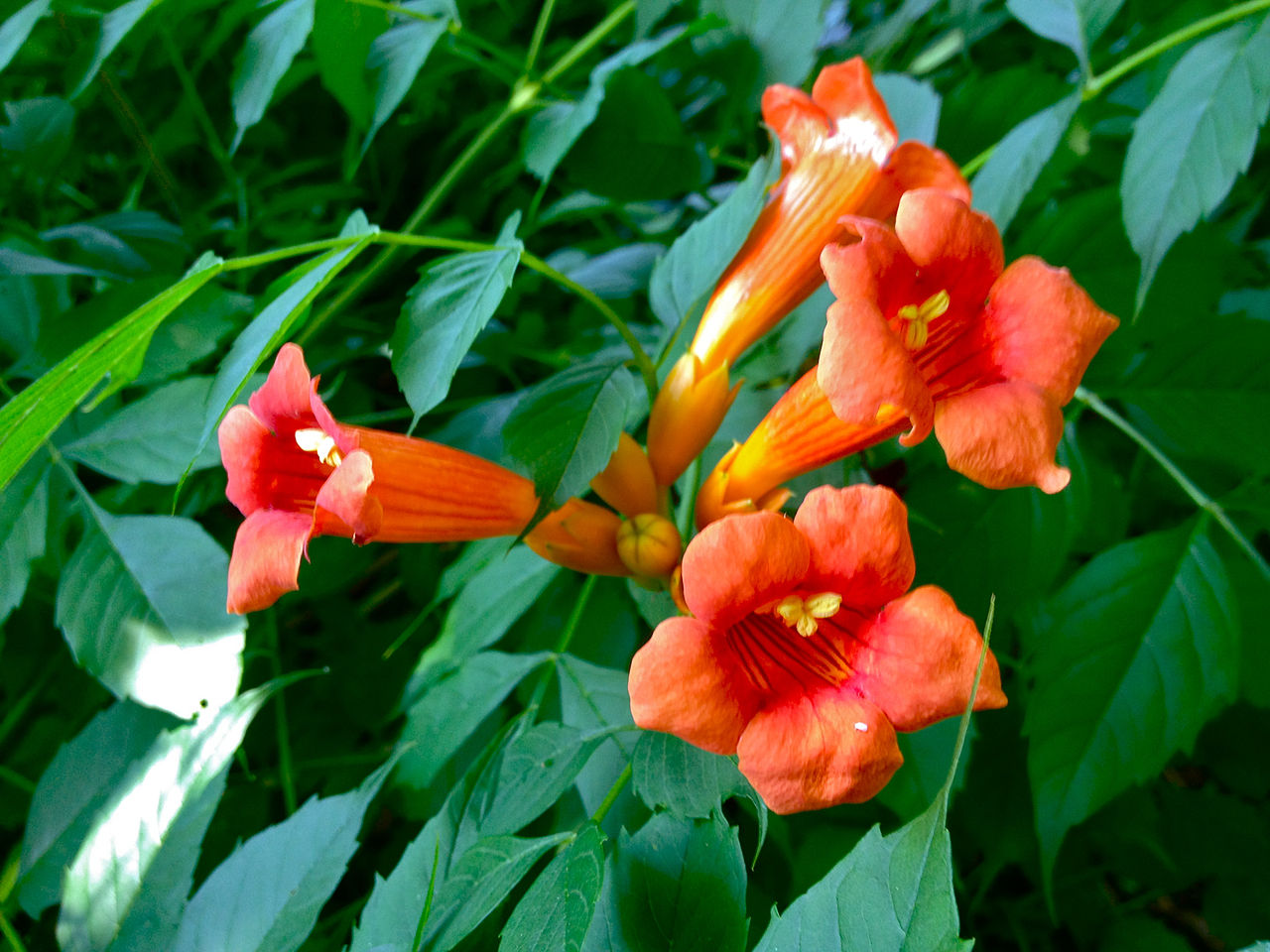
Trumpet vine (genus Campsis) — also called trumpet-creeper or hummingbird vine — comprises vigorous, deciduous woody climbers in the family Bignoniaceae. The best known species, Campsis radicans, is native to eastern North America; Campsis grandiflora is an East Asian species grown in gardens. These vines are valued for their clusters of tubular, trumpet-shaped flowers in shades of orange, red or yellow that appear in summer and early autumn.
Image gallery
6 Images



Description and identification
Plants produce pinnate leaves with several serrated leaflets and develop stout, twining or scrambling stems. C. radicans often produces small aerial rootlets and can adhere to rough surfaces; C. grandiflora typically twines without rootlets. Flowers are borne in terminal clusters and are followed by long, narrow pod-like fruits that split to release flattened, winged seeds. The combination of pinnate leaves, showy funnel-shaped flowers and paired pods helps distinguish trumpet vine from other tubular-flowered climbers.
Cultivation and garden uses
Trumpet vines are adaptable to many soils but flower best in full sun. They are commonly trained on trellises, arbors, pergolas, fences and walls where their floral display is visible. Plants provide abundant nectar for hummingbirds and attract bees and butterflies. Propagation is by seed, softwood cuttings, layering or root division. Young plants establish quickly and may begin flowering within a few years.
Management, pruning and problems
While ornamental, trumpet vine can be aggressive: it spreads by roots, suckers and self-seeding and may form dense thickets. It can damage woodwork or mortar if allowed to run over structures. Control requires regular pruning—often heavy pruning in late winter or early spring to remove old wood and limit size—and removal of root pieces to prevent resprouting. Wear gloves when handling, as the sap may cause mild skin irritation in sensitive individuals. Pests and diseases are generally minor but can include scale insects and occasional fungal leaf spots.
Species notes and ecology
Campsis radicans is hardy and well adapted to a range of temperate sites; C. grandiflora has larger flowers but is less cold-hardy. In some regions trumpet vine has escaped cultivation and is considered invasive or weedy; planting is recommended only where its vigour can be contained. Ecologically, the flowers are an important nectar source for hummingbirds and other pollinators during the summer flowering season.
Author
AlegsaOnline.com Trumpet vine (Campsis) — trumpet-creeper, hummingbird vine Leandro Alegsa
URL: https://en.alegsaonline.com/art/101812