
Tropical Storm Chris (2006)
A short-lived Atlantic tropical storm during late July–early August 2006 that formed from a tropical wave, reached peak winds near 65 mph, skirted the northern Caribbean and dissipated near eastern Cuba with minimal damage.
Overview
Tropical Storm Chris was the fourth named storm of the 2006 Atlantic hurricane season. It developed from a tropical wave and became a distinct tropical cyclone on July 31, 2006 in the tropical Atlantic. The system tracked generally west‑northwest, passing north of several Lesser Antilles islands before weakening and losing its identity in early August. For background on the season and storm classification, see the season summary and the definition of a tropical storm and the 2006 Atlantic hurricane season.
Image gallery
10 Images




Meteorological history and characteristics
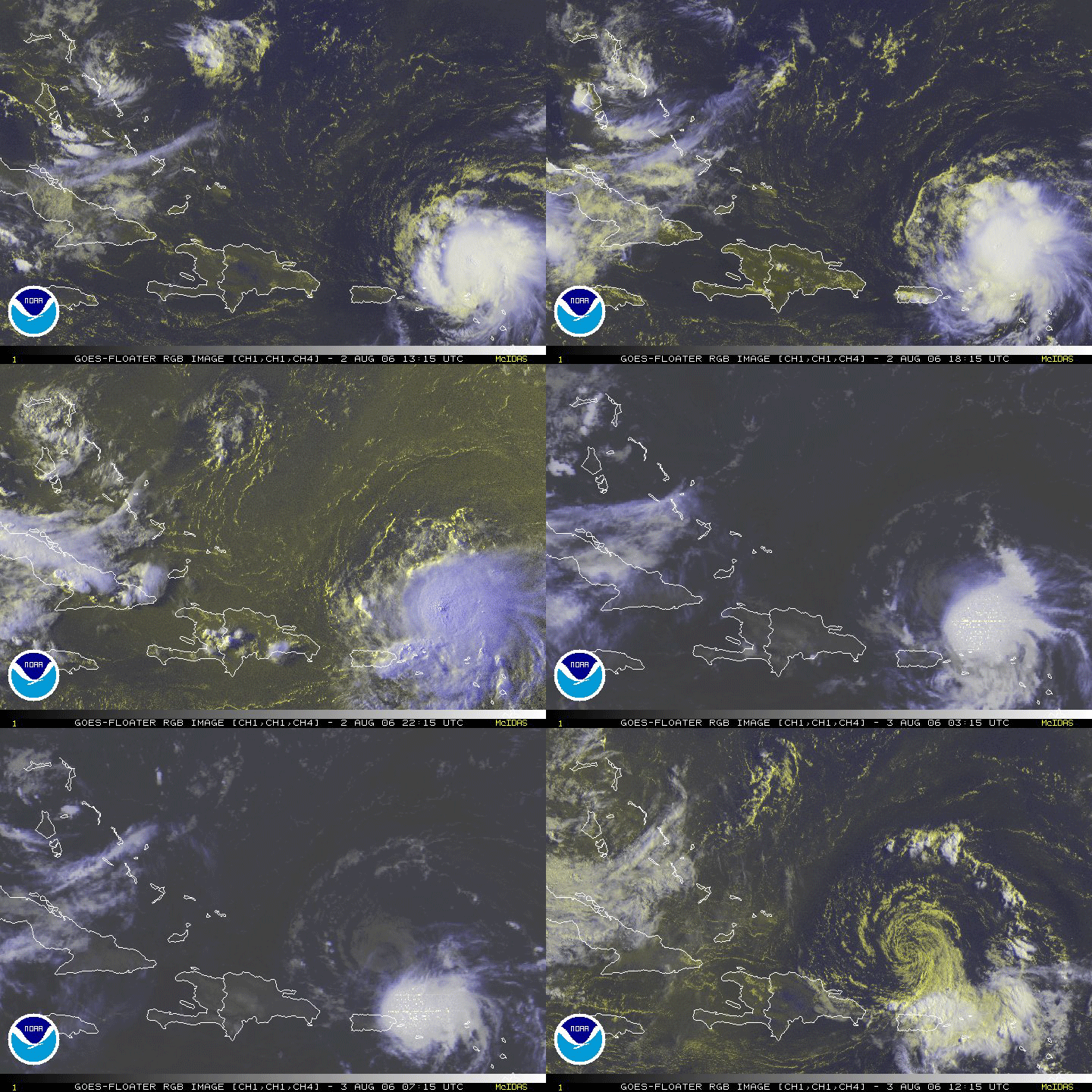
Chris originated from a tropical wave that moved westward across the tropical Atlantic. The nascent circulation consolidated into a tropical cyclone east of the Leeward Islands and was designated a tropical storm on July 31. The storm's motion was influenced by the larger‑scale subtropical ridge to its north, which steered it on a generally west‑northwesterly track across the central Atlantic basin. Satellite and surface observations indicated peak sustained winds reached about 65 mph (100 km/h) on August 2 while the center was located north of the island of St. Martin. After its peak, Chris encountered increasing shear and slightly cooler waters that caused gradual weakening before the system dissipated on August 5 near eastern Cuba. The genesis area and early track over the open Atlantic Ocean were typical for summertime waves coming off Africa and into the Caribbean region.
Impact and affected areas
The storm largely remained over open water or passed near, but not directly over, populated islands. As it moved past the northern fringes of the Lesser Antilles and the northern Caribbean, Chris produced episodes of moderate rainfall and gusty winds in some islands. Localized flooding and temporary coastal swells were reported in places, but there were no confirmed fatalities associated with the storm. The overall human and economic impacts were minimal compared with stronger or longer‑lived hurricanes in the basin. Observers noted that Chris served as a reminder of how rapidly tropical waves can organize into short‑lived tropical storms that still affect maritime activity and produce rainfall on nearby islands.
Timeline (key dates)
- Late July 2006: Tropical wave approaches the eastern Atlantic and begins to organize.
- July 31, 2006: System is classified as Tropical Storm Chris.
- August 2, 2006: Chris reaches peak intensity with winds near 65 mph while north of St. Martin.
- August 5, 2006: The circulation deteriorates and Chris dissipates near eastern Cuba.
Context, distinctions and notable facts
Unlike major hurricanes, Chris was short‑lived and did not attain hurricane strength. Its evolution exemplifies storms that form from tropical waves — disturbances that traverse the Atlantic and often serve as the seed for tropical cyclones. The storm's proximity to the northern edges of the Caribbean and the Leeward Islands produced measurable rainfall across several islands, yet avoided the direct landfalls that typically cause higher damage. Forecasters and mariners monitored Chris for its potential to affect shipping lanes and island weather, and archived synoptic analyses reference the storm's development from a tropical wave and the precipitation reports documented in post‑storm summaries (rainfall observations).
Legacy and records
Tropical Storm Chris is remembered as a relatively minor system within the 2006 season, notable chiefly for its typical tropical‑wave origin and brief lifecycle. It did not produce large loss of life or major structural damage, and therefore is frequently cited in season reviews as an example of a short‑duration Atlantic tropical storm that had modest meteorological effects on the northern Caribbean and adjacent maritime areas.
For further storm-specific data and official advisories, consult archival storm reports and season summaries prepared by meteorological agencies and archives linked in regional hurricane season resources: storm details, season overview, and observational summaries from the Atlantic basin (oceanic context, dissipation area, and rainfall compilations here).
Questions and answers
Q: When did Tropical Storm Chris form?
A: Tropical Storm Chris formed on July 31 in the Atlantic Ocean.
Q: Where did Tropical Storm Chris form from?
A: Chris formed from a tropical wave that was located east of the Leeward Islands.
Q: In which direction did Tropical Storm Chris move?
A: Chris moved generally to the west-northwest.
Q: Which area did Tropical Storm Chris skirt?
A: Chris skirted the northern fringes of the Caribbean islands.
Q: What was the peak intensity of Tropical Storm Chris?
A: The peak intensity of Chris was reached with winds at 65 mph (100 km/h) on August 2, while positioned north of St. Martin.
Q: What was the overall impact of Tropical Storm Chris?
A: The overall impact of Chris was minimal, with moderate amounts of rainfall throughout its path. No deaths were reported.
Q: When did Tropical Storm Chris dissipate?
A: Tropical Storm Chris gradually weakened before finally dissipating on August 5, near eastern Cuba.
Related articles
Author
AlegsaOnline.com Tropical Storm Chris (2006) Leandro Alegsa
URL: https://en.alegsaonline.com/art/101691
Sources
- nhc.noaa.gov : "Tropical Storm Chris Tropical Cyclone Report"
- nhc.noaa.gov : "Tropical Depression One Discussion One"
- nhc.noaa.gov : "Tropical Storm Chris Discussion Two"
- nhc.noaa.gov : "Tropical Storm Chris Discussion Six"
- nhc.noaa.gov : "Tropical Storm Chris Discussion Seven"
- nhc.noaa.gov : "Tropical Storm Chris Discussion Eight"
- nhc.noaa.gov : "Tropical Storm Chris Discussion Nine"
- nhc.noaa.gov : "Tropical Storm Chris Discussion Eleven"
- nhc.noaa.gov : "Tropical Storm Chris Discussion Twelve"
- nhc.noaa.gov : "Tropical Storm Chris Discussion Fourteen"
- nhc.noaa.gov : "Tropical Depression Chris Discussion Sixteen"
- nhc.noaa.gov : "Tropical Depression Three Public Advisory One"
- nhc.noaa.gov : "Tropical Storm Chris Public Advisory Two"
- cnn.com : "Tropical Storm Chris loses steam"
- fema.gov : "National Situation Update"