
Tron (1982 film)
Tron is a 1982 science-fiction film from Walt Disney known for pioneering visual effects and early computer-generated imagery. Starring Jeff Bridges, it became a cult classic and spawned games, media tie-ins and a 2010 sequel.
Tron is a 1982 American science fiction movie released by Walt Disney Pictures. Directed by Steven Lisberger, the film stars Jeff Bridges as the programmer Kevin Flynn, with Bruce Boxleitner as Alan Bradley/Tron and Cindy Morgan as Lora/Yori. David Warner appears in antagonistic roles, including Dillinger and Sark, and provides the voice of the Master Control Program. The production combined live-action performance with stylized representations of programs and a visual language intended to evoke the inner workings of a computer.
Image gallery
2 Images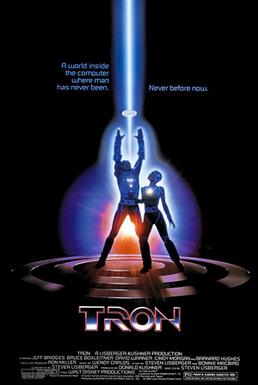

Synopsis
The story follows a human protagonist who becomes trapped inside a computer system and must navigate a world where software and processes are personified. Inside the grid, programs appear as humanoid figures and familiar computing operations become dramatic action sequences, from gladiatorial games to high-speed "light cycle" chases. The dual narrative between the ordinary world of programmers and the interiorized digital realm offered an early cinematic meditation on identity, agency and the relationship between humans and machines.
Visual style and effects
Tron is notable for its hybrid approach to effects. The film used early computer animations alongside backlit animation, photographic processing and optical compositing to create glowing circuitry, suit illumination and abstract architectural spaces. Though the amount of true CGI was limited by contemporary technology, the combination of techniques produced a distinctive aesthetic—neon lines, geometric sets and contrasting light—that influenced later designers and filmmakers and helped establish the look of on-screen virtual environments.
Cast, music and production
Principal performers included Jeff Bridges, Bruce Boxleitner and Cindy Morgan, with supporting roles by David Warner. The score was composed by Wendy Carlos, whose electronic and orchestral textures reinforced the film’s synthetic atmosphere; she is credited as the film’s composer. Popular music contributions included two tracks associated with the band Journey, which helped broaden the soundtrack’s appeal.
Release and reception
Upon its initial release the film met with mixed success commercially and critically. Over time, however, it developed a devoted cult audience and is frequently cited for its early use of computer-generated imagery and its imaginative depiction of a digital world. Critics and historians now often discuss Tron in the context of both effects history and cultural conversations about virtuality.
Legacy and adaptations
Tron’s iconography—most famously the light cycles, the glowing suits and the concept of programs as anthropomorphic figures—has appeared in many derivative works. It inspired numerous video games, comic books and visual homages in film and television. The title received a twentieth anniversary home release and a renewed interest on home formats, notably the 2002 DVD edition that introduced the film to new audiences. In 2010 the franchise returned to theaters with Tron: Legacy, which updated the setting and themes for a modern audience while referencing the original’s aesthetic innovations.
Significance
- One of the first mainstream studio films to integrate early computer graphics with live action.
- Established visual conventions for depicting virtual worlds that persist in later media.
- Maintains cultural relevance through games, re-releases and scholarly interest in representations of technology.
Today, Tron is studied both as a milestone in the development of visual effects and as a cultural artifact reflecting early popular imaginings of networked computing and digital identity. Its technical limitations are now part of its historical interest, while its themes about control, authorship and the boundary between human and machine remain resonant.
Questions and answers
Q: When was Tron released?
A: Tron was released in 1982.
Q: Who are some of the stars of the movie Tron?
A: Jeff Bridges stars as Kevin Flynn (and Clu), Bruce Boxleitner stars as Alan Bradley (and Tron) and Cindy Morgan stars as Lora (and Yori).
Q: Who played the villain in Tron?
A: David Warner played the villain in Tron. He played Dillinger (and Sark, as well as the voice of the "Master Control Program").
Q: Who directed Tron?
A: Steven Lisberger directed Tron.
Q: What is distinctive about Tron's visual style?
A: Tron is one of the first movies to use computer animations extensively, which gives it a distinctive visual style.
Q: Who wrote the music for Tron?
A: Wendy Carlos wrote the music for Tron, and there were also two songs from the band Journey.
Q: When was Tron Legacy released?
A: Tron Legacy was released in 2010. It tells the story of Flynn's son Sam.
Related articles
Author
AlegsaOnline.com Tron (1982 film) Leandro Alegsa
URL: https://en.alegsaonline.com/art/101637