
Triangular trade: three-way maritime commerce and its historical role
Triangular trade describes three-port or three-region exchange systems, notably the Atlantic slave trade, linking Europe, Africa and the Americas through specific routes, goods and economic relationships.
Overview
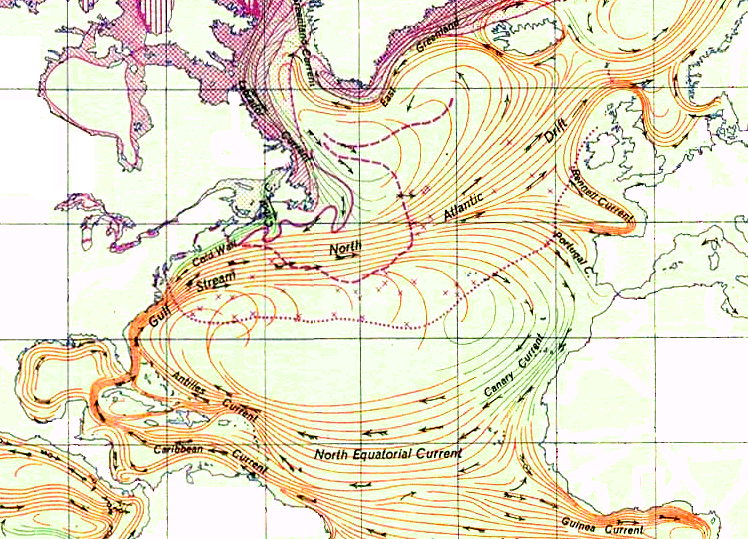
Triangular trade denotes a pattern of exchange in which commerce regularly moved among three ports or regions rather than directly between two. Such arrangements arose when producers in one area lacked markets for the goods they produced within the region that supplied their main imports. Merchants therefore shipped exports to a third destination and brought different commodities back, creating a triangle of voyages and commercial ties. Wind, ocean currents and the sailing technologies of the time often determined the practical shape of these routes.
Image gallery
6 Images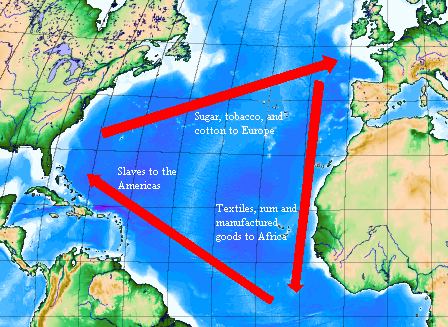


Characteristics and typical routes
These systems share a few common features: repeated legs between three points, a set of commodities or human cargoes specialized to each leg, and economic links that bound producers, middlemen and consumers. In the age of sail, route selection depended on predictable winds and currents, access to provisioning and repair, and political control of ports. Cargoes could include agricultural staples, raw materials, manufactured goods and, in the most notorious cases, enslaved people transported under inhumane conditions.
The Atlantic triangular trade: development and structure
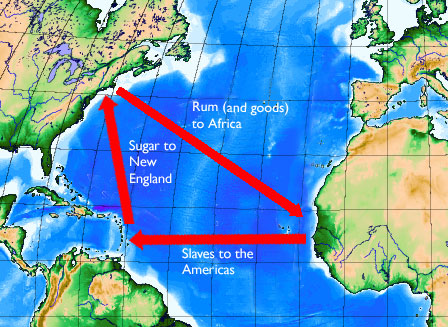
The best-known instance is the Atlantic triangular trade that developed from the 16th through the early 19th centuries. European merchants dispatched manufactured goods to West Africa, exchanged those goods for captives, carried enslaved Africans across the Middle Passage to plantation colonies in the Caribbean and the Americas, and then transported plantation products such as sugar, tobacco and rum back to Europe. This three-part circuit linked European metropoles, African suppliers and American production zones into a sustained commercial system tied to colonial policies and mercantilist ideas.
Economic and social impacts
Triangular trade shaped economies and societies on all three continents involved. In the Americas it underpinned plantation agriculture and the large-scale production of export crops; in Africa it altered local economies, intensified warfare and demographic change in some regions; in Europe it supported manufacturing, shipbuilding and financial institutions. The human cost, particularly the suffering of enslaved people on the Middle Passage and the consequences of forced labor, is a central element of the trade’s legacy.
Decline and legacy
By the 19th and 20th centuries the prominence of classic triangular circuits waned as legal abolition, changing economic doctrines (including free trade), advances in shipping technology and specialized cargo handling transformed global commerce. Nonetheless, the term remains useful for describing multi-legged trade patterns and their long-term cultural, demographic and economic effects. Historians study these networks to understand the flows of goods, capital and people that shaped the modern world.
Further reading and topic links
- Definition and general concept of triangular trade
- Examples of ports and regional nodes
- Commodities exchanged in triangular systems
- Patterns of imports and exports
- Historic maritime routes and navigation
- Role of winds and ocean currents
- Shipping technology in the age of sail
- The Atlantic Ocean as a trade theater
- Atlantic slave trade overview
- European maritime powers and merchants
- Spanish colonial connections
- French colonial commerce
- Colonial administration and ports
- The Americas as production regions
- Plantation crops and raw materials
- Manufactured goods in exchange networks
- West African involvement and markets
- The Caribbean in colonial trade
- The use of enslaved labor
- Cash crops: sugar, tobacco and others
- Mercantilism and imperial policy
- Rum and distilled products in exchange
- Sugar production and markets
- Tobacco and colonial exports
- Gold, silver and precious commodities
- Fish, lumber and other staples
- Specialized cargoes and the end of classic triangles
Questions and answers
Q: What is the triangular trade?
A: The triangular trade is a system of trading between three ports or regions. It usually develops when a region exports resources that are not needed in the region from which its main imports come, and instead these resources are exported to a third region.
Q: When did the Atlantic slave trade take place?
A: The Atlantic slave trade took place from the late 16th to early 19th centuries.
Q: What were some of the goods traded during this time?
A: Goods that were traded in the Atlantic economy during this time included rum, slaves, sugar, tobacco, gold, spices, fish, lumber and manufactured goods.
Q: How was mercantilism related to triangular trading?
A: Mercantilism was tied into triangular trading because it thought it was beneficial for European countries to have colonies that only traded with them. These colonies would provide resources such as cash crops which could be exported back to Europe.
Q: What does "middle passage" refer to in relation to triangular trading?
A: The middle passage refers to the transportation of African slaves from West Africa across the Atlantic Ocean to American colonies where they were used as labor on cash crops being exported back to Europe.
Q: Why did triangular trading become less common in the 20th century?
A: Triangular trading became less common in the 20th century due to free trade and ships specialized for particular cargoes.
Related articles
Author
AlegsaOnline.com Triangular trade: three-way maritime commerce and its historical role Leandro Alegsa
URL: https://en.alegsaonline.com/art/101444