
Trevi Fountain (Fontana di Trevi) — Rome's Baroque landmark
A comprehensive overview of the Trevi Fountain in Rome: its design, sculptures, history, cultural traditions, restorations and what to know when visiting this famous Baroque monument.
The Trevi Fountain is an iconic monumental fountain in the city of Rome. Set against the rear façade of the Palazzo Poli in the Trevi district, it combines architecture and sculpture to form one of the most recognizable urban fountains in the world. Visitors encounter a dramatic theatrical composition in which water, stone and allegory are used to convey power, abundance and the sea.
Image gallery
10 Images


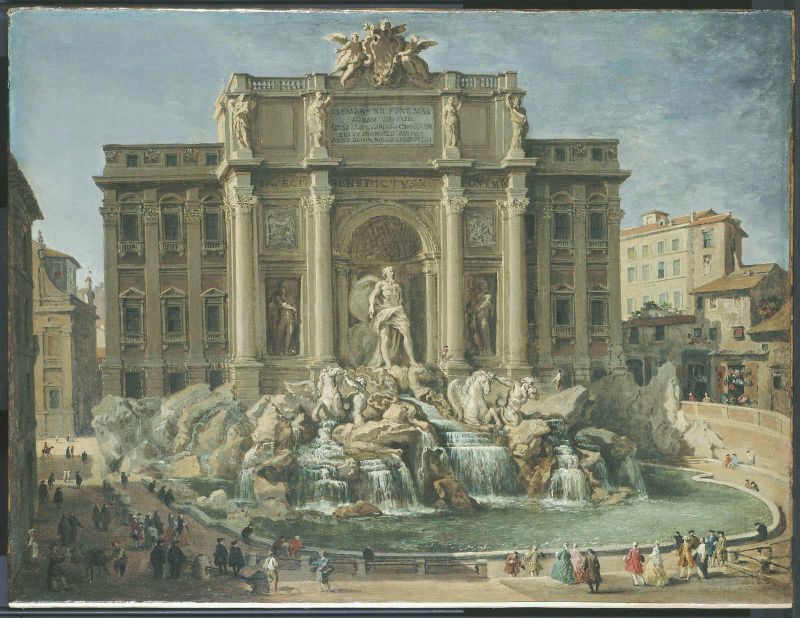
Design, composition and features
Laid out as a large, theatrical niche, the fountain's central figure is a commanding sea god—typically described as Oceanus or Neptune—standing in a shell-shaped chariot. He is flanked by two tritons (mythical sea attendants) and by a pair of horses that symbolize the varying moods of the sea: one placid, one restive. The sculptural group is set within a richly decorated travertine façade, complete with rock-work basins and cascades that animate the water flow. The overall dimensions make the Trevi Fountain one of Rome's largest fountains, and the composition epitomizes Baroque tendencies toward movement and dramatic contrast.
History and development
The site is connected to an ancient Roman water source, the Aqua Virgo (Aqua Vergine), which supplied drinking water and gave rise to earlier fountains here. The modern Baroque fountain was begun in the 18th century after a papal commission and a design competition that called for a monumental terminus for the restored aqueduct. Architect Nicola Salvi produced the principal design, and the sculptural work was completed later in the century by a succession of artists. The fountain, conceived in the Baroque idiom, was finished in the mid-1700s and has since undergone periodic repairs and conservation campaigns to address wear from pollution and heavy visitation.
Restoration and preservation
- Periodic cleaning and structural maintenance have been required to protect the travertine and sculptures.
- Major restorations in recent decades returned original details and improved water circulation systems.
- Private sponsorship and municipal programs have both played roles in funding conservation work, reflecting public interest in preserving the fountain.
Cultural significance and traditions
The Trevi Fountain is woven into modern popular culture. It is famous for a ritual in which visitors toss coins into the basin—traditionally with the right hand over the left shoulder—to secure a return to Rome. The fountain also gained global attention from cinema, where memorable film scenes helped cement its reputation as a symbol of Roman romance and spectacle. Coins recovered from the water are collected and typically redirected to charitable causes by municipal authorities.
Visiting and notable facts
Located in a pedestrianized piazza, the fountain is accessible to the public at all hours and is often crowded, particularly at dawn and dusk when light enhances the sculptural drama. Respectful behavior is encouraged: swimming or bathing in the basin is prohibited, and authorities enforce rules to protect the monument. For more detailed background on the Baroque style and fountains in general, see resources on Baroque art and entries about monumental fountains.
Questions and answers
Q: Where is the Trevi fountain located?
A: The Trevi fountain is located in Rome.
Q: What is the name of the district where the Trevi fountain is located?
A: The district where the Trevi fountain is located is called the Trevi district.
Q: In what style was the current fountain built?
A: The current fountain was built in Baroque style.
Q: How tall is the Trevi fountain?
A: The Trevi fountain is about 26 metres (85 ft) high.
Q: How wide is the Trevi fountain?
A: The Trevi fountain is about 50 metres (160 ft) wide.
Q: What is the significance of the Trevi fountain?
A: The Trevi fountain is one of the best-known fountains in Rome and is also Rome's largest fountain.
Q: When was the Trevi fountain built?
A: The Trevi fountain was built from 1732 to 1736.
Related articles
Author
AlegsaOnline.com Trevi Fountain (Fontana di Trevi) — Rome's Baroque landmark Leandro Alegsa
URL: https://en.alegsaonline.com/art/101405