
Tree of life (biology): evolutionary relationships and phylogenetic concepts
A summary of the biological 'tree of life' concept: its meaning, history, data and methods, limits such as horizontal gene transfer, and its uses in classification and research.
The phrase "tree of life" is a widely used metaphor that represents the pattern of common descent among living organisms. In biology it denotes a branching diagram in which tips represent living or extinct taxa and internal nodes represent inferred ancestors. The image helps communicate how species diverged over time and how all known organisms share evolutionary connections.
Image gallery
10 Images
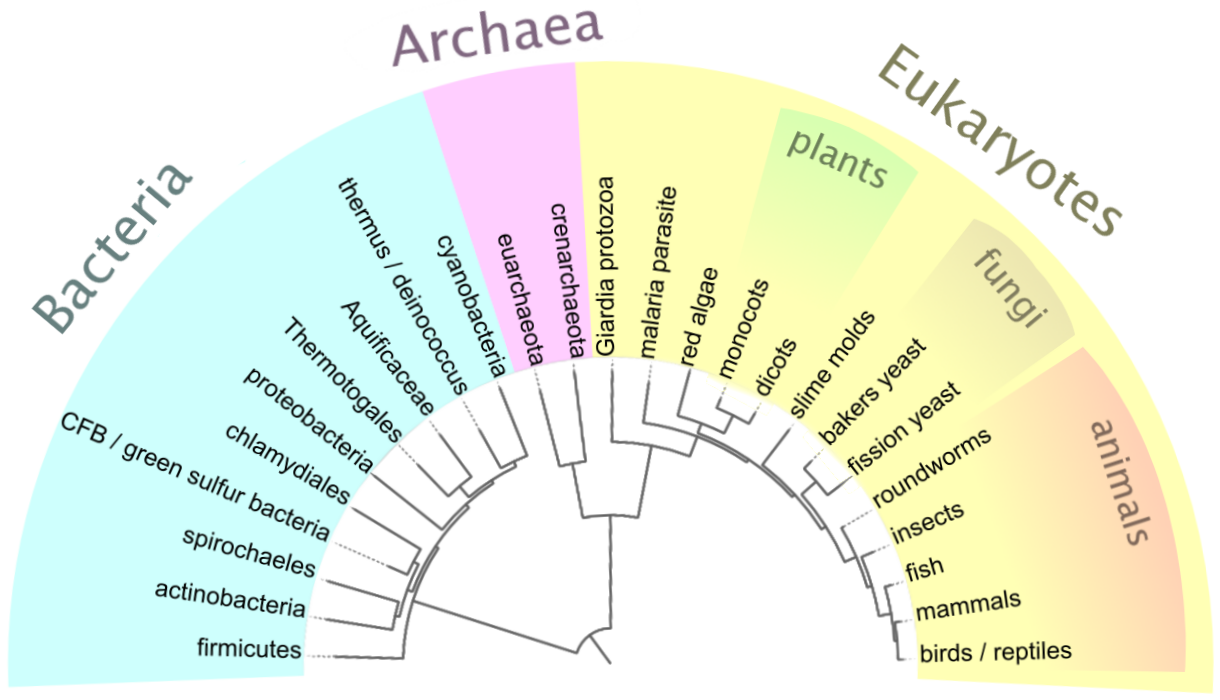





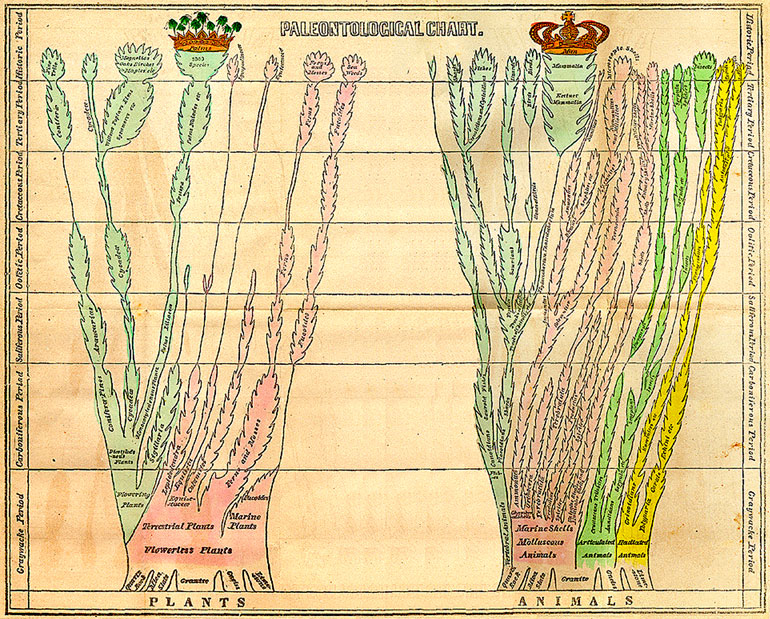

How to read a tree
Phylogenetic trees are interpreted in terms of branches, nodes and roots. A branch shows a lineage, a node indicates a hypothetical common ancestor, and the root (when present) identifies the earliest divergence shown. Trees can be drawn as cladograms, phylograms or chronograms to emphasize topology, genetic change or time respectively. Modern texts often compare trees to hypotheses: they are testable statements about relationships, not literal depictions of every ancestral species.
Origins and development
Although tree metaphors existed earlier, Charles Darwin popularized the idea in modern evolutionary theory and integrated it into modern biology. Later developments in systematics replaced purely morphological classifications with phylogenetic approaches. The mid-20th century introduced quantitative methods, and the advent of molecular sequencing transformed the field, culminating in frameworks such as the three-domain view that recognizes Bacteria, Archaea and Eukarya as major lineages.
Evidence and methods
Relationships are inferred from many data types. Traditional comparative anatomy and morphology remain useful, but molecular characters dominate much current work. Scientists commonly use sequences of DNA, RNA and protein to construct trees. Other analytical tools include likelihood and Bayesian models, parsimony analysis, and the molecular evolution framework; timing of splits often relies on a molecular clock calibrated with fossils or geological events. Historical comparative approaches such as comparative anatomy continue to inform character interpretation.
Complications and alternative views
The tree model is powerful but not universally adequate. In microbes, frequent horizontal gene transfer and endosymbiotic events create reticulate patterns better described as networks than strict trees. Processes such as incomplete lineage sorting and hybridization also blur simple bifurcating histories. As a result, modern systematists sometimes present both tree-like and network representations depending on the taxa and genes studied.
Importance and applications
- Classification: trees underpin modern taxonomy by grouping species into nested clades.
- Comparative biology: phylogenies provide the context for studying trait evolution and adaptation.
- Medical and ecological use: phylogenies trace the origins and spread of pathogens and inform conservation priorities.
Contemporary tree-of-life research combines fossil evidence, morphological study and large-scale molecular datasets to refine our picture of life's history. Ongoing work seeks to reconcile gene-level conflicts, improve dating methods and represent complex evolutionary processes in ways that are both accurate and communicable. For introductions and further details see authoritative sources and reviews linked by topic: metaphor and overview, common descent, Darwin's role, modern biology context, DNA studies, RNA evidence, protein comparisons, comparative anatomy resources, molecular evolution methods and molecular clock approaches.
Questions and answers
Q: What is the Tree of Life?
A: The Tree of Life is a metaphor which suggests that all life is interconnected and has evolved by common descent.
Q: Who first used this metaphor in modern biology?
A: Charles Darwin was the first to use this metaphor in modern biology.
Q: What does the evolutionary tree show?
A: The evolutionary tree shows the relationships between different biological groups, based on data from DNA, RNA, and protein analysis.
Q4 How is Tree of Life research conducted?
A: Tree of Life research uses a combination of traditional comparative anatomy and modern molecular evolution and molecular clock research to understand how organisms are related.
Tags
Related articles
Author
AlegsaOnline.com Tree of life (biology): evolutionary relationships and phylogenetic concepts Leandro Alegsa
URL: https://en.alegsaonline.com/art/101338
Sources
- darwin-online.org.uk : online edition of Vestiges
- darwin-online.org.uk : 116–130
- darwin-online.org.uk : 104–105
- doi.org : 10.1098/rsbl.2008.0224
- ncbi.nlm.nih.gov : 2610160
- pubmed.ncbi.nlm.nih.gov : 18522922
- apollon.uio.no : Apollon: the Tree of Life has lost a branch
- doi.org : 10.1371/journal.pone.0002621
- ncbi.nlm.nih.gov : 2440802
- pubmed.ncbi.nlm.nih.gov : 18612431
- doi.org : 10.1016/j.cub.2008.12.032
- pubmed.ncbi.nlm.nih.gov : 19243692
- doi.org : 10.1073/pnas.96.7.3801
- ncbi.nlm.nih.gov : 22375
- pubmed.ncbi.nlm.nih.gov : 10097118