
Tree fern
Tree ferns are large, tree‑like ferns with a trunk formed by root masses, large divided fronds, spore reproduction, an ancient fossil history, and important ecological and horticultural roles.
Tree ferns are a distinctive group of ferns that develop a single, upright trunk and a crown of large divided fronds. Often mistaken for small trees because of their stature and habit, they are true ferns rather than seed plants. Most modern tree ferns belong to a monophyletic lineage of ferns recognized within a particular subclass, a result supported by DNA and sequence analysis. The tree‑like form evolved repeatedly within a larger assemblage sometimes treated as an order, and living species show a wide range of heights, growth habits and frond forms.
Image gallery
8 Images



Characteristics
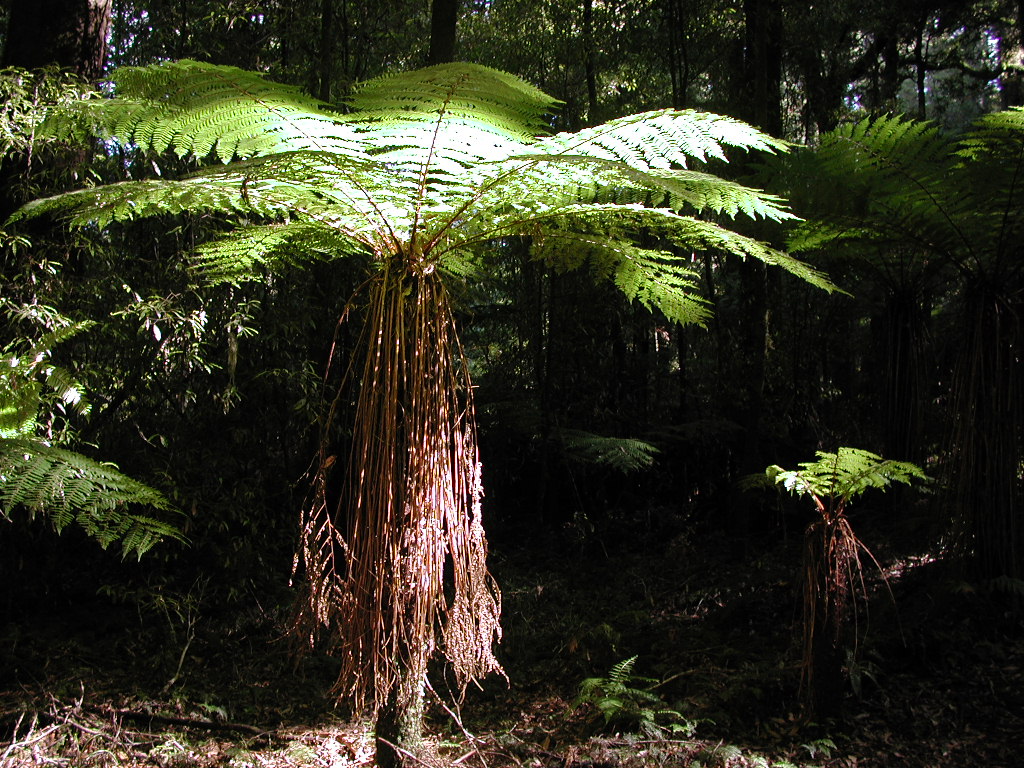
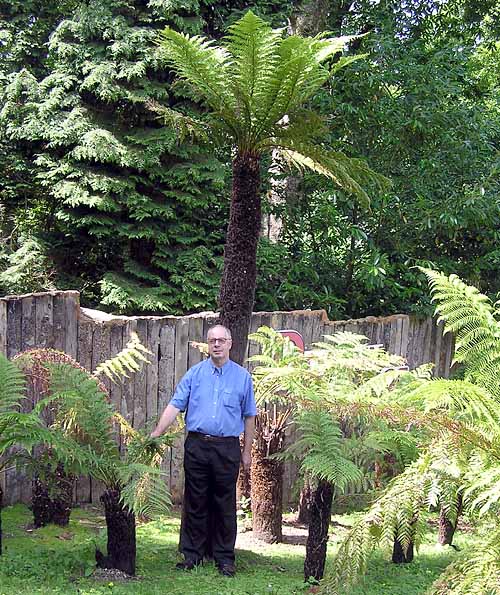
Unlike woody trees, tree ferns do not make secondary woody tissue. Their trunk is an elongated, vertical stem enveloped and reinforced by a dense mat of fibrous roots and persistent leaf bases. Fronds can be several metres long and typically emerge as coiled fiddleheads that unfurl as they grow. A typical set of distinguishing features includes:
- an erect, trunk‑like stem formed mainly of roots and rhizome tissue;
- large pinnate or bipinnate fronds forming a terminal crown;
- spore production in sporangia borne on the undersides of fronds, rather than seeds;
- repeated instances of tree‑form evolution among related fern groups, so the habit is convergent in places.
Reproduction and life cycle
Tree ferns reproduce by spores, released from clusters of sporangia on frond undersides. Spores develop into a small, typically short‑lived gametophyte stage that produces gametes and, after fertilization, a new sporophyte. This alternation of generations is the hallmark of all ferns and contrasts with the seed‑based reproduction of flowering plants.
History and fossil record
Ferns with tree‑like growth forms have a long fossil record. In deep time, forests composed largely of tree ferns and cycads contributed to extensive coal deposits in the Lower Jurassic. Many Mesozoic herbivores likely fed on large ferns; for example, some studies suggest armored dinosaurs such as Ankylosaurs may have browsed on tree‑fern fronds during the Upper Jurassic, though direct evidence is rare. The lineage has persisted with both radiation and local extinctions throughout geological time.
Distribution, ecology and notable genera
Tree ferns are most diverse in moist tropical and subtropical forests and in temperate rainforests. They are prominent in parts of Australia, New Zealand and many Pacific islands, and some genera reach into southern Europe and other temperate areas. New species continue to be described from remote regions such as New Guinea. Well‑known genera include Cyathea and Dicksonia, while Cyatheales is the higher‑level group that contains many tree‑fern taxa. Tree ferns play ecological roles by creating habitat structure, retaining moisture, and stabilizing soil on slopes.
Uses, conservation and threats
Tree ferns are valued in horticulture for their dramatic form and are used in gardens, restoration plantings and as landscape specimens. Some cultures have used parts of tree ferns for traditional purposes. However, populations face threats from habitat destruction, logging and over‑collection. The exact number of species is uncertain—estimates are around a thousand—so many likely became extinct or remain poorly known. Conservation efforts combine habitat protection, cultivation, and careful regulation of trade. For further general reading see resources on fern biology and conservation from botanical authorities such as ferns databases and regional floras (subclass treatments and sequence analysis summaries).
For concise introductions and identification keys consult specialist floras and horticultural guides. Additional information and taxonomic updates are available through regional botanical organizations and research networks (temperate rainforests, flowering plants comparative materials, and conservation pages). Practical care notes for cultivated tree ferns address shade, moisture, soil and protection from frost or sun scorch. Because new discoveries appear frequently, particularly in understudied areas like New Guinea, enthusiasts and conservationists are encouraged to rely on current botanical literature and local experts.
Questions and answers
Q: What is a tree fern?
A: Tree ferns are a large group of ferns with tree-like form that belong to the Cyatheales group.
Q: How tall can tree ferns grow?
A: Tree ferns can grow up to 20 metres tall, although many are much shorter.
Q: What type of forests were mainly formed by tree ferns and cycads in the Lower Jurassic period?
A: The coal forests of the Lower Jurassic were mainly formed by tree ferns and cycads.
Q: Where are tree ferns found growing?
A: Tree ferns are found growing in tropical and subtropical areas as well as temperate rainforests in Australia, New Zealand, and other island groups nearby. A few genera extend further, such as Culcita in southern Europe.
Q: How do tree ferns reproduce?
A: Like all ferns, tree ferns reproduce by means of spores developed in sporangia on the undersides of the fronds.
Q: What is unique about how they grow compared to flowering plants? A: Unlike flowering plants, tree ferns do not form new woody tissue in their trunk as they grow. Rather, the trunk is supported by a fibrous mass of roots that expands as the tree fern grows.
Q: How many species of tree Fern are there estimated to be? A: It is not certain how many species of tree Fern there are but it is likely to be around a thousand.
Related articles
Author
AlegsaOnline.com Tree fern Leandro Alegsa
URL: https://en.alegsaonline.com/art/101332