
Treblinka extermination camp: overview, operation, and legacy
Treblinka was a Nazi extermination camp in occupied Poland (1942–1943) and a central site of Operation Reinhard, where hundreds of thousands of Jewish people and Roma were murdered.
The Treblinka extermination camp was established by the Nazi regime in occupied Poland during World War II. Located in a wooded area northeast of Warsaw, near the village of Treblinka, the facility was part of the network of facilities the occupiers used to carry out mass murder. It is commonly described as one of the most lethal death camps of the Holocaust, sited in a forest to conceal its activity and to facilitate the arrival of victims by rail.
Image gallery
10 Images
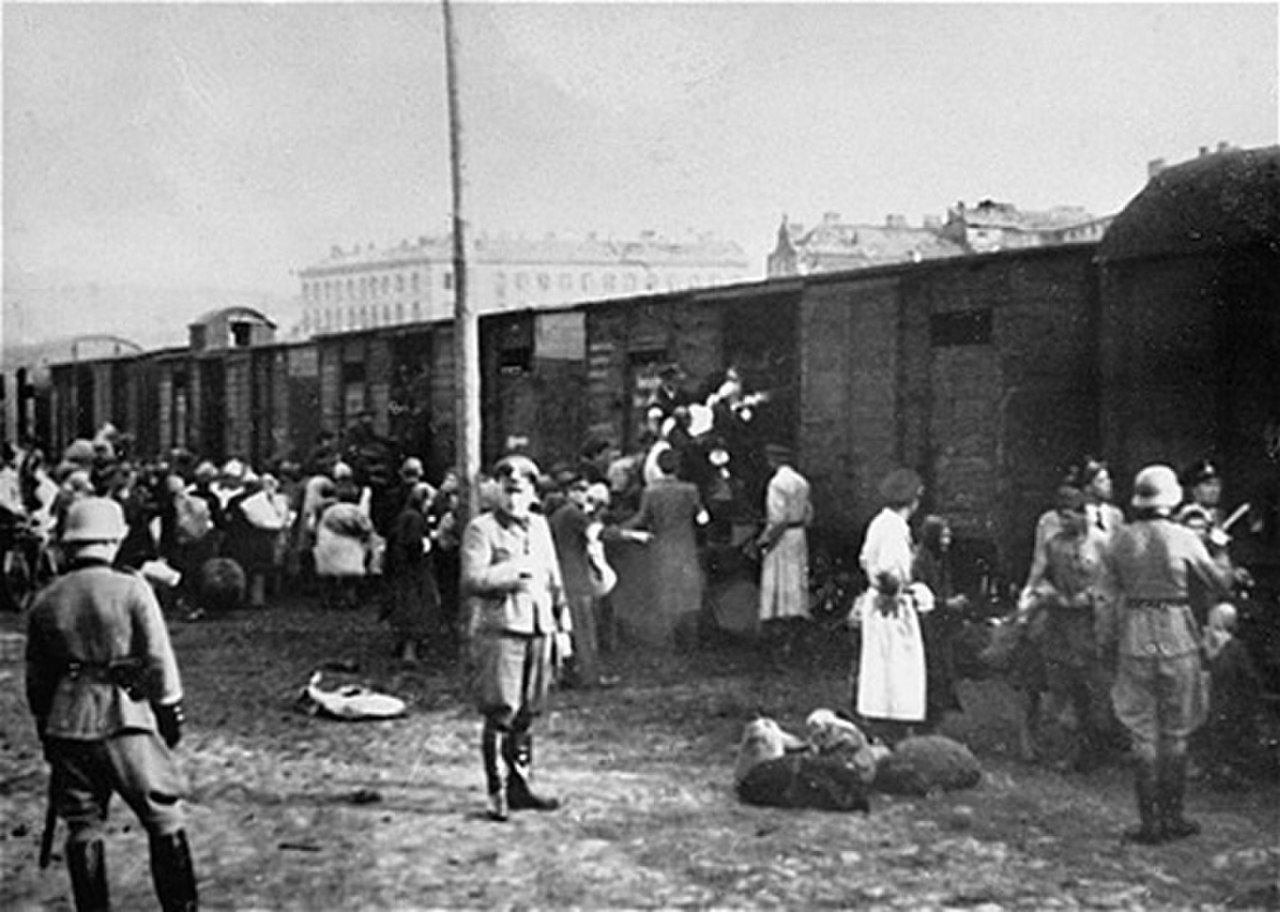


Structure and operation
The site actually comprised two nearby camps. An earlier forced-labor camp (often called Treblinka I) held prisoners for work and punishment. The better-known Treblinka II was built as an extermination facility designed for the rapid murder of those deported there. Trains arrived at a rail platform; victims were removed from boxcars, belongings were stripped, and most were led directly to gas chambers. The killings were carried out by poisoning the air with engine exhaust (carbon monoxide) and by other means intended to maximize speed and secrecy.
Scale, dates, and victims
Treblinka II operated during the main phase of Operation Reinhard, from July 23, 1942, until October 19, 1943. During that interval the camp became a principal instrument of the Nazi plan to annihilate Jewish communities across German-occupied Europe. Scholarly estimates place the number of Jewish victims at Treblinka between roughly 700,000 and 900,000; several thousand additional victims included Roma people and others targeted by the occupiers. The camp was one of the deadliest killing sites, surpassed in documented Jewish deaths only by Auschwitz, and it played a central role in the wider crime often referred to as the Holocaust.
Uprising, closure, and aftermath
In August 1943 prisoners staged an organized revolt. A portion of the inmates managed to escape during the uprising, which damaged the camp and accelerated German plans to dismantle it. After the revolt, the Nazis closed and largely razed the site to hide evidence of their crimes. Postwar investigations, witness testimony, and archaeological work have reconstructed much of what happened, but many details remain difficult to quantify precisely because the perpetrators destroyed records and attempted to erase traces of mass murder. The victims have been commemorated at a memorial and cemetery established at the site, and the camp remains an important focus of Holocaust research and remembrance.
Significance and notable facts
- Treblinka was a principal killing center of Operation Reinhard, the campaign that targeted Polish Jews for extermination.
- Estimates of Jewish victims generally range between 700,000 and 900,000; figures also record the murder of at least several thousand Roma and others (Roma).
- The camp site included both a forced-labor facility and a purpose-built extermination complex; survivors’ testimony and postwar trials documented methods and daily practice.
- After the August 1943 revolt, the Germans attempted to destroy physical evidence and close the camp permanently.
Researchers and educators continue to study Treblinka to preserve the memory of those killed and to understand the mechanisms of mass murder. For further context on the camp's place in the history of the period, consult general resources on the death camp system, the Nazi occupation, and the wider events of World War II.
Questions and answers
Q: What was Treblinka?
A: Treblinka was a Nazi death camp during World War II.
Q: Where was Treblinka located?
A: Treblinka was located in a forest northeast of Warsaw, in Poland which was controlled by Germany.
Q: When was Treblinka open?
A: Treblinka was open from July 23, 1942 to October 19, 1943 during Operation Reinhard, the deadliest part of The Holocaust.
Q: What was the goal of death camps like Treblinka?
A: The goal of death camps like Treblinka was to kill millions of people as quickly as possible.
Q: How many Jewish people were killed at Treblinka?
A: At least 700,000 and 900,000 Jewish people were killed at Treblinka.
Q: How many Roma people were killed at Treblinka?
A: At least 2,000 Roma people were killed at Treblinka.
Q: How does Treblinka compare to other death camps in terms of Jews killed?
A: The Nazis killed more Jews at Treblinka than at any death camp other than Auschwitz.
Related articles
Author
AlegsaOnline.com Treblinka extermination camp: overview, operation, and legacy Leandro Alegsa
URL: https://en.alegsaonline.com/art/101329
Sources
- ushmm.org : "Treblinka"
- britannica.com : "Treblinka: Concentration Camp, Poland"
- obozyzaglady.files.wordpress.com : "Więźniowie obozu zagłady w Treblince"
- worldcat.org : 52658491
- doi.org : 10.1353/jss.2001.0017
- alija.4me.pl : VII. Pod Gwiazdą Dawida
- bbc.co.uk : Treblinka survivor recalls suffering and resistance