
Tray (shallow container for carrying and serving items)
A tray is a shallow, flat container with raised edges used to carry, serve, or organize objects. Trays vary by material, form and function from serving and butler's trays to utility and industrial types.
A tray is a shallow receptacle with a flat base and raised sides, intended to hold, carry or present objects. Its basic purpose is to keep items together and to prevent them from sliding off while being moved. Trays appear in everyday life—from household service and food presentation to industrial logistics and storage—and are made in many sizes, shapes and materials suited to their role.
Image gallery
9 Images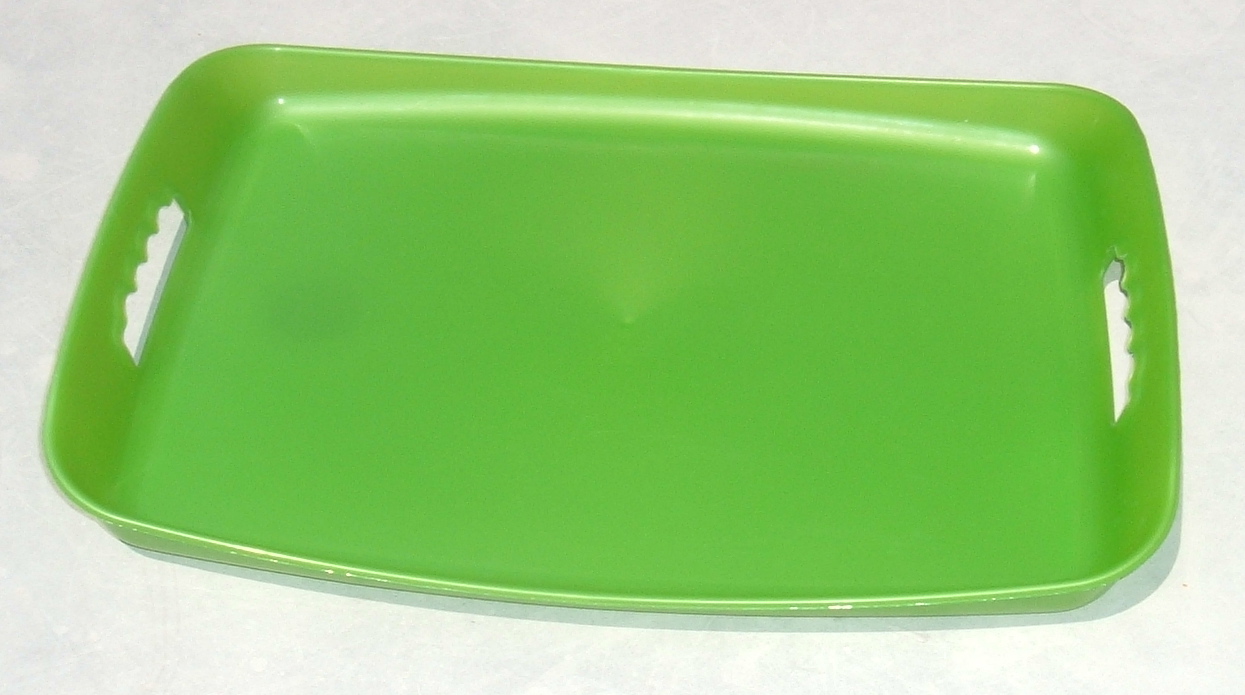


Characteristics and common parts
Most trays share a few simple design elements: a planar bed to support items, a rim or lip to retain them, and often handles or cutouts to make lifting easier. Materials include wood, metal, glass, ceramic, plastic, plywood, bamboo and composites; the choice depends on appearance, strength, heat resistance and hygiene. Trays are frequently rectangular or round, but square and irregular shapes are also used. Some trays are stackable for efficient storage, others are made to nest, and many have non-slip surfaces or recessed areas to keep cups and plates steady.
Types and notable variants
- Serving tray: a general-purpose tray for carrying food and drink, used in homes, restaurants and cafés.
- Butler's tray: a serving tray with a deeper surround, handles cut into the short sides and often folding legs; it doubles as a portable surface or side table.
- Tea tray: a decorative tray designed to present teapots, cups and accessories, sometimes with compartments.
- Utility trays: simple, durable trays used in hospitals, factories or cafeterias; examples include meal trays and instrument trays.
- Baking and sheet pans: in culinary contexts a tray can mean a flat pan used in ovens; these are designed for heat conduction rather than hand carrying.
History and development
Trays have an ancient pedigree: flat serving surfaces and shallow dishes occur in the archaeological record and in historical accounts across many cultures. Over time the form evolved alongside materials technology and social practices—fine metal and inlaid wooden trays became symbols of hospitality and status, while inexpensive molded plastics and composites made disposable or lightweight trays common in modern mass catering and transportation.
Uses, importance and examples
Trays are central to foodservice (carrying multiple plates, clearing tables), healthcare (delivering meals and holding instruments), retail and display (presenting goods), and household organization (desk trays for papers, jewelry trays). Specialized trays appear in laboratories, bakeries, and manufacturing for sorting, processing and shipping small parts. The butler's tray, in particular, is valued for its portability and its ability to function as a temporary tabletop when placed on folding legs.
Distinctions and practical considerations
When choosing a tray, consider load capacity, hygiene, heat resistance and ease of cleaning. Design details such as lip height, handle placement and surface texture affect usability and stability. In public and commercial settings, trays are often standardized for stacking and washing; in domestic contexts they may also serve a decorative role. Awareness of these differences helps match a tray's form to its intended function and environment.
Questions and answers
Q: What is a tray?
A: A tray is a shallow container designed for carrying things.
Q: How are trays designed?
A: Trays are flat, but with raised edges to stop things from sliding off of them.
Q: What shape are trays commonly found to be?
A: They are often rectangular.
Q: Do trays always have handles?
A: Trays may or may not have handles with which to carry them.
Q: What is a butler's tray and how is it different from a regular tray?
A: A butler's tray has a deeper surround, handles on the short sides (usually cut into the surround) so that it can be easily carried, and folding legs. It is used to carry drinks and can be used as a side table.
Q: What is the purpose of trays having raised edges?
A: The raised edges are meant to prevent things from sliding off the tray.
Q: What is the purpose of a butler's tray?
A: A butler's tray is used specifically for carrying drinks and can be used as a side table.
Author
AlegsaOnline.com Tray (shallow container for carrying and serving items) Leandro Alegsa
URL: https://en.alegsaonline.com/art/101267