
Travelcard — integrated ticket for London's public transport
A Travelcard is a time‑limited ticket for travel across multiple modes in London, valid within selected fare zones and issued by Transport for London and National Rail agencies.
Overview
A Travelcard is a multi‑modal ticket that permits unlimited journeys within a chosen set of London fare zones for a specified period. It is intended to simplify travel across the city's networks by providing one ticket that works on services run by different operators in London.
Image gallery
3 Images
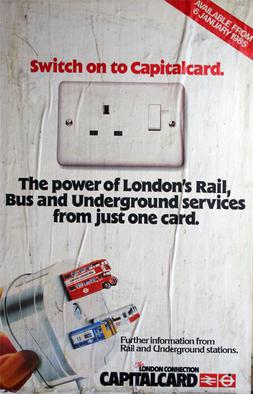

Key characteristics
Travelcards are sold for different durations (for example, day, week, month or longer) and for defined zone ranges. They are commonly available as paper tickets or loaded electronically onto smart cards. A Travelcard typically covers travel on a variety of services, including:
- London Underground and Overground services
- Buses, and the Docklands Light Railway (DLR)
- Tram systems within the covered zones and most National Rail services that operate inside the ticketed zones
History and development
The Travelcard grew out of efforts to integrate fares across London's many operators. Introduced when the city moved to zonal fares, it later became interoperable with electronic ticketing systems so that season tickets and single tickets could be combined onto a single smart card or account.
Use, purchase and validity
Travelcards can be bought at stations, from ticket offices and machines, or loaded onto smart cards and accounts managed by Transport for London. They are also issued through participating rail companies and ticket outlets associated with National Rail. The ticket shows the applicable zones and dates of validity and must be presented or touched in accordance with the operator's rules.
Limitations and distinctions
While Travelcards cover most standard services within the chosen zones, they do not automatically cover premium or special services (for example certain express or airport premium services). They differ from pay‑as‑you‑go contactless fares and single tickets in that a Travelcard provides unlimited travel for its period rather than per‑journey charging.
Importance and typical uses
For commuters and visitors making multiple journeys in a day or over a week, a Travelcard often offers convenience and cost predictability. It remains an important element of London's fare structure because it integrates services run by different operators into a single, easy‑to‑use ticketing option.
Questions and answers
Q: What is a Travelcard?
A: A Travelcard is a ticket used for most transport in London, including buses and the underground.
Q: Who issues the Travelcard?
A: The Travelcard is issued by Transport for London and National Rail.
Q: What modes of transport can the Travelcard be used on?
A: The Travelcard can be used on most transport in London, including buses and the underground.
Q: Can the Travelcard be used on National Rail services?
A: Yes, the Travelcard can be used on the services of both Transport for London and National Rail.
Q: Is the Travelcard good for a single journey or multiple journeys?
A: The Travelcard can be used for multiple journeys during the validity period.
Q: Is the Travelcard valid for a specific duration?
A: Yes, the Travelcard has a validity period which can range from one day to one week to one month.
Q: Is the Travelcard a cost-effective option for regular commuters?
A: Yes, the Travelcard is often a cost-effective option for regular commuters as it allows for unlimited travel during the validity period.
Related articles
Author
AlegsaOnline.com Travelcard — integrated ticket for London's public transport Leandro Alegsa
URL: https://en.alegsaonline.com/art/101253
Sources
- tfl.gov.uk : "1 and 3 day tickets"
- railplus.com.au : "London Travelcard (details)"
- victoriaschool.co.uk : "Travelling in London"