
Transmission (gearbox): converting engine power to usable motion
A transmission (gearbox) is a mechanical assembly of gears and related parts that adapts engine output—speed and torque—so wheels or machinery can move. Explains types, parts, operation, history, and maintenance.
A transmission, often called a gearbox, is an assembly of gears and associated components that transfers and modifies rotational power from a prime mover to a driven device. In automotive contexts it links the engine's crankshaft to the drive wheels, changing speed and torque to suit driving conditions. In broader mechanical engineering contexts the term applies to any gear train that adapts rotational speed, torque, or direction for tools, industrial machinery, or vehicles. For basic background on the field, see mechanical engineering.
Image gallery
9 Images


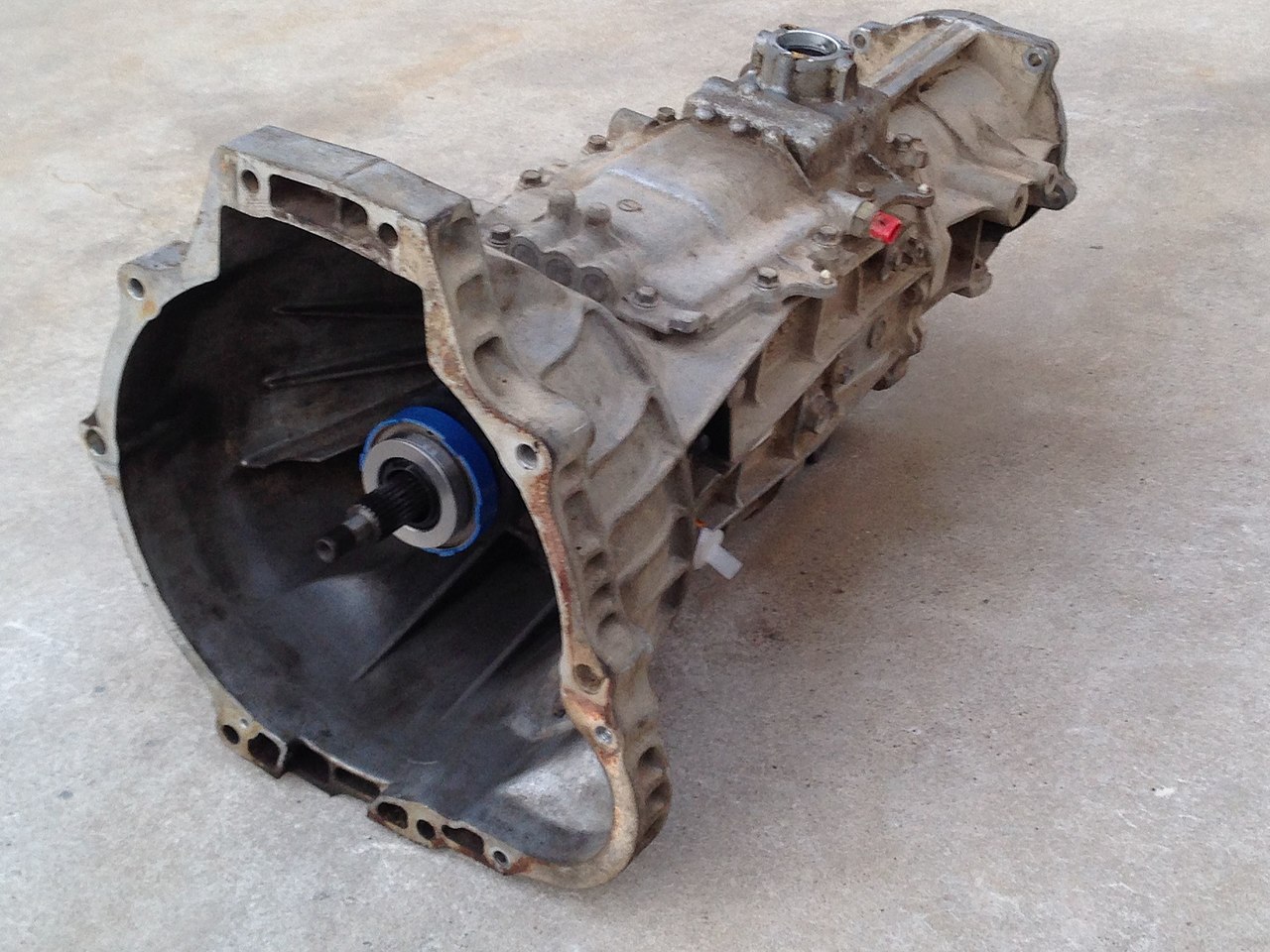


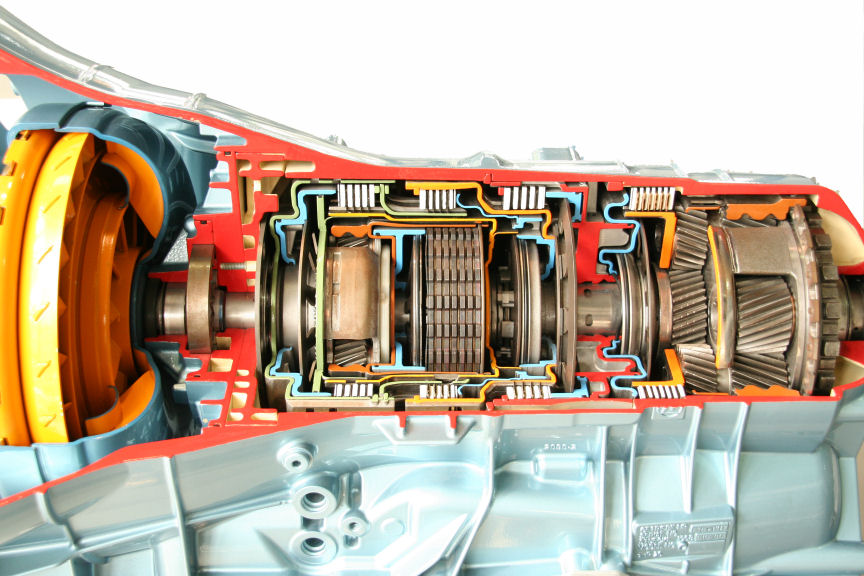


Core functions and basic operation
The principal role of a transmission is to reconcile the high-speed, relatively low-torque output of an engine with the lower-speed, higher-torque requirements of wheels or driven equipment. Gears provide mechanical advantage: lower gear ratios reduce output speed while increasing torque, and higher ratios do the opposite. Transmissions also allow temporary disengagement of the power flow so the engine can run while the vehicle is stationary. The rotating input commonly originates at the crankshaft or equivalent shaft, and one important measured effect of gearing is the change in torque available at the output.
Principal components
- Input shaft — receives rotation from the engine or prime mover.
- Gears and gearsets — spur, helical, or planetary/epicyclic groups that provide selectable ratios.
- Countershaft or layshaft — intermediate shafts used in many manual designs.
- Clutch or torque converter — devices that couple and decouple the engine from the gearbox and smooth torque transfer.
- Output shaft and final drive — delivers rotated power to the wheels or driven equipment, often through a differential.
- Housing, bearings, sealings, and lubrication system — protect components, reduce friction, and remove heat; many housings include a breather vent for pressure equalization and heat escape.
Types and historical development
Early transmissions were simple gear trains for machinery; in road vehicles they evolved into more complex, selectable gearboxes. Manual transmissions use a human-operated clutch and gear selector to engage fixed gear ratios. Automatic transmissions replace manual selection with hydraulic, electronic, or mechanical control and often use planetary gearsets plus a torque converter to provide smooth, gearless transitions. Continuously variable transmissions (CVTs) use belt or chain and variable-diameter pulleys to offer seamless ratio changes. Modern designs also include dual-clutch automated manuals for rapid, efficient shifts and sophisticated electronic controls that optimize performance and fuel economy.
Uses, advantages, and examples
Transmissions are essential wherever rotational power must be adapted: in automobiles, trucks, motorcycles, tractors, marine propulsion, industrial gearboxes, and wind turbines. By providing multiple ratios they let a single engine operate efficiently across a range of speeds and loads. For example, low gears help start a heavy vehicle or climb a hill by increasing torque at the wheels, while higher gears enable cruising with lower engine speed and reduced fuel consumption.
Maintenance and notable considerations
Proper lubrication is critical: transmission oil reduces wear, carries heat away, and supports hydraulic controls in automatics. Regular service intervals, fluid checks, and attention to leaks or abnormal noises extend life. Design trade-offs include weight, complexity, efficiency, and cost — simpler manual gearboxes tend to be lighter and more efficient, while advanced automatics and CVTs prioritize driver convenience and optimized engine operation. Understanding these distinctions helps users and technicians choose and maintain the right transmission for a given application.
For further technical detail and historical context consult specialist sources or technical reference materials; introductory engineering overviews can be found through general mechanical engineering resources such as textbooks and guides or focused articles on the crankshaft and torque concepts.
Questions and answers
Q: What is a transmission in mechanics?
A: In mechanics, a transmission or gearbox means gears working together.
Q: What is the most common type of transmission?
A: The most common transmission is the transmission in a car.
Q: How does the engine make the wheels spin in a car?
A: In a car, the engine makes the crankshaft spin. The crankshaft makes the transmission's gears spin, which spin some more parts, which make the wheels spin.
Q: Why do the wheels not spin as fast as the engine makes the crankshaft spin?
A: The wheels do not spin as fast as the engine makes the crankshaft spin because the gears are made to slow down the spinning.
Q: What is the purpose of the gears in a transmission?
A: The gears in a transmission slow down the spinning and give the spinning more force, or torque, so the wheels can make the entire car move.
Q: Do most transmissions have a breather vent?
A: Yes, most transmissions have a breather vent to let hot air escape.
Q: What is the function of a breather vent in a transmission?
A: The function of a breather vent in a transmission is to let hot air escape.
Related articles
Author
AlegsaOnline.com Transmission (gearbox): converting engine power to usable motion Leandro Alegsa
URL: https://en.alegsaonline.com/art/101179
Sources
- carbibles.com : "The Transmission Bible"
- manualload.com : "Car manual"