
Transmission medium
Material or environment through which energy, signals or particles travel; covers mechanical and electromagnetic media, characteristics, history, uses, and practical distinctions.
A transmission medium is any material or environment that carries energy, signals or particles from one place to another. In general use this includes solids, liquids, gases and plasmas. Mechanical disturbances such as sound require a material medium, while many forms of electromagnetic radiation can travel through a vacuum as well as through matter. The broad purpose of a transmission medium is to provide a path for energy or information to move between source and receiver.
Image gallery
6 Images


Types and basic mechanisms
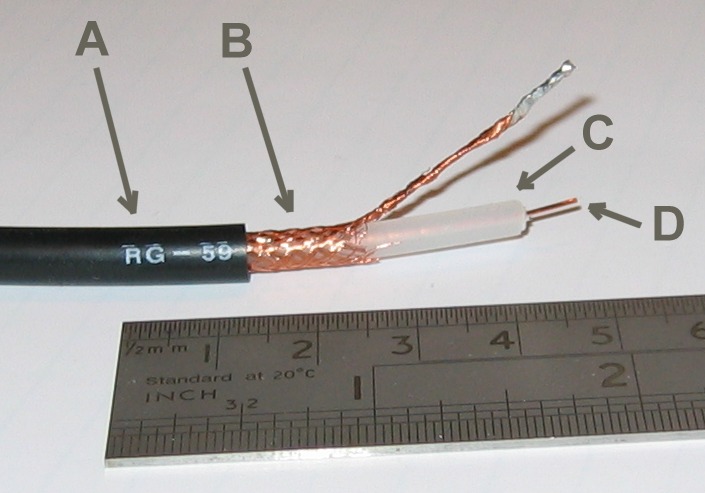
Transmission can take different physical forms. Mechanical waves (for example, sound) propagate by local pressure or displacement of particles in a material. Electrical conduction in a metal wire involves the flow of electrons and is commonly used to carry electricity along a wire. Electromagnetic waves (radio, light) move by oscillating electric and magnetic fields and interact with media through absorption, reflection or refraction. In plasmas charged particles and collective fields create propagation behavior distinct from neutral gases or solids.
Characteristics that matter
- Attenuation: how rapidly a signal weakens as it travels.
- Bandwidth: the range of frequencies a medium can carry, sometimes called bandwidth.
- Speed: propagation velocity in the medium, often compared to the speed in vacuum or other reference.
- Cost and practicality: installation and maintenance expenses, or cost, influence choice.
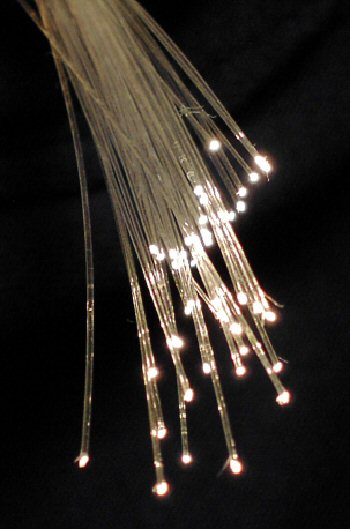
These factors determine suitability: optical fiber offers high bandwidth and low attenuation for data, while air is convenient for sound and wireless radio but has different range and interference characteristics.
History and development
Human use of transmission media dates from spoken language carried through air, to cables for telegraph and telephone, to radio and microwave links, and to modern fiber optics. Advances in materials and electronics have repeatedly shifted which media are preferred for communication, sensing and power delivery.
Uses and notable distinctions
Common applications include audio transmission, wireless communications, power distribution, medical imaging (ultrasound through tissues), and sensing (seismic waves in the ground). A key distinction is that mechanical waves require matter to travel, while electromagnetic waves need not—allowing space communication. Practical design balances performance, environment, and cost to choose the appropriate medium.
For further technical overview and comparisons see introductory references and guides: solids, liquids, gases, plasmas, and resources on energy, sound, wire, electrons, electricity, cost, bandwidth, speed.
Questions and answers
Q: What is a transmission medium?
A: A transmission medium is a substance, including solid, liquid, gas, or plasma, that can transmit energy.
Q: What is the transmission medium for sounds?
A: The transmission medium for sounds is mostly air, although it can also transmit through solids and liquids.
Q: What can a wire transmit?
A: A wire can transmit electrons in the form of electricity.
Q: Are there advantages and disadvantages to every transmission medium?
A: Yes, there are advantages and disadvantages to every transmission medium.
Q: What are some factors that can affect a transmission medium?
A: Some factors that can affect a transmission medium include cost, bandwidth, speed, and scope.
Q: What is bandwidth in terms of a transmission medium?
A: Bandwidth refers to how much of something can be transmitted through a transmission medium.
Q: Can different transmission media have different costs?
A: Yes, different transmission media can have different costs depending on their availability and properties.
Related articles
Author
AlegsaOnline.com Transmission medium Leandro Alegsa
URL: https://en.alegsaonline.com/art/101177