
Transitional fossil
Fossils showing anatomical features intermediate between distinct groups; key evidence for evolutionary change. Explains rarity, examples (Archaeopteryx, Tiktaalik), and common misconceptions about 'missing links'.
Overview
A transitional fossil, often called a "missing link" in popular language, is a fossilized specimen that preserves traits characteristic of two different groups, helping to illuminate evolutionary change. These fossils do not always represent direct ancestors of modern species; instead they usually record organisms that are close relatives of the actual lineages that led to later groups. Transitional fossils provide concrete anatomical evidence for how major structures and lifestyles — such as limbs adapted for walking, feathers for flight, or teeth lost in favor of baleen — evolved over time.
Image gallery
10 Images




Key characteristics
Transitional fossils typically combine a mix of ancestral and derived features. For example, a specimen might retain primitive jaw structures while showing more advanced limb bones adapted for weight bearing. The defining characteristics include:
- Presence of traits diagnostic of two different clades or grades.
- Anatomical evidence that suggests functional change (for example, fins to limbs).
- Context within a stratigraphic sequence that fits the inferred order of change.
Why they can be rare
Several biological and geological factors make transitional forms uncommon in the preserved record. Fossilization is a rare event that favors certain environments; many organisms and fragile tissues are simply lost to decay. Some evolutionary changes occur in small, short-lived populations or during rapid bursts of speciation, reducing the chance that many fossilizable individuals existed. The archaeological deposits known as fossil-bearing sediments are unevenly distributed in time and space, so many parts of the history of life are poorly sampled.
Historical and notable examples
Recognized transitional fossils have played a large role in shaping our understanding of major evolutionary transitions. Prominent examples include:
- Archaeopteryx — a Late Jurassic animal that combines feathers and avian flight-related bones with teeth and a long bony tail, showing links between non-avian dinosaurs and birds.
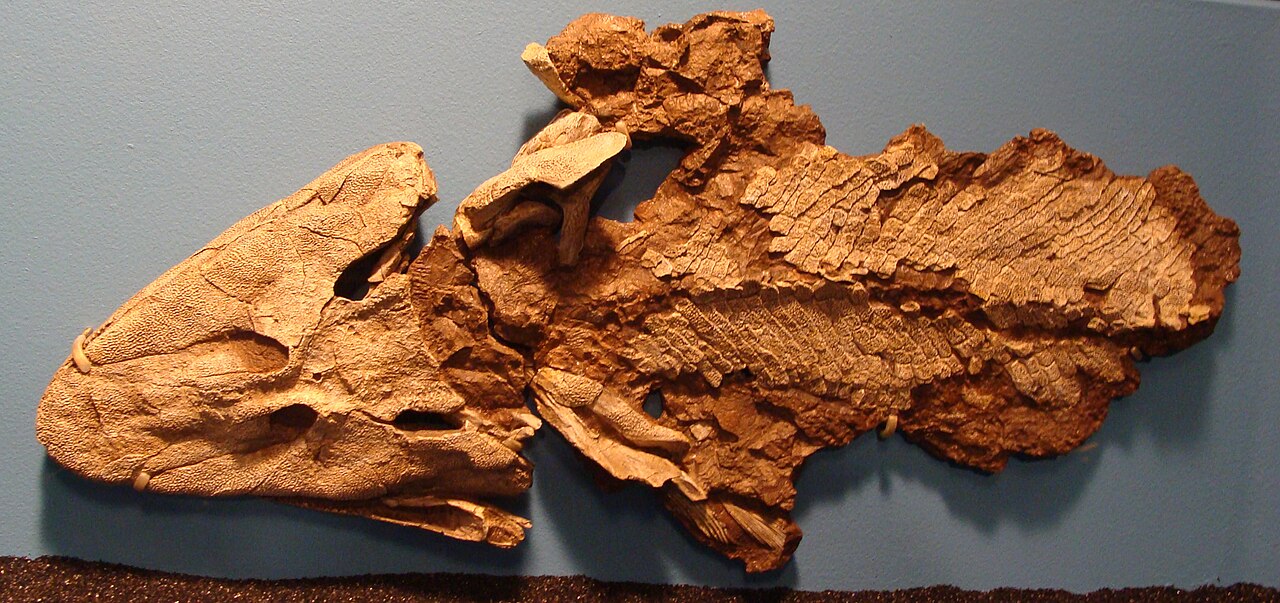
- Tiktaalik — a Devonian-aged fish-like form with wrist bones and a neck, bridging fish and early tetrapods and clarifying how fins evolved into weight-bearing limbs.
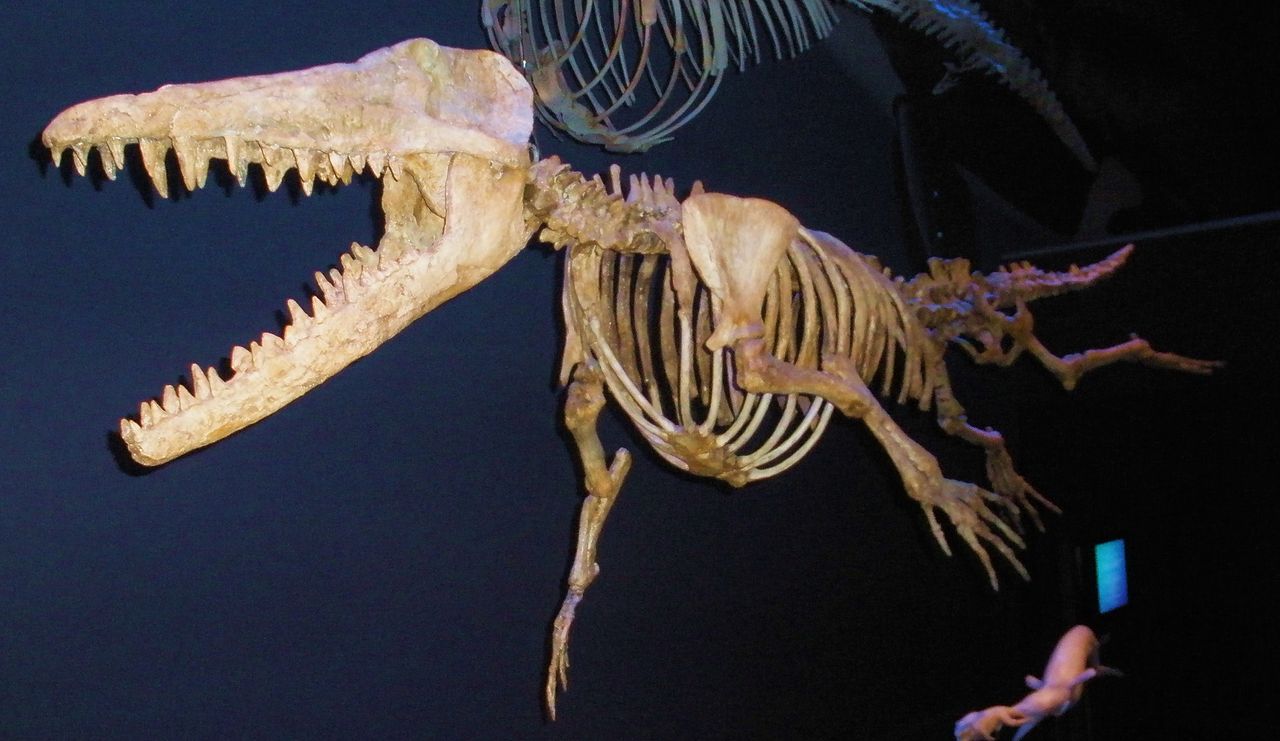
- Early whales (for example, amphibious archaeocetes) — species that document the gradual adaptation from terrestrial, hoofed ancestors to fully aquatic, tail-powered cetaceans.
Scientific importance and interpretation
Transitional fossils serve multiple scientific purposes: they test hypotheses about ancestry and function, provide calibration points for molecular clocks, and inform phylogenetic reconstructions. Because evolution is branching rather than strictly linear, a fossil with intermediate traits is best interpreted as evidence of a transitional stage that occurred somewhere on the tree of life, not necessarily as a direct ancestor. Paleontologists place such specimens in a broader context using stratigraphy, comparative anatomy, and modern techniques like CT scanning and cladistic analysis.
Common misconceptions and context
The phrase "missing link" can be misleading: it implies a single chain connecting two modern groups when actual evolutionary history is a complex bush of branching lineages. The scarcity of some transitional fossils does not imply a failure of evolutionary theory; it reflects ecology, population dynamics, and geological processes. For example, the Solnhofen limestone, where Archaeopteryx was discovered, preserves exceptional detail but represents a specific habitat and time slice. In that same deposit, flying reptiles such as pterosaurs are often more abundant, illustrating how ecological dominance influences fossil representation. Likewise, the abundance and preservation of transitional bird-like forms increase in later Cretaceous deposits and Lagerstätten such as the Jehol biota, a pattern consistent with changing environmental and ecological conditions through time.
Overall, transitional fossils remain among the most direct lines of evidence for macroevolutionary change: each new discovery refines our view of how major anatomical and ecological transformations unfolded over deep time.
Questions and answers
Q: What is a transitional fossil?
A: A transitional fossil is a fossilised remains of lifeforms that show features typical of two distinct groups, such as Archaeopteryx which shows early features of a group which later becomes widespread.
Q: What does the rarity of transitional forms suggest?
A: The rarity of transitional forms suggests that the new forms are not yet dominant in the ecology of their time, and their populations are relatively small, meaning that their fossils would be scarce.
Q: What was dominant in the air during the Jurassic period?
A: In the Jurassic period, pterosaurs were dominant in the air.
Q: How do birds found in Chinese lagerstatten deposits differ from Lower Cretaceous birds?
A: Birds found in Chinese lagerstatten deposits are more primitive compared to Lower Cretaceous birds, who developed features that enabled them to invade habitat niches which had been previously unexplored or occupied by pterosaurs before then.
Related articles
Author
AlegsaOnline.com Transitional fossil Leandro Alegsa
URL: https://en.alegsaonline.com/art/101166