
Trams in Melbourne
Overview of Melbourne’s tram system: its history since 1885, network characteristics, operations by Yarra Trams, cultural role, ridership, and notable distinctions.
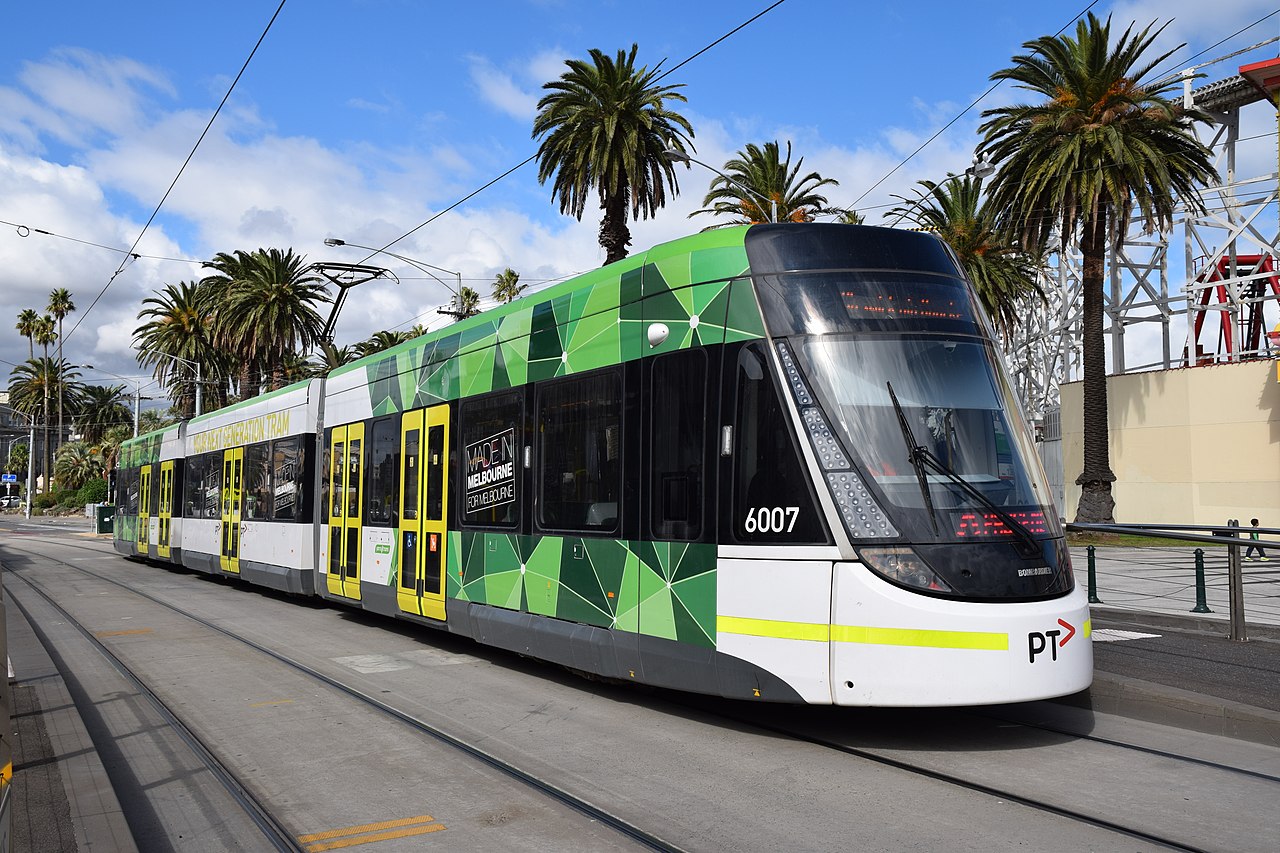
Melbourne’s tram system is a defining feature of the cityscape and a major element of public transport in Melbourne, Australia. Introduced in 1885, the network has grown into the largest urban tram system in the world. It combines historic street-running routes with modern light-rail vehicles, serving commuters, visitors and the central business district with frequent services and an extensive stop network.
Image gallery
10 Images




History and development
The system originated in the late 19th century with cable and horse-drawn trams before electric traction became the standard. Over time many private and municipal lines were consolidated under metropolitan control and progressively electrified. Elements of the older rolling stock and a number of heritage routes have been preserved, contributing to the city’s visual identity while newer models and infrastructure improvements address contemporary transport needs.
Network characteristics
Melbourne’s network is notable for several technical and operational features. It runs on standard-gauge track and uses overhead wiring to supply electric traction at around 600 volts DC. The system comprises an extensive route map with hundreds of stops and a fleet that mixes historic and modern trams.
- Long, largely street-level route network enabling direct access to many inner suburbs.
- Standard-gauge track and overhead electrification for all lines.
- Combination of heritage vehicles and contemporary low-floor trams for accessibility.
Operations, routes and ridership
The network is owned by the state government and operated under contract by a private operator, which currently manages day-to-day services, maintenance and customer-facing functions. The system covers numerous routes across the metropolitan area and handles high volumes of passengers annually, reflecting its role as a backbone of the city’s public transport. Ticketing and service integration are coordinated across trains, trams and buses to provide through journeys across the network.
Importance, culture and uses
Beyond moving people, trams contribute strongly to Melbourne’s character and sense of place. Iconic tram types and heritage lines are popular with tourists and locals alike. The network supports commuting, retail access, tourism and events, and it is often cited in discussions about urban design, sustainable transport and the preservation of historic elements in a modern city.
Notable distinctions and facts
Melbourne’s tram network is widely recognized for its scale and continuity of operation. Its status as the world’s largest urban tramway is frequently noted in guides and transport studies. For further background on the city and the national context, see general information about Melbourne, Australia and the broader tram network concept. The blend of heritage preservation and ongoing modernization makes Melbourne’s trams a significant case study in urban transit planning.
Questions and answers
Q: When were trams introduced in Melbourne?
A: Trams were introduced in Melbourne in 1885.
Q: What makes Melbourne's tram network distinctive?
A: Melbourne's tram network is distinctive because it is the largest tram network in the world, with 450 trams, 25 routes, and 1,700 tram stops.
Q: How are Melbourne's trams powered?
A: Melbourne's trams are powered using 600V DC delivered by overhead wires.
Q: Who currently operates Melbourne's tram network?
A: Melbourne's tram network is currently operated by a private company, Yarra Trams, under contract from the Victorian Government, the owner of the network.
Q: How many passengers took rides on Melbourne's trams in 2015-16?
A: In 2015-16, a total of 203 million passengers took rides on Melbourne's trams.
Q: What gauge track are Melbourne's trams run on?
A: Melbourne's trams run on standard gauge track.
Q: What is the attitude of the people of Melbourne towards their trams?
A: The trams are loved by the people of Melbourne and give a lot to the city's distinctive character.
Related articles
Author
AlegsaOnline.com Trams in Melbourne Leandro Alegsa
URL: https://en.alegsaonline.com/art/101086
Sources
- doi.vic.gov.au : doi.vic.gov.au/DOI/DOIElect.nsf/alldocs/1173456893D78FD4CA25741A000461EE/$FILE/Investing_…
- yarratrams.com.au : Yarra Trams Facts & Figures