
Trafalgar Square — central London public square and landmark
Central London public square commemorating the Battle of Trafalgar. Famous for Nelson's Column, lion sculptures, public gatherings and nearby cultural institutions.
Overview
Trafalgar Square sits at the geographic and cultural heart of central London. It functions both as a wide, primarily pedestrian open space and as a major traffic junction where several historic thoroughfares meet. The square is a popular meeting place for visitors and residents, hosting ceremonies, protests, festivals and informal gatherings throughout the year.
Image gallery
10 Images


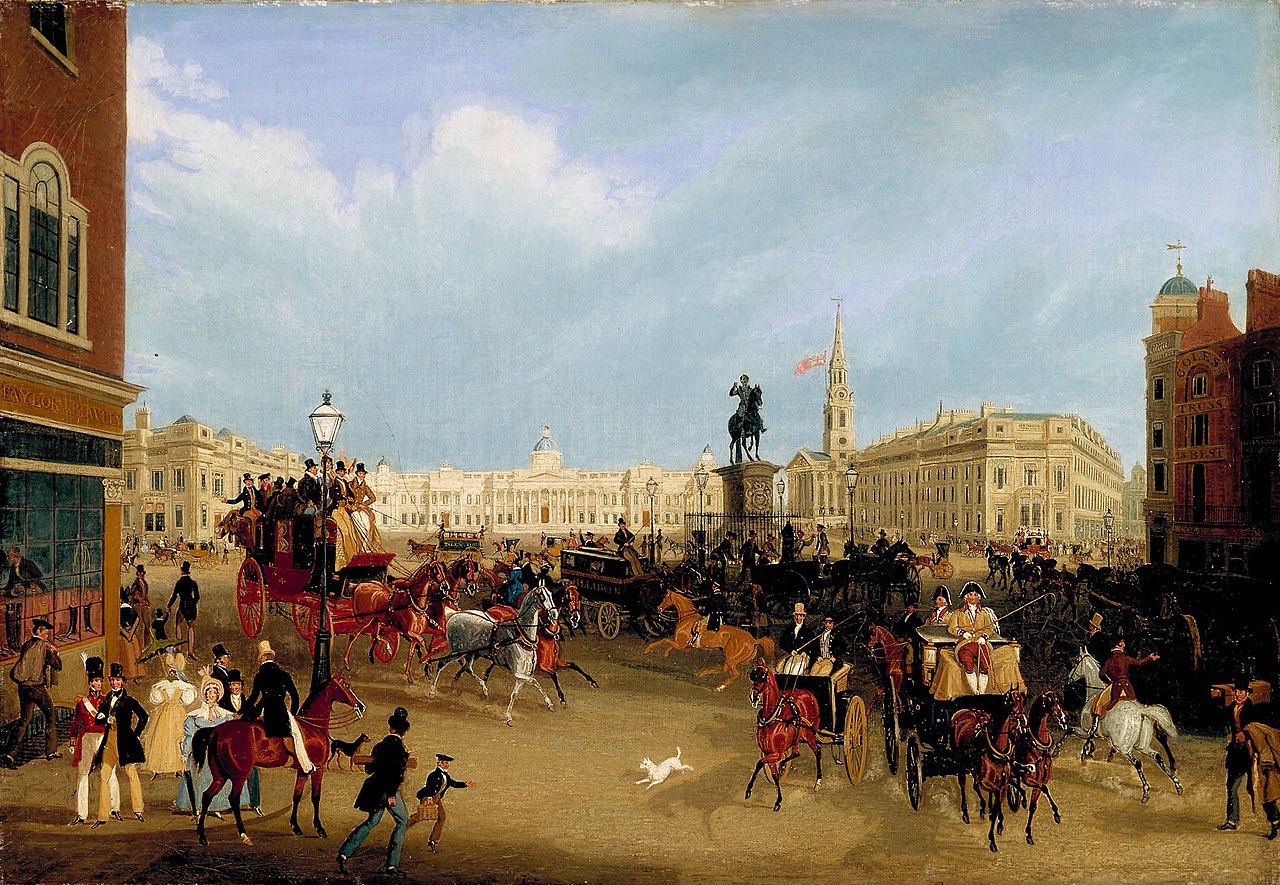


Layout and connections
The square is surrounded on three sides by roads and is threaded by important routes that radiate into the city. From Trafalgar Square the broad avenue of Whitehall leads toward the seat of government at the Palace of Parliament, while The Mall connects to Buckingham Palace. To the west the Strand runs toward the historic commercial district and the City of London. Nearby cultural and transport hubs include Covent Garden and Charing Cross station, both within easy walking distance.
Monuments and public art
The square is dominated by a tall column topped with a statue of Admiral Lord Nelson, erected in memory of the naval victory commemorated by the Battle of Trafalgar. This feature, commonly known as Nelson's Column, is surrounded at its base by four large bronze lions and other sculptural works. One corner of the square contains the so‑called "Fourth Plinth," a rotating platform used to display contemporary artworks and commissions.
Key features
- Nelson's Column and the statue of Admiral Nelson (Nelson's Column, Nelson).
- Four bronze lion sculptures guarding the column (lions).
- The Fourth Plinth contemporary art programme.
- Surrounding cultural buildings such as the National Gallery.
History and development
Trafalgar Square was created in the 19th century as part of urban improvements intended to celebrate national achievement and to open up views in central London. The name and principal monument commemorate Britain’s naval success at Trafalgar in 1805. Over time the square has been altered and landscaped to improve pedestrian access and to accommodate public events, but it retains its role as a designed civic space and a site of national memory.
Uses, events and cultural role
The square is a focal point for public life: state occasions, demonstrations, sporting celebrations, seasonal festivals and performance all make frequent use of the open space. It is also a tourist magnet, drawing millions of visitors each year who come to see the monuments, enter nearby museums and galleries, or use the square as a starting point for exploring Westminster and the West End.
Access, management and notable facts
Access by public transport is straightforward thanks to nearby rail and Underground services at Charing Cross station. The square is framed by important institutions such as the National Gallery and is close to entertainment and shopping districts like Covent Garden. Contemporary interventions such as the Fourth Plinth and periodic conservation work reflect ongoing efforts to balance historic preservation with the demands of a busy modern public space.
Why it matters
Trafalgar Square remains one of London’s most recognisable civic spaces: a place of commemoration and contested public expression, a crossroads of historic streets, and a vantage point for cultural institutions. Its blend of monumental sculpture, planned vistas and everyday urban life makes it a useful introduction to London’s layers of history and contemporary public culture.
Questions and answers
Q: Where is Trafalgar Square located?
A: Trafalgar Square is located in the heart of London.
Q: What kind of square is it?
A: Trafalgar Square is a large pedestrian square.
Q: How many roads bound Trafalgar Square?
A: Trafalgar Square is bounded on three sides by roads.
Q: What are the important roads that lead from Trafalgar Square?
A: Whitehall goes to Parliament, the Mall goes to Buckingham Palace, and the Strand goes to the City of London.
Q: What is the significance of the square?
A: The square is a major traffic intersection and serves as a refuge.
Q: What is the height of Nelson's Column in Trafalgar Square?
A: Nelson's Column is 56 meters tall.
Q: What is located in Trafalgar Square besides the statue of Admiral Lord Nelson?
A: The National Art Gallery is one of several important buildings facing the Square.
Related articles
Author
AlegsaOnline.com Trafalgar Square — central London public square and landmark Leandro Alegsa
URL: https://en.alegsaonline.com/art/101033
Sources
- socialistworker.co.uk : "Sign in · SWP"