
Torajan people: culture, religion, architecture, and rites
The Torajans are an indigenous ethnic group of South Sulawesi, Indonesia, known for ancestral houses, elaborate funerals, and the Aluk To Dolo belief alongside Christianity and Islam.
Overview
The Torajans are an indigenous ethnic group of Indonesia with a core population concentrated in the highland regency of Tana Toraja. Scholars and travel writers often refer to them simply as Torajans. Estimates place their total population around 650,000, with roughly 450,000 still living in Tana Toraja on the island of South Sulawesi (South Sulawesi). Their traditional homeland is a mountainous interior where agriculture, kinship, and ritual are closely linked.
Image gallery
10 Images




Language and social organization
Torajan communities are organized around extended families and clans. They speak several related languages and dialects belonging to the Austronesian family. Social identity is often expressed through descent lines, named houses, and customary obligations. Lineage houses act as focal points for communal life, inheritance, and ritual responsibilities that mark life-cycle events.
Architecture and material culture
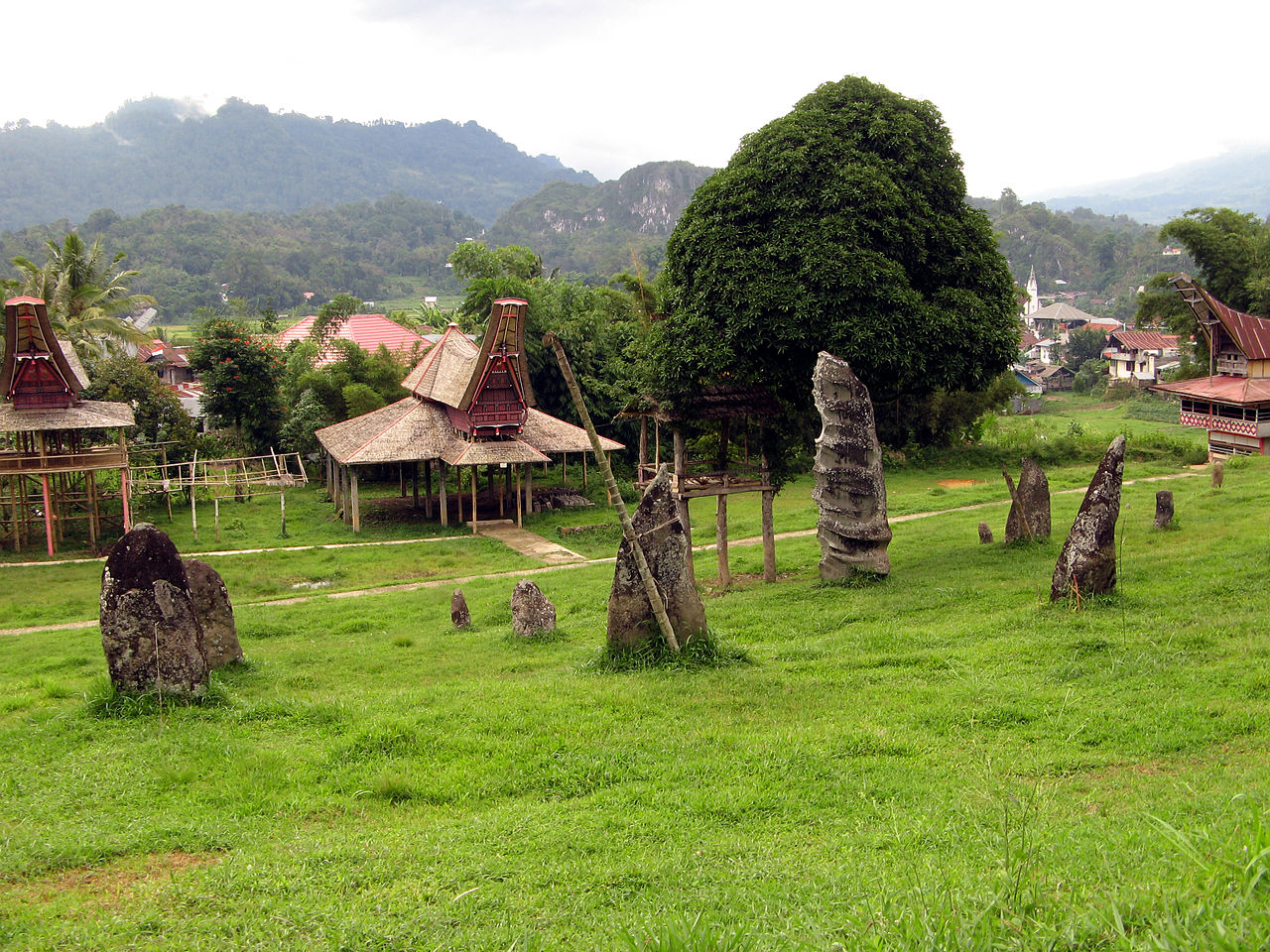
The most striking Torajan buildings are the tongkonan, ceremonial ancestral houses characterized by their curved, boat-shaped roofs and richly carved facades. These structures serve social and symbolic functions rather than purely domestic ones: they anchor lineage identity, store heirlooms, and host major ceremonies. Common decorative motifs include geometric patterns and stylized animals, often painted in red, black, and yellow.
Religion and belief
Religion among the Torajans is plural. A majority now identify as Christian, while others practice Islam or maintain indigenous beliefs collectively known as aluk or the "way". The traditional code of ritual and ethics is referred to by many as Aluk To Dolo, "the way of the ancestors", a system that the Indonesian state has recognized in various forms. Christian affiliation is common after missionary influence in the late 19th and early 20th centuries (Christianity), and some Torajans are Muslim (Islam), reflecting wider regional conversions.
Funeral rites and ancestral practices
Funeral ceremonies are central to Torajan culture and can be complex, expensive, and extended affairs. Families may delay burial until they have prepared elaborate rites. Ceremonies often include processions, the display of carved effigies called tau tau that represent the deceased, and the sacrifice of water buffalo and pigs as offerings to secure the dead's passage to the afterlife. These practices symbolize respect for ancestors and the community's continuity.
Economy, arts, and contemporary issues
Traditional subsistence includes wet-rice cultivation on terraces and small-scale horticulture; livestock—especially water buffalo—remains economically and ritually valuable. Torajan arts such as woodcarving, textile weaving, and metalwork are notable, and tourism has grown because of interest in architecture and funerary customs. This attention brings income but also ethical and social pressures, prompting debates about cultural preservation, commodification of ritual, and the impact of modernization on customary life.
Further reading
- General summaries and introductions to Torajan society: Torajan people.
- Regional context in Sulawesi: South Sulawesi.
- Religious history and missionary influence: Christianity.
- Islamic communities and conversions: Islam.
- Traditional belief systems and Aluk To Dolo: Aluk To Dolo.
Questions and answers
Q: Who are the Torajans?
A: The Torajans are an ethnic group indigenous to a part of South Sulawesi, Indonesia.
Q: How many Torajans are there around the world?
A: There are about 650,000 Torajans around the world.
Q: Where do most Torajans still live?
A: Most Torajans still live in the regency of Tana Toraja, which is also known as the "Land of Toraja".
Q: What religions do Torajans practice?
A: Most Torajans are Christian, but some are Muslim or have local animist beliefs known as Aluk.
Q: What is Aluk?
A: Aluk is the local animist belief system practiced by some Torajans.
Q: Has the Indonesian government recognized Aluk?
A: Yes, the Indonesian government has recognized Aluk as Aluk To Dolo, meaning "Way of the Ancestors."
Q: How many Torajans are practicing Aluk?
A: The text does not provide information on how many Torajans are practicing Aluk.
Related articles
Author
AlegsaOnline.com Torajan people: culture, religion, architecture, and rites Leandro Alegsa
URL: https://en.alegsaonline.com/art/100670