
Tomorrow Never Knows (The Beatles song)
A landmark 1966 Beatles track from Revolver. Written by John Lennon and shaped by psychedelic literature and studio experimentation, noted for tape loops, processed vocals and Indian instrumentation.
Tomorrow Never Knows is a seminal song by The Beatles first released on their 1966 album Revolver. Often cited as a turning point in popular music, the track moved the group decisively away from conventional rock arrangements toward studio-based experimentation and psychedelic textures. Its compact form, bold production and unusual sound palette have been influential across rock, electronic and experimental music.
The song was principally written by John Lennon, who drew inspiration from contemporary psychedelic literature. In particular, he had been reading works that reinterpreted the Tibetan Book of the Dead for Western use and related ideas about ego dissolution promoted in writings associated with LSD. Lennon later described the song’s theme as an attempt to evoke a kind of mystical or religious experience in musical form rather than a narrative story.
Image gallery
5 Images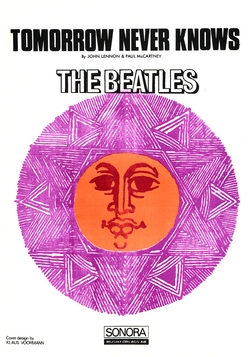


Recording and production
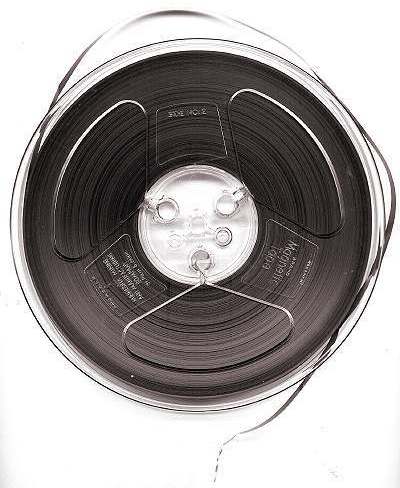
The recorded result is unlike most pop songs of its day. Studio techniques were central to the sound: looping fragments of tape, layering and feeding vocals through rotating speaker systems, and employing non-Western instruments to create a continuous drone. Lennon wanted the atmosphere of distant monks chanting, and while literal chanting was not used, his voice was processed to make it appear remote and otherworldly. The track also features Indian textures, including a sitar-inflected timbre and a sustained drone underpinning the harmony.
Engineers and producers manipulated tape at speed, played loops of treated guitar and studio noise, and blended them with conventional rock instrumentation. The result is a compact arrangement in which the lyric and a repeated harmonic pedal point take precedence over chord changes or guitar solos. Anecdotally, the song’s title is credited to Ringo Starr, whose offhand remark supplied the memorable phrase.
Musical characteristics and themes
Musically the composition sits on a steady modal drone rather than a sequence of changing chords. Percussion and rhythm support the vocal line while the layered loops provide shifting colors and textures. Lyrically and sonically the song explores altered states, perceptual surrender and detachment from conventional ego-centered thinking, presented in a direct, imperative vocal delivery rather than a detailed narrative.
Legacy and versions
From its release the track has been regarded as a milestone in studio-driven popular music: an early mainstream use of what would later be called sampling and tape-loop collage. Its influence stretches to psychedelic rock, ambient music and electronic production techniques. Many artists have recorded reinterpretations, and the song resurfaced in different forms — including a notable dance reinterpretation in the 1990s — demonstrating its adaptability. A wide range of musicians have produced cover versions; some remain faithful while others recast the piece in new genres, attesting to the composition’s enduring appeal as a template for experimentation. See also a recorded cover tradition that highlights its cross-generational impact.
Notable elements
- Use of tape loops and looped studio noises.
- Processed lead vocal routed through rotating speakers to produce a warbling effect.
- Drone-based harmony with little conventional chord change.
- Incorporation of Indian sonic elements alongside Western rock instrumentation.
- Direct lyrical focus on altered consciousness and spiritual themes.
Questions and answers
Q: Who wrote the song Tomorrow Never Knows?
A: John Lennon wrote the song Tomorrow Never Knows.
Q: What was the source of inspiration for the song?
A: The source of inspiration for the song was The Psychedelic Experience, which adapted the Tibetan Book of the Dead for use as an LSD "user's manual".
Q: When was it released?
A: The song was released in 1966 on The Beatles's Revolver album.
Q: Where did the title come from?
A: The title came from Ringo Starr, one of John Lennon's bandmates, who was known for his quirky but insightful comments about life.
Q: How did they create a sound like monks chanting?
A: It wasn't possible to record actual monks chanting, so instead Lennon's voice was played through a special speaker called a Leslie speaker to give it a warbling sound like a voice calling from a hilltop.
Q: What other sounds were used on the record?
A: Other sounds used on the record included tape loops playing over and over and a sitar.
Q: Has anyone else recorded this song?
A: Yes, other artists have recorded their own versions of this song including a dance cover version that appeared in the 1990s.
Related articles
Author
AlegsaOnline.com Tomorrow Never Knows (The Beatles song) Leandro Alegsa
URL: https://en.alegsaonline.com/art/100484
Sources
- digital.library.unt.edu : "Show 39 - The Rubberization of Soul: The great pop music renaissance. [Part 5]"