
Bedford (market town in Bedfordshire, England)
Bedford is the county town of Bedfordshire, England: a riverside market town with a diverse population, distinct districts, historic roots and a notable local education system.
Overview
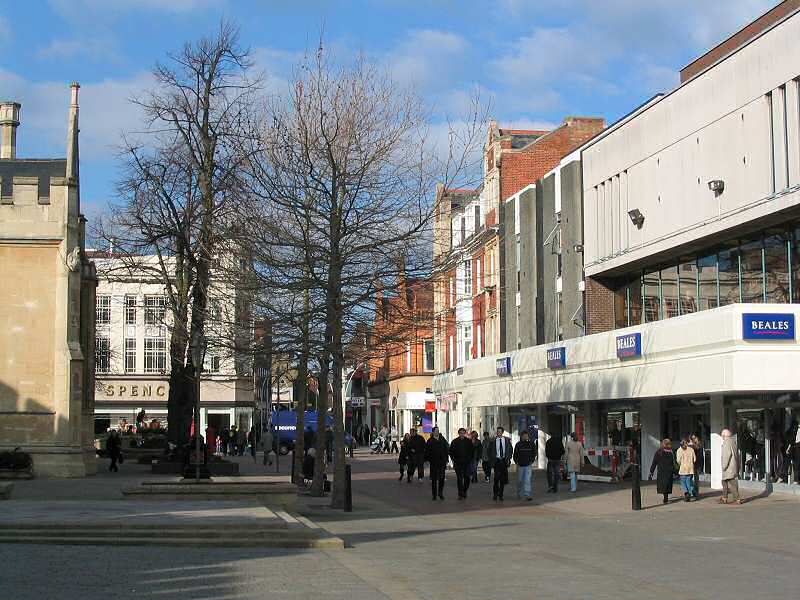
Bedford is a historic market town and the county town of Bedfordshire in England. It lies beside a navigable stretch of the River Great Ouse and serves as a local centre for commerce, administration and services. The town itself has a population of around 79,000 people, rising to roughly 100,000 if adjacent urban areas such as Kempston are included. Bedford combines suburban areas, former industrial sites and town-centre retail with parks and riverside spaces.
Image gallery
10 Images




Districts and surrounding settlements
Bedford is made up of several distinctive districts and suburbs. Notable residential areas include Putnoe, Goldington, Brickhill and Woodside, each with its own character and local amenities. The wider borough contains a number of smaller towns and villages that maintain close links to Bedford for shopping, education and transport.
- Districts: Putnoe; Goldington; Brickhill; Woodside.
- Nearby villages and towns: Sandy, Willington, Cople, Cardington.
History and development
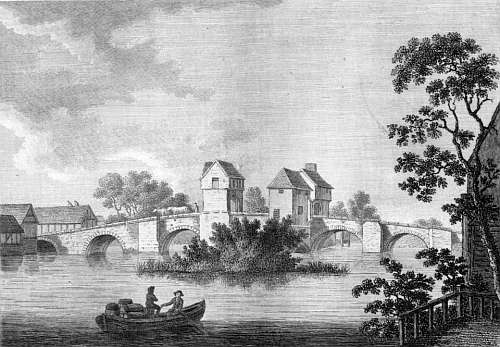
Bedford has medieval origins as a market town and developed over centuries around trade on the River Great Ouse and local agriculture. Industry expanded in the 18th and 19th centuries, including brick and light manufacturing, which attracted workers and shaped neighbourhoods. Over time the town has shifted from traditional industry toward a mixed economy of retail, education, public services and small-scale manufacturing.
Education and institutions
Education is a prominent feature of Bedford’s civic life. The town supports a range of state and independent schools and has been known for a distinctive three-tier schooling arrangement comprising lower, middle and upper schools. This system has been relatively rare nationally and Bedford has in recent years been transitioning toward a two-tier primary/secondary structure in places. The town also hosts academies, special educational provision and the Bedford Free School among other institutions.
Demography, culture and community
Bedford is notable for its diverse population: long-established immigrant communities, including Italian and Polish families, are part of the town’s social fabric, with roots in local industry such as former brickworks and engineering firms. The town supports cultural and community organisations, places of worship of different faiths, and a calendar of local events. Its riverside parks and historic sites contribute to both local identity and visitor interest.
Notable facts and transport
As a county town, Bedford is an administrative hub for local government services and regional commerce. It retains a market-town heritage while functioning as a suburban centre with commuter links to larger cities. The combination of historic centre, residential suburbs and nearby villages gives Bedford a mixed urban-rural character, with ongoing change in housing, education and local economy shaping its contemporary profile. For further local information see the town’s civic and visitor resources such as the market town guides and regional pages linked to county services.
Questions and answers
Q: What is Bedford?
A: Bedford is a market town located in Bedfordshire, England.
Q: How many people live in Bedford?
A: Bedford has a population of over 79,000 people. If the people living in Kempston are included, the population reaches 100,000.
Q: What are some of the districts that form Bedford?
A: Bedford is formed of multiple districts, including Putnoe, Goldington, Brickhill, and Woodside.
Q: What are some of the smaller villages surrounding Bedford?
A: Some of the smaller villages surrounding Bedford include Sandy, Willington, Cople, and Cardington.
Q: What kind of schools can be found in Bedford?
A: Bedford has many outstanding schools, including both state and public schools. There are academies, community schools, SEN schools, and the Bedford Free School.
Q: Is Bedford known for its diverse population?
A: Yes, Bedford is known for its large diversity of nationalities, such as Italians and Polish.
Q: Where did the diversity in Bedford stem from?
A: The diversity in Bedford stems from the brick works that used to stand in the area.
Related articles
Author
AlegsaOnline.com Bedford (market town in Bedfordshire, England) Leandro Alegsa
URL: https://en.alegsaonline.com/art/10038