
Tjunti — soakage site and Lasseter’s Cave in the Petermann Ranges
Tjunti is a remote soakage and mountain gap in the Petermann Ranges of the Northern Territory, Australia, notable for its waterholes, Aboriginal outstation, and Lasseter’s Cave, linked to the Lasseter legend.
Overview
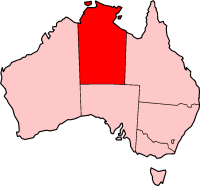
Tjunti lies in a narrow gap where a sandy creek cuts through the Petermann Ranges of central Australia. Its approximate position is given by the coordinates 25°01′S 129°24′E. The place is commonly described as a soakage site (soakage) in the broader region of the Northern Territory of Australia, and is part of the folded landscape of the Petermann Ranges. Tjunti sits roughly 36 kilometres southeast of the settlement of Kaḻṯukatjara by straight line and about 41 km by the local Tjukaruru Road.
Image gallery
3 Images

Geography and physical features
The location is formed where the Hull River — a typically dry, sandy creek — carves a gap through sandstone and quartzite ridges. That gap is often referred to in local descriptions as a natural gap in the mountain chain. The corridor separates the Curdie Range to the south from the Mannanana Range to the north. The creek bed and surrounding rock provide a number of soaks and rockholes that capture and hold seasonal water in otherwise arid country; the stream is normally a sandy channel that only flows after substantial rain.
- Natural water points: several soakages and rockholes that support local flora and fauna.
- Landforms: a pass or gap through folded ranges, with caves and overhangs in the Mannanana formations.
- Cultural place names: the cave and many features retain names in the local Aboriginal language and tradition.
History and the Lasseter story
Tjunti gained wide attention because of its association with the story of Harold B. Lasseter, the prospector who claimed to have found a very rich gold deposit, often called Lasseter's Reef. Lasseter himself is commonly described as a prospector pursuing a gold discovery. During his 1930–1931 search he sheltered for about 25 days in a small rock cavity known in the local tongue as Kuḻpi Tjuntinya and in English as Lasseter's Cave. He recorded events and observations in a diary, and described earlier attempts to relocate the reef from a prior expedition.
On that journey he lost his pack animals — his camels — which left him stranded in harsh desert conditions. Local Aboriginal people of the Pitjantjatjara communities encountered him and provided some assistance, but Lasseter later set out on foot toward distant settlements. Dehydration (dehydration), malnutrition and exhaustion severely weakened him; he died during the return journey after covering many tens of kilometres.
Contemporary presence and cultural value
An Aboriginal outstation was established at Tjunti in 1977 and the site remains associated with a Pitjantjatjara family and their country. The outstation movement enabled many families to live on or visit traditional lands; the Tjunti site functions as a place of cultural memory, seasonal use, and connection to ancestral stories. The local name for the cave and surrounding features is from the Pitjantjatjara language, reflecting long-standing Aboriginal ties to the land.
Access, significance and conservation
Tjunti is remote and visited mainly by those with experience of desert travel or by people travelling with local guides. It is valued for its geological interest, its water resources in an arid landscape, and for the historical episode linked to Lasseter. Visitors are advised to respect Indigenous ownership and heritage, to prepare for limited water and extreme conditions, and to recognise that many elements of the site are culturally sensitive.
For concise maps and coordinate references see location data, and for further reading on the outstation movement and Aboriginal custodianship consult resources listed at outstation and cultural overviews at Petermann Ranges and Northern Territory. Additional historical records and interpretations appear in accounts of the Lasseter story (Lasseter's Reef, Lasseter, diary) and field studies of desert soakages (soakage, sandy creek). The place names and language references connect to Pitjantjatjara tradition (Pitjantjatjara, language).
Key local geographical terms and features referenced here include the Curdie Range, the Mannanana Range, the Hull River gap (gap), and the small shelter known in English as Lasseter's Cave. The human story is marked by survival, contact, and loss — a reminder of the risks of early prospecting expeditions and the enduring importance of water places in desert Australia.
Questions and answers
Q: Where is Tjunti located?
A: Tjunti is located near Kaḻṯukatjara in the Northern Territory of Australia. It is about 36 kilometres (22 mi) to the southeast of Kaḻṯukatjara (41 km by road, along the Tjukaruru Road).
Q: What are the coordinates of Tjunti?
A: The coordinates of Tjunti are 25°1′S 129°24′E / 25.017°S 129.400°E / -25.017; 129.400.
Q: What is special about this location?
A: This location is special because it is where famous gold prospector Harold B. Lasseter took refuge on his fatal search for Lasseter's Reef and there is a small cave here called Kuḻpi Tjuntinya (now commonly called Lasseter's Cave in English).
Q: How did Lasseter end up at this location?
A: Lasseter ended up at this location after his camels ran away, leaving him stranded in the desert without food during his search for a rich gold deposit he had discovered earlier on an expedition.
Q: How long did he stay at this location?
A: He stayed at this location for about 25 days during January 1931 while taking shelter in the cave and writing about his journey in his diary.
Q: Who provided help to Lasseter while he was there?
A: A local Pitjantjatjara family provided help to Lasseter while he was there by giving him food and water before he decided to leave the cave and try to walk 140 km (87 mi) to Kata Tjuṯa.
Q: How far did he manage to walk before passing away?
A: Before passing away, Lasseter managed to walk about 55 km (34 mi).
Related articles
Author
AlegsaOnline.com Tjunti — soakage site and Lasseter’s Cave in the Petermann Ranges Leandro Alegsa
URL: https://en.alegsaonline.com/art/100162
Sources
- books.google.com.au : Uluru: an aboriginal history of Ayers Rock
- digitalcollections.anu.edu.au : Land Use and Resources in Desert Homelands