
Adler Planetarium & Astronomy Museum
Historic Chicago planetarium founded in 1930 offering exhibitions, sky shows, public observing, education and outreach. First planetarium in the Western Hemisphere and a National Historic Landmark.
Overview
The Adler Planetarium & Astronomy Museum is a public planetarium and museum located in Chicago, Illinois, U.S.. Opened on May 12, 1930 through the philanthropy of Max Adler and with early leadership from the institution's first director, Philip Fox, the Adler was the first planetarium built in the Western Hemisphere and remains one of the oldest institutions of its kind in continuous operation. The museum blends exhibition galleries, immersive sky shows, informal science education and public outreach to connect diverse audiences with astronomy and space science.
Image gallery
10 Images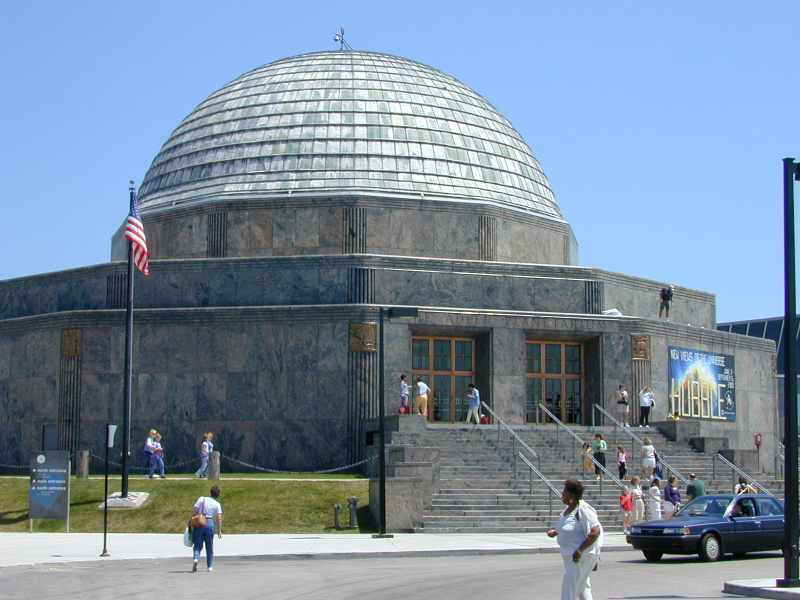





History and founding
The Adler was established in the late 1920s and opened during a period of renewed public interest in science and technology. Its creation reflected a philanthropic commitment to bring contemporary scientific knowledge to urban populations and schools. Early programs emphasized planetarium demonstrations, teacher training and public lectures, helping to popularize astronomical ideas and to introduce generations of visitors to the modern study of the sky.
Architecture and site
Designed by architect Ernest A. Grunsfeld Jr., the building is sited on Northerly Island and forms part of Chicago's lakeshore cultural cluster known as the Museum Campus. The structure's architectural quality earned the Chicago chapter of the American Institute of Architects a gold medal in 1931 for the project's execution. Its placement on the lakefront creates a visual and civic landmark adjacent to other major institutions such as the John G. Shedd Aquarium and the Field Museum of Natural History, contributing to the area's role as a focal point for education and tourism.
Collections and exhibitions
The Adler's galleries interpret astronomy and space science through a combination of historic materials, models, interactive exhibits and modern displays. Exhibition topics commonly include the structure of the solar system, the life cycles of stars, the history of astronomical instruments, and the methods astronomers use to study the universe. The museum preserves documents and objects that illuminate the development of public astronomy education over the twentieth century while presenting up-to-date scientific discoveries in accessible formats.
Planetarium theaters and public programs
Central to the institution's mission are its projection theaters and sky presentations. Visitors experience live and prerecorded shows that recreate the night sky, illustrate celestial motions, and explain contemporary topics in planetary science and cosmology. The Adler also hosts lectures, school programs, family activities, seasonal telescope viewings and community outreach events intended to increase public engagement with science and to support formal and informal learning.
Education, research and outreach
Education and outreach are core functions of the planetarium. Programs serve K–12 students, teachers and lifelong learners, and often include curriculum-aligned resources, professional development for educators and hands-on activities designed to foster scientific literacy. While primarily an educational and public-facing museum, the institution has participated in collaborations and initiatives that support research, data interpretation and the communication of contemporary astronomy to broad audiences.
Significance and preservation
As the first planetarium built in the Western Hemisphere and an early center for public astronomy, the Adler is frequently cited in histories of planetaria and science museums. Its long record of service, continuing public programs and its architectural distinction resulted in designation as a National Historic Landmark in 1987. The planetarium's ongoing work balances preservation of historical collections and buildings with renewal of exhibits and technologies to reflect current scientific understanding.
Visiting
The Adler functions as both a local science resource and a destination for visitors to the Museum Campus. Typical offerings include scheduled sky shows, temporary and permanent exhibitions, special events and opportunities for public observing. Its role in the cultural life of Chicago and the broader public understanding of astronomy continues to evolve with advances in digital media and science education practice.
- Founded in 1930 by philanthropist Max Adler with early direction from Philip Fox.
- First planetarium in the Western Hemisphere and among the oldest operating planetaria.
- Noted architectural design by Ernest A. Grunsfeld Jr., awarded by the American Institute of Architects.
- Part of the lakeside cultural precinct with the Shedd Aquarium and the Field Museum, located on Northerly Island.
For authoritative and current information about hours, tickets, exhibitions and educational programs, consult the planetarium's official resources and visitor services. The Adler continues to preserve its historical legacy while presenting contemporary astronomy to the public and supporting science education in the region and beyond.
Questions and answers
Q: What is the Adler Planetarium & Astronomy Museum?
A: The Adler Planetarium & Astronomy Museum is a planetarium located in Chicago, Illinois, U.S.
Q: What is the significance of the Adler Planetarium & Astronomy Museum?
A: The Adler Planetarium & Astronomy Museum is the first planetarium to be built in the Western Hemisphere and is the oldest in existence.
Q: Who founded and built the Adler Planetarium?
A: The philanthropist Max Adler founded and built the Adler Planetarium in 1930, with the assistance of the first director of the planetarium, Philip Fox.
Q: When did the Adler Planetarium open to the public?
A: The Adler Planetarium opened to the public on May 12, 1930.
Q: What other attractions are included in the Museum Campus in Chicago where the Adler Planetarium is located?
A: The Museum Campus in Chicago where the Adler Planetarium is located also includes the John G. Shedd Aquarium and the Field Museum of Natural History.
Q: Who was the architect responsible for the design of the Adler Planetarium?
A: The architect responsible for the design of the Adler Planetarium was Ernest A. Grunsfeld, Jr. He was awarded the gold medal of the Chicago chapter of the American Institute of Architects in 1931 for his work.
Q: Was the Adler Planetarium designated as a National Historic Landmark?
A: Yes, the Adler Planetarium was designated as a National Historic Landmark in 1987.
Related articles
Author
AlegsaOnline.com Adler Planetarium & Astronomy Museum Leandro Alegsa
URL: https://en.alegsaonline.com/art/1001
Sources
- pdfhost.focus.nps.gov : National Register of Historic Places Inventory-Nomination: Adler Planetarium / Adler Planetarium and Astronomical Museum
- pdfhost.focus.nps.gov : Accompanying 2 photos, exterior, from 1985.